For years, L.L.Bean’s store growth followed a steady, comfortable rhythm. The company would open one or two new locations per year, rely on strong store teams to solve operational challenges, and lean on a supply chain built for a direct-to-consumer world.
What’s Related
That model worked. Until it didn’t.
According to Corey Bouyea, VP of Stores & Retail Operations, the warning signs had been building quietly as retail grew alongside the brand’s catalog and e-commerce business. But it wasn’t until L.L.Bean crossed 50 stores that the cracks became impossible to ignore.
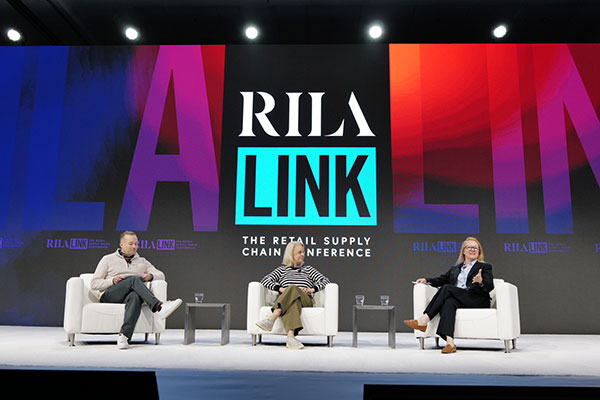
“The pressure really started to show its ugly head when we hit 50 stores in our store portfolio a couple of years ago,” Bouyea said during a RILA conference session on leading transformation. “That pressure has increased as we’ve got closer to 70 this past year.”
The issue wasn’t demand, store performance, or execution. It was structural.
L.L.Bean’s supply chain had been designed for a world where most orders went directly to individual customers. Inventory systems, fulfillment processes, and workflows were optimized to send “one or maybe two or three products to an individual customer,” as Chief Supply Chain Officer Kirsten Piacentini described it. As stores expanded, the same model was repeatedly retrofitted to serve retail, wholesale, and omnichannel needs.
The result was a system that technically functioned, but only through constant workarounds.
Store teams were receiving shipments that looked less like store replenishment and more like oversized e-commerce orders, with mixed categories, inconsistent prep, and every unit handled individually. What should have been a clean flow of store-ready product instead turned into hours of back-of-house labor.
The inefficiencies snowballed as the store footprint grew. “The things you can’t fix upstream just snowball themselves into the things that the store teams deal with,” Bouyea said. “Teams end up spending time sorting, prepping, and reacting instead of serving customers.”
The tipping point came as L.L.Bean approached 70 stores and set an ambitious goal to open 10 or more new locations a year as part of its Vision 2030 growth plan. The math no longer worked. The supply chain itself had become the limiting factor.
“It’s just not designed in a place where it’s going to enable us to scale to that rapid speed that we need,” Bouyea said.
That realization pushed L.L.Bean to step back from incremental fixes and rethink how its supply chain was built to support stores. Rather than focusing on small process changes, the company began looking at where friction was introduced long before the product reached the sales floor.
Retail became the logical place to start. It wasn’t the company’s largest channel, but it was the fastest growing, and the limits of the existing model were showing up there first.
As Bouyea put it, the issue wasn’t whether the company could open more stores, but whether the system behind them could keep up.
“It’s just not designed in a place where it’s going to enable us to scale to that rapid speed that we need,” he said.