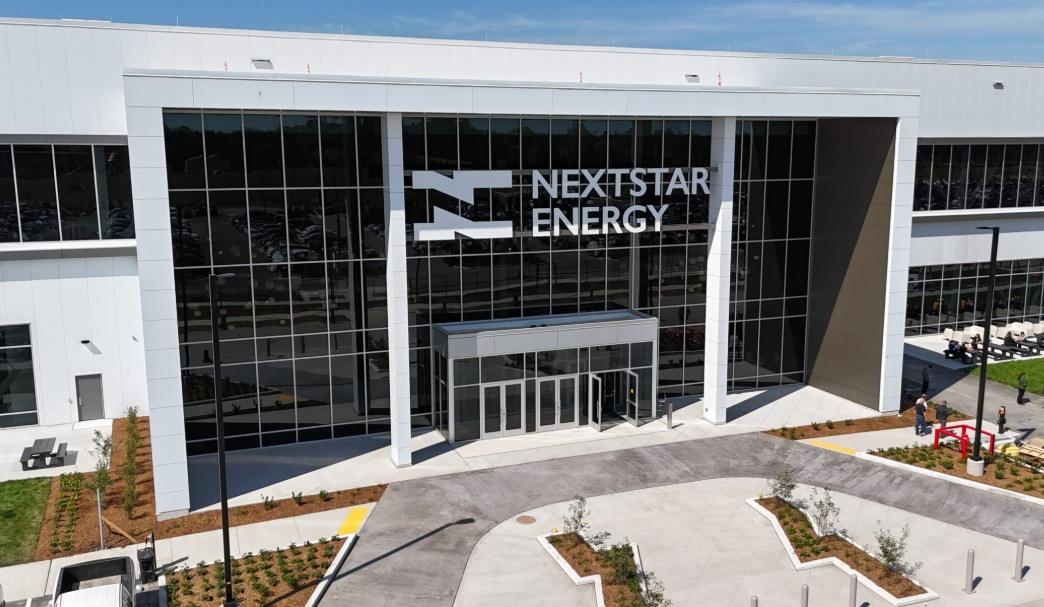
Chrysler, Dodge, Jeep, and Citroen parent Stellantis announced today an agreement to sell its 49% stake in its Canada-based EV battery manufacturing facility, NextStar Energy to its joint venture partner LG Energy Solution.
Launched by Stellantis and LG Energy Solution in 2022, NextStar was founded to establish the first large-scale domestic electric vehicle manufacturing facility in Canada, with annual production capacity in excess of 45 GWh.
To date, more than C$5 billion (USD$3.7 billion) has been invested in the facility. According to a filing on the Korean Financial Supervisory Service, LG Energy Solution is buying its stake from Stellantis for $100.
Alongside the sale of its JV stake, Stellantis also announced a “reset” in its business, including taking a €22.2 billion (USD$26 billion) charge as it pulls back on its EV plans “to align the Company with the real-world preferences of its customers.”
The announcement follows a series of moves by global automakers to rationalize major investments made in electric vehicle and battery capacity over the past few years, in the face of a softer than expected market for EVs.
Ford, for example, recently reported a $19.5 billion charge on its own plans to rationalize its U.S. EV-related assets and product roadmap, while also launching a new battery energy storage systems (BESS) business to repurpose some of its existing U.S. battery manufacturing capacity, to target opportunities from the growing demand for battery energy storage emerging from data centers and grid infrastructure.
Similarly, LG Energy Solution said that following the transaction, it will reposition NextStar to “serve a broader customer base, including the Energy Storage System (ESS) industry.” The move forms part of the company’s strategy of “reallocating production capacity between EV and Energy Storage Systems,” and its goal to increase global ESS capacity to more than 60 GWh this year, including more than 50 GWh in North America.
David Kim, CEO of LG Energy Solution, said:
“Full ownership of NextStar Energy will enable us to respond swiftly to the growing demand from the ESS market and position us to play a key role in Canada’s EV industry by securing additional North American-based customers.”


