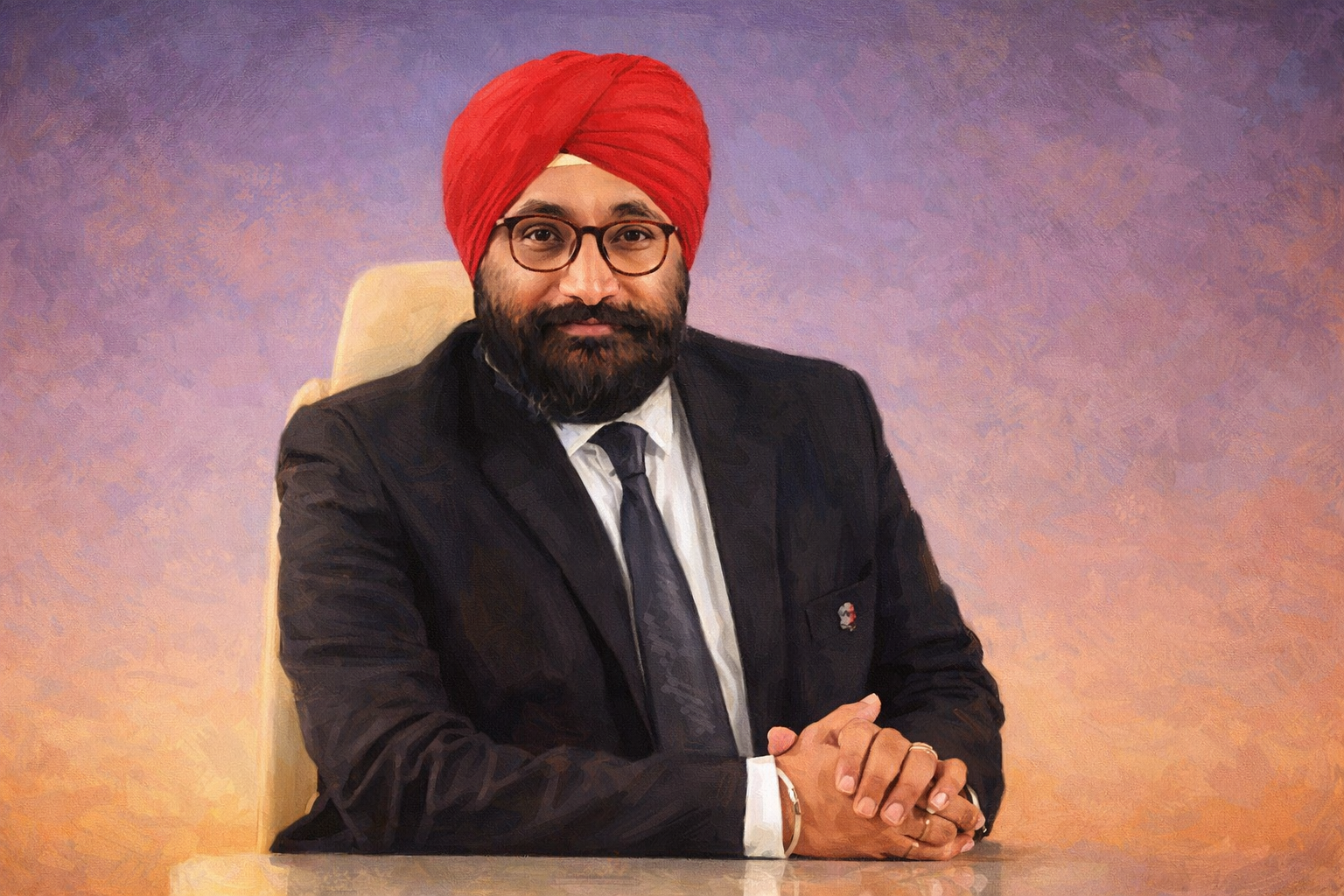
Indian Oil Corporation (IOC) is aiming to strengthen its non-fuel business and targeting an increase in the share of revenue from gas, petrochemicals, lubricants and renewables to 20-30 per cent by 2030, up from around 10 per cent now, said chairman AS Sahney. In an interview to Sanjeev Choudhary, he said this shift would expand the non-fuel business to ₹2-3 lakh crore from about ₹70,000 crore at present.
Asked about the unease in parts of the organisation over cost cuts, Sahney said the tightening was aimed at trimming excesses, not essentials, and the cost-discipline drive had already delivered annual savings of about ₹2,000 crore. He outlined plans to consolidate the gas business under one head while stressing that any scrapping of the positions of director (research and development) and director (pipelines) would be a government decision, not his. Edited excerpts:
Over the past year, since you took charge, you’ve sought to revitalise the organisation through the Sprint programme. How has it performed?
The Sprint is focused on the core business, customer centricity, cost consciousness, on making the company transition-ready, on leadership development and technology. We have introduced energy efficiency initiatives and profitability improvement initiatives, which are giving me ₹2,000 crore per annum (in savings). We are switching from our (expensive) captive power plants to grid power wherever the grid is cheaper and reliable. Now, at least 20 per cent of (our power consumption) is coming from the grid. Earlier, it was much lower. We will raise it to at least 30-40 per cent. We are trying to upgrade the products. Naphtha, bitumen, fuel oil, sulphur—these are the products which give me lower than crude return. So, when we are minimising these products, I am increasing my profitable products. More and more of naphtha is being converted into petrol.
Some divisions of the company have seen discontent over cost cuts.
We will never do any cost-cutting in any essential thing. It’s the excesses that are being targeted. We are driving cost consciousness in the organisation.
Is there a plan to reduce the size of IOC’s board by eliminating the positions of director (research and development) and director (pipelines)?
Frankly speaking, I don’t have any idea on this because this is the decision of the competent authorities in the government.
Does the company need an independent pipeline division?
(The division’s independent existence or elimination) is not important at all. What is important is we are a board of Indian Oil. For me, it is not the board of different divisions. My directors are the directors of Indian Oil. They should not be directors of one division or other division.
What kind of company do you want to leave behind at the end of your five-year tenure?
Five years down the line, this company will be pretty much different. Today, 85 per cent or 90 per cent of revenues are coming from petrol, diesel, aviation fuel, etc. What I foresee is that at least 20 to 30 per cent of my revenues should start coming from alternative sources like gas, lubes, renewables, biofuels, petrochemicals. These verticals should generate about ₹2-3 lakh crore in revenues (IOC’s total revenue today is about ₹9 lakh crore). At present, gas is a ₹30,000 crore business, petrochemicals is ₹28,000 crore. Lubes is worth ₹13,000 crore, which should rise to ₹20,000 crore.
Where do you expect your gas business to reach in four years?
It will at least double. In the last two years, we have already doubled.
What about petrochemicals?
We aim to double this also to about ₹50,000 crore. We may even do acquisition to meet the target. This will now be more focused on specialty chemicals. In lubricants, we have shifted our focus towards automotive lubes, where we were somewhat lagging.
What’s your plan for the natural gas business?
We are trying to consolidate the gas business. Bulk business, which is procurement of gas and selling of gas to the industrial people, is done by the business development division, while the CGD (city gas distribution) business is under pipeline division. We are trying to consolidate them into one entity, place it under one head.
Do you see an opportunity in the nuclear business?
We are evaluating it in light of the new legislation that has come last month. If we get a good partner, we will go for it. At present, we are not engaged in talks with potential foreign partners.
Are you concerned that your stock price does not adequately reflect your financial performance?
That is a cause of concern for us, but it is ultimately market driven. So, we can’t do anything other than communicate to the market that these are my plans, ambitions, growth prospects. And then I’ll have to go into businesses which are given higher multiples like petrochemicals, gas, renewables or, maybe, nuclear.