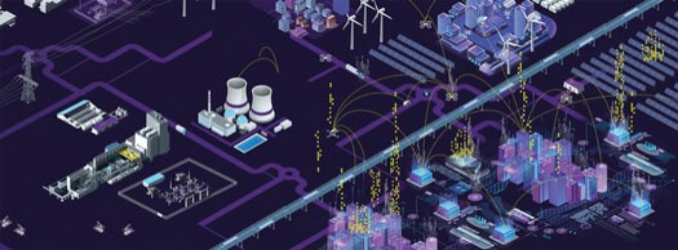
The global energy sector is at an inflection point, navigating sustained market volatility and increasing pressure for operational efficiency and sustainability. In this challenging landscape, the convergence of industrial artificial intelligence (AI) and advanced digitalization platforms is emerging as a critical differentiator for energy companies. Recent advancements, particularly in the realm of AI-driven tools for complex industrial assets, signal a transformative shift in how upstream oil and gas operations, as well as broader energy infrastructure, will be designed, managed, and optimized. For investors, understanding the implications of these technological leaps is paramount to identifying future leaders in the energy space.
Navigating Volatility: AI’s Role in Upstream Profitability Amidst Shifting Prices
The current market environment underscores the urgent need for enhanced efficiency and cost control within the energy sector. As of today, Brent crude trades at $90.72, showing a modest daily gain, but its recent trajectory tells a starker story. Over the past two weeks, Brent has plummeted from $118.35 on March 31st to $94.86 just yesterday, representing a significant $23.49 decline. Similarly, WTI crude sits at $87.68. This rapid downturn in benchmark prices highlights the precarious nature of upstream margins and the critical importance of capital discipline.
Against this backdrop, the introduction of an Industrial AI Operating System, designed to embed AI across the entire lifecycle of industrial facilities, offers a compelling solution. This platform, combining simulation, real-time operational data, and sophisticated AI models, promises faster optimization and more resilient asset performance. Complementing this is the forthcoming Digital Twin Composer, anticipated in mid-2026. This software integrates high-fidelity digital twins with real-time engineering data, empowering operators to simulate modifications, environmental impacts, and operational changes virtually before costly physical execution. For asset-intensive industries like upstream oil and gas, where capital efficiency and risk reduction are non-negotiable, these technologies directly address the challenge of maintaining profitability even when crude prices are under pressure. By shortening project timelines, improving predictability, and slashing both capital and operating costs, these digital advancements offer a potent hedge against market volatility, making companies that adopt them more resilient in downturns and more profitable during upswings.
Addressing Investor Concerns: AI Copilots for Greater Certainty and Compliance
Investors in the energy sector are constantly seeking clarity in an often-opaque market, as evidenced by frequent inquiries regarding market direction and specific company performance. Questions like “is WTI going up or down?” or “what do you predict the price of oil per barrel will be by end of 2026?” reflect a deep-seated desire for predictability. While no technology can fully control market prices, advanced AI-powered industrial copilots can significantly enhance operational certainty and risk management, which are crucial factors influencing investor confidence.
These specialized AI tools span engineering, compliance, manufacturing, and operations software platforms, acting as intelligent assistants for engineers and operators. They are designed to streamline complex tasks such as navigating vast datasets, validating intricate designs, managing evolving regulatory requirements, and improving overall operational efficiency. For upstream developments, which increasingly face tighter cost controls and intense regulatory scrutiny, these copilots are invaluable. They can drastically reduce the time and effort spent on compliance, minimize human error in design validation, and unlock new levels of efficiency in daily operations. By de-risking projects, ensuring adherence to environmental standards, and optimizing resource allocation, these AI assistants provide a tangible pathway to improved financial performance and greater transparency, ultimately contributing to a more favorable investment thesis for adopting companies.
Forward Momentum: AI’s Strategic Edge Amidst Upcoming Energy Events
The next few weeks are packed with critical energy market indicators that will shape short-term sentiment and strategic planning. These include the OPEC+ Joint Ministerial Monitoring Committee (JMMC) Meeting today, April 21st, which could signal shifts in global supply policy. This will be followed by the EIA Weekly Petroleum Status Reports on April 22nd and April 29th, offering insights into U.S. inventory levels, and the Baker Hughes Rig Counts on April 24th and May 1st, indicating drilling activity. Furthermore, the EIA Short-Term Energy Outlook on May 2nd will provide crucial forecasts for the coming months.
In this environment of continuous data flow and potential market shifts, the deployment of advanced industrial AI through ecosystems like Siemens Xcelerator becomes a strategic imperative. Companies leveraging these AI technologies are better positioned to digest and react to real-time market signals. For instance, an operator utilizing an Industrial AI Operating System can rapidly simulate the impact of potential OPEC+ supply changes on their production strategy, or quickly adapt maintenance schedules in response to inventory reports or rig count trends. Predictive maintenance, enhanced by AI, can reduce unplanned downtime, ensuring assets are optimally available to capitalize on favorable market conditions or to minimize losses during periods of oversupply. By enabling quicker, more informed decision-making and fostering operational agility, these AI platforms empower energy firms to not just react to, but strategically anticipate and adapt to the dynamic forces unveiled by upcoming market events, thereby optimizing resource allocation and maximizing returns.
Investment Outlook: The Digital Divide in Energy Performance
The ongoing push for digitalization, now significantly augmented by industrial AI, is creating a widening gap between energy companies that embrace these transformative technologies and those that lag. Siemens’ expanded partnership with NVIDIA to build an Industrial AI Operating System, alongside innovations like the Digital Twin Composer and AI-powered copilots, represents more than just a technological upgrade; it signifies a fundamental shift in how value is created and sustained in the energy sector. These tools are engineered to shorten project timelines, improve predictability, and deliver substantial reductions in both capital and operating expenditures across the entire energy value chain.
For discerning investors, this technological pivot presents a clear opportunity. Identifying energy companies that are actively integrating these advanced AI platforms into their core operations will be key to long-term portfolio performance. These firms are not merely adopting new software; they are fundamentally reshaping their operational DNA to be more efficient, more resilient, and ultimately, more profitable. As early applications of this industrial AI portfolio are already underway in energy-related projects, the competitive advantages will soon become evident in financial statements. The ability to manage complex assets with unprecedented precision, navigate regulatory landscapes with ease, and optimize performance in a volatile price environment will define the next generation of energy sector leaders, making robust digital strategies a cornerstone of any compelling investment thesis.


