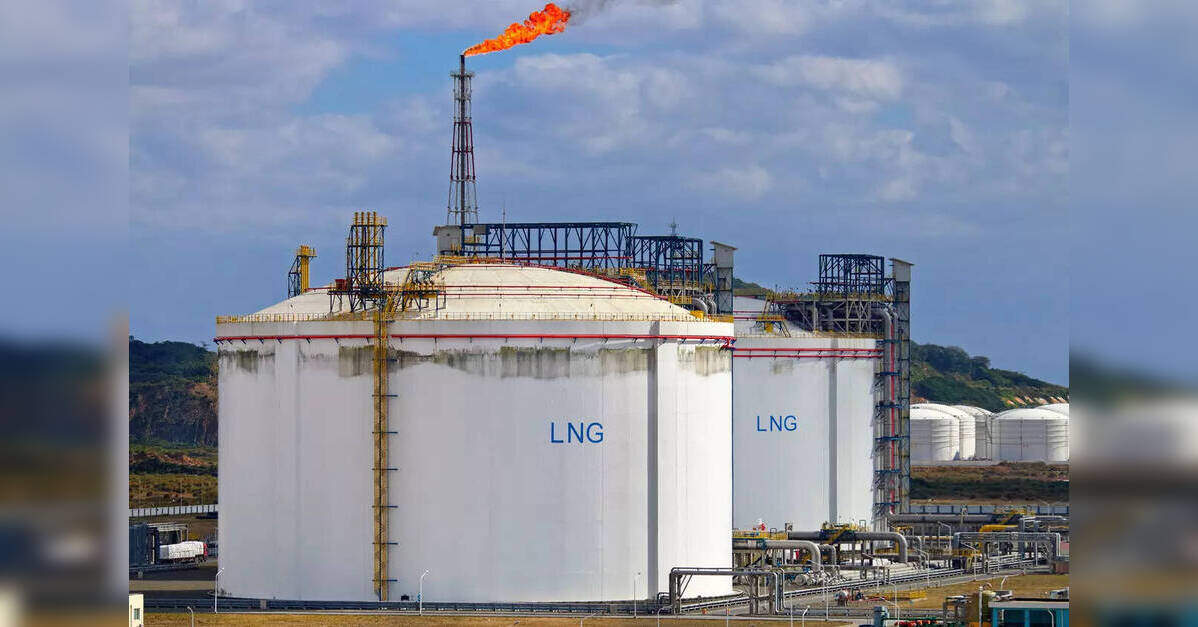
The United States has firmly cemented its position as a global energy powerhouse, achieving an unprecedented milestone in 2025 by exporting over 100 million metric tons (mmt) of liquefied natural gas (LNG) within a single year. This historic accomplishment, with total exports reaching 111 mmt, not only surpassed its closest competitor, Qatar, by a significant 20 mmt, but also represented a remarkable 24% year-over-year growth. Accounting for roughly a quarter of global LNG shipments, this surge underscores a fundamental shift in the international energy landscape, presenting compelling opportunities and strategic considerations for investors navigating the complex oil and gas markets.
The Ascendance of US LNG: A Structural Shift
The rapid expansion of US LNG exports is a testament to both strategic infrastructure development and robust market demand. In just nine years, the nation transitioned from negligible LNG exports to becoming the world’s largest supplier, validating its “free on board” sales model and the reliability of its gas supplies. A key driver of this impressive growth in 2025 was the rapid ramp-up of new facilities, notably Venture Global’s Plaquemines facility. This critical plant, now the country’s second-largest export terminal, contributed 16.4 mmt in its first year of operation after initiating its inaugural cargo in December 2024. The operational efficiency across existing terminals, coupled with the swift commissioning of new capacity, propelled the US to set five monthly production records throughout 2025, culminating in a single-month record of 11.5 mmt in December.
This sustained output illustrates a deep structural change in global energy flows. The ability of the US to consistently deliver large volumes of LNG provides crucial energy security for importing nations, particularly as geopolitical dynamics continue to influence traditional supply routes. For investors, this signifies a sector underpinned by strong fundamentals and long-term growth prospects, distinct from the more volatile crude oil market.
Navigating Market Volatility Amidst LNG Strength
Against a backdrop of fluctuating crude oil prices, the consistent performance of the US LNG sector offers a compelling narrative. As of today, Brent crude trades at $90.01, reflecting a -0.46% decline, while WTI crude stands at $86.38, down -1.19%. This recent market movement follows a significant downturn, with Brent having shed nearly 20% from its late March peak of $118.35. Such volatility naturally leads investors to scrutinize the broader energy market, with many currently asking about the immediate direction of WTI and what the price of oil per barrel might be by the end of 2026. While these questions are critical for broad energy exposure, the LNG market presents a somewhat different risk-reward profile, driven by long-term contracts and geopolitical demand rather than purely short-term speculative movements.
The sustained demand for US LNG, particularly from Europe, provides a degree of insulation from the immediate pressures felt in the crude market. This divergence highlights the importance of a diversified energy investment strategy. While the macro sentiment from crude prices can influence the broader energy complex, the specific drivers for LNG, such as new liquefaction capacity and strategic energy security objectives, offer a distinct investment thesis.
Strategic Demand and Future Expansion Pathways
Europe remained the dominant destination for US LNG in 2025, absorbing 9 mmt in December alone as the Northern Hemisphere winter intensified and the continent continued its efforts to reduce reliance on Russian gas. This strategic shift has seen nations like Turkey significantly increase their purchases, taking 1.45 mmt in December, demonstrating the vital role US LNG plays in continental energy security. Beyond Europe, emerging markets also represent crucial demand centers; Egypt, facing domestic natural gas shortages, continues to import significant volumes, acquiring 0.78 mmt in December. While Asian imports saw a slight dip in December to 1.23 mmt from 1.75 mmt in November, the long-term growth trajectory in the region remains robust. The Americas region also saw steady demand, taking 0.42 mmt.
Looking ahead, the US is poised for further expansion. Plaquemines is targeting full operational capacity this year, while Cheniere’s smaller modular plants are expected to reach or accelerate towards full volume. Moreover, the first train at Golden Pass LNG, a joint venture between QatarEnergy and Exxon Mobil, is projected to commence production in the first quarter of 2026. Experts predict that these new capacities could add another 20 mmt to annual US LNG production this year, reinforcing the nation’s leadership in the global gas market and offering continued tailwinds for related energy investments.
Key Upcoming Catalysts for Energy Investors
For investors focused on the evolving energy landscape, the coming weeks hold several critical data releases and events that will provide further clarity on market direction. Tomorrow, April 21st, the OPEC+ JMMC Meeting will be closely watched for any signals regarding crude oil production policy, which can set the tone for the entire energy sector. This will be followed by the EIA Weekly Petroleum Status Reports on April 22nd and April 29th, offering insights into US oil and gas inventories, refining activity, and demand trends. Similarly, the Baker Hughes Rig Count on April 24th and May 1st will indicate drilling activity, a bellwether for future production levels. Meanwhile, API Weekly Crude Inventory reports on April 28th and May 5th will provide additional, earlier insights into US crude stocks.
Perhaps most importantly for long-term outlooks, the EIA Short-Term Energy Outlook (STEO) on May 2nd will offer updated projections for crude oil, natural gas, and refined products through 2026. This comprehensive report will be invaluable for investors seeking to refine their year-end price predictions and understand the broader supply-demand balances influencing both crude and natural gas markets. Given the robust expansion of US LNG, these upcoming reports will be crucial for assessing how this increased output integrates into the overall energy matrix and impacts the investment prospects across the sector.


