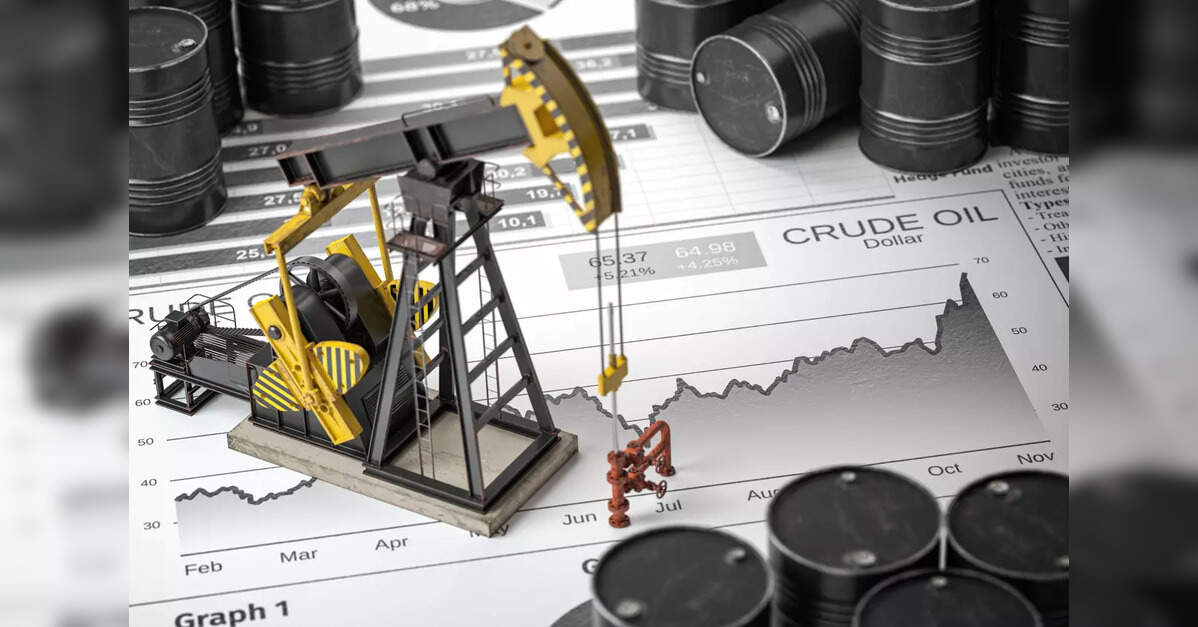
The global crude oil market is once again navigating a treacherous landscape, with prices experiencing significant downward pressure in recent weeks. Investors are grappling with a complex confluence of persistent oversupply concerns, evolving geopolitical tensions, and the lingering specter of demand-side challenges. This volatility is not new, but its recent intensity, highlighted by a nearly 20% drop in Brent crude prices over the past two weeks, demands a fresh look at the underlying drivers and what lies ahead for energy investors.
The Current Market Landscape: A Volatile Reality
As of today, Brent Crude trades at $90.24, down 0.21% from its open, with an intraday range of $93.87 to $95.69. West Texas Intermediate (WTI) Crude follows a similar trajectory, currently at $86.68, reflecting an 0.85% decrease and ranging between $85.50 and $87.49. This snapshot captures a market under duress, especially when considering the recent trajectory: Brent crude has plummeted from $118.35 on March 31st to $94.86 just yesterday, representing a staggering $23.49 or 19.8% decline in little more than two weeks. This sharp correction underscores the market’s sensitivity to perceived imbalances between supply and demand.
Early year analysis from January 2026 had already flagged oversupply concerns and tariff-related uncertainties as significant headwinds, contributing to what was then noted as crude oil’s worst annual decline since 2020. While the specific price points have shifted dramatically since those early 2026 predictions of range-bound prices around $60, the fundamental anxieties persist. The market is still contending with the ramifications of abundant supply meeting, at times, uncertain demand growth, exacerbated by global economic crosscurrents. For investors, this means vigilance is paramount, as rapid price swings can erode or create substantial value.
Geopolitical Undercurrents and Supply Glut Dynamics
Geopolitical tensions remain a potent, albeit unpredictable, force in the oil market. While sanctions against major producers like Russia and Iran, alongside blockades on Venezuelan crude, theoretically aim to restrict supply, their real-world impact is often more nuanced and complex. The market has observed situations where large volumes of Russian crude, for instance, have been reported floating off the coast of China in tankers due to a lack of immediate buyers. This phenomenon, a direct consequence of disrupted traditional trade routes and buyer hesitancy, effectively contributes to a perceived global oversupply even amidst official sanctions.
Analysts had previously suggested that any truce emerging between Russia and Ukraine could introduce further weakness into crude prices by potentially unlocking additional supply or reducing geopolitical risk premiums. While a definitive resolution remains elusive, the market is constantly weighing such possibilities. The interplay between these high-stakes geopolitical maneuvers and the physical movement of crude dictates not only price volatility but also the very structure of global energy trade. Investors must therefore monitor these developments closely, as shifts in policy or conflict status can rapidly alter supply-demand balances.
Forward Gaze: Key Events Shaping Investor Decisions
For investors asking about the future direction of WTI or the overall price of oil by year-end 2026, the upcoming energy calendar provides critical signposts. The next two weeks are packed with events that could significantly influence market sentiment and price discovery:
- **OPEC+ JMMC Meeting (April 21):** This meeting is a crucial determinant of supply policy. Any indication of production adjustments, either cuts to support prices or increases responding to perceived demand, will send immediate ripples through the market. Given the recent price decline, the pressure on OPEC+ to defend current price levels will be intense.
- **EIA Weekly Petroleum Status Reports (April 22 & April 29):** These reports from the U.S. Energy Information Administration are indispensable for understanding real-time inventory levels, refinery utilization, and demand indicators in the world’s largest oil consumer. Unexpected builds in crude or gasoline inventories, or weakening demand signals, could reinforce bearish sentiment.
- **API Weekly Crude Inventory (April 28 & May 5):** Preceding the official EIA data, the American Petroleum Institute’s weekly figures offer an early glimpse into U.S. inventory changes, often setting the tone for the trading week.
- **EIA Short-Term Energy Outlook (May 2):** This comprehensive report provides updated forecasts for supply, demand, and prices across various energy commodities. It will be a key document for investors seeking to refine their longer-term outlooks for the remainder of 2026, addressing questions about anticipated price trajectories.
These events, collectively, offer the data points necessary to gauge the ongoing tug-of-war between fundamental supply and demand factors, providing crucial context for investors making strategic allocations in the energy sector.
Investor Sentiment and The Path Ahead
The pervasive question among investors, “is WTI going up or down?” reflects the profound uncertainty currently gripping the market. Beyond the immediate price movements, there’s a deeper inquiry into the factors that will determine crude’s trajectory through the end of 2026. While early 2026 forecasts from some analysts suggested that crude prices might remain range-bound for a few months due to demand-side challenges, the current market dynamic indicates greater volatility than initially anticipated.
The global economic outlook remains a primary driver of demand-side challenges. Slower-than-expected growth in major economies, or continued inflationary pressures leading to tighter monetary policies, could dampen crude consumption. Conversely, a robust economic recovery, particularly in Asian markets, could provide significant upward impetus. While lower crude prices historically tend to support economies, such as India’s, the current environment is characterized by a delicate balance of risks. Investors are keenly watching for signs of sustainable demand recovery, alongside the willingness of major producers to manage supply. The path ahead will be dictated by this intricate dance between geopolitical stability, economic resilience, and coordinated supply management, making informed analysis of proprietary market data and upcoming events more critical than ever.


