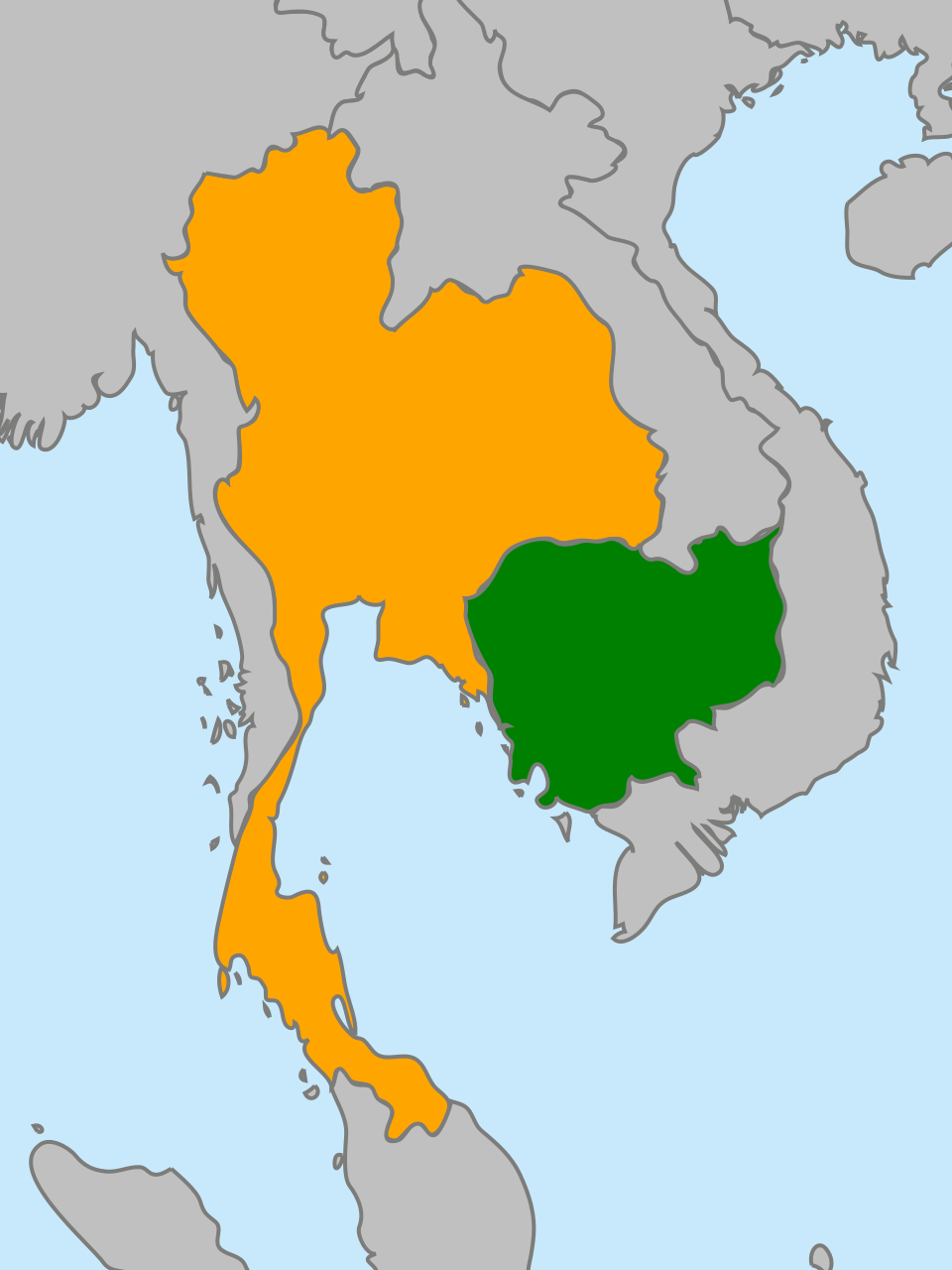
The simmering tensions between Cambodia and Thailand, often framed as a simple border dispute, present a complex challenge for energy investors eyeing Southeast Asian prospects. Beneath the surface of territorial claims lies a more fundamental issue: a profound democratic asymmetry between the two nations that continuously obstructs a stable resolution. This enduring political instability, particularly Cambodia’s entrenched autocracy and its reported transformation into a “mafia state,” casts a long shadow over the development of potentially lucrative offshore oil and gas fields, injecting significant long-term risk into regional energy investment strategies.
Geopolitical Gridlock Stifles Offshore Potential
The heart of the energy investment dilemma lies in the contested Joint Development Area (JDA) in the Gulf of Thailand, believed to hold substantial hydrocarbon reserves. However, the political friction between Phnom Penh and Bangkok has prevented meaningful progress for decades. Thailand, despite its history of coups and political upheavals, maintains a critical element of democracy: competitive elections where outcomes are genuinely uncertain. This accountability, albeit fragile, provides a pathway for public pressure and, theoretically, for leaders to negotiate with a mandate. In stark contrast, Cambodia, under Hun Sen’s decades-long rule, operates as a deeply entrenched autocracy. Elections are effectively predetermined, stripping them of democratic significance, as noted by numerous international observers. This fundamental difference in governance creates an environment where stable, legitimate agreements on resource sharing are exceedingly difficult to forge. For investors, this translates into an intractable political risk, where the legal and operational certainty required for large-scale upstream projects remains elusive.
Market Realities and Investor Concerns Amidst Regional Risk
While the Cambodia-Thai dispute is a localized issue, it contributes to the broader tapestry of global geopolitical risks that influence energy markets. Investors are constantly evaluating where oil prices are headed, with questions like “Is WTI going up or down?” frequently surfacing. As of today, Brent crude trades at $90.03, experiencing a slight dip of 0.44% within a daily range of $93.87 to $95.69. Similarly, WTI crude stands at $86.32, down 1.26%, with its daily range between $85.50 and $87.47. This minor daily fluctuation comes after a more significant downward trend for Brent over the past two weeks, dropping from $118.35 on March 31st to $94.86 by April 20th. This broader market movement reflects a complex interplay of global supply-demand dynamics and economic sentiment, with regional geopolitical tensions adding a layer of risk premium rather than driving short-term price shifts. However, for companies with direct or indirect exposure to Southeast Asian exploration, the protracted political deadlock between Cambodia and Thailand is a critical factor in long-term valuation models. The question of “what will the price of oil per barrel be by end of 2026?” is intrinsically linked to the cumulative impact of such regional instabilities on global supply and investment flows.
Upcoming Catalysts and the Persistent Shadow of Instability
Looking ahead, the energy sector calendar is packed with events that will shape near-term market sentiment, yet the Cambodia-Thai situation will continue to simmer as a structural regional challenge. Investors will closely watch the OPEC+ JMMC Meeting on April 21st for any signals on production policy, followed by the EIA Weekly Petroleum Status Reports on April 22nd and April 29th, which provide crucial insights into U.S. inventory levels. The EIA Short-Term Energy Outlook on May 2nd will offer a broader forecast. While these global events directly impact price discovery, the Cambodian-Thai dispute’s resolution remains dependent on internal political developments. Thailand’s scheduled popular consultation in April 2026, if genuinely competitive, could usher in a more stable government with a clearer mandate. However, this potential for increased Thai democratic stability faces a significant hurdle in Cambodia’s autocratic and increasingly opaque governance. The deep-seated issues stemming from Cambodia’s “mafia state” characteristics, where the regime’s survival is reportedly intertwined with transnational criminal networks, create an environment antithetical to transparent negotiations and reliable agreements. This means that even with a more stable Thai government, the path to unlocking the JDA’s potential remains fraught with political and governance risks, pushing any significant development further into the future.
Investment Implications for Regional Upstream Opportunities
For investment analysts and portfolio managers, the Cambodia-Thai conflict serves as a potent reminder of how political structure dictates economic opportunity, especially in resource-rich regions. The democratic asymmetry ensures that a mutually agreeable, legally sound framework for the JDA’s development remains elusive. Thailand’s imperfect yet genuine electoral process offers some hope for future stability and legitimacy in its dealings, but Cambodia’s entrenched autocracy and its reported financial reliance on illicit networks present an enduring obstacle. This makes long-term capital deployment in the contested Gulf of Thailand highly speculative. Energy companies evaluating exploration and production opportunities in Southeast Asia must factor in this protracted political deadlock, which imposes significant delays and regulatory uncertainties. The absence of robust democratic institutions and the prevalence of opaque governance in one of the key parties fundamentally undermines the security of any potential investment. Therefore, while the JDA holds significant promise, it will likely remain an untapped resource until a more profound shift towards democratic governance and stability occurs within Cambodia, a prospect that currently appears distant.