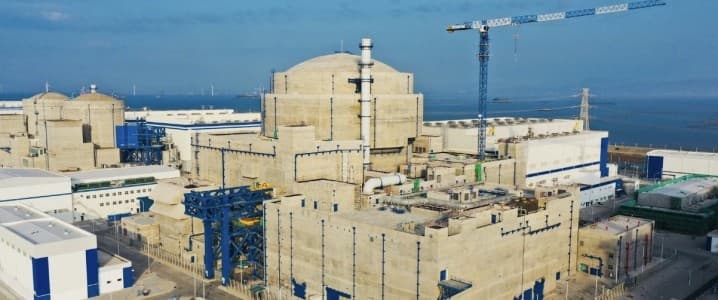
Turkey’s recent move to secure an additional $9 billion in financing from Russia for the Akkuyu nuclear power plant is far more than a simple infrastructure update; it is a profound strategic declaration. This substantial commitment, largely slated for deployment in 2026 and 2027 with $4-5 billion flowing next year alone, solidifies Turkey’s long-term energy trajectory, deeply intertwining its future with Russian expertise and capital. For investors tracking global energy shifts, this development signals a pragmatic, albeit complex, approach to energy security and diversification that warrants close examination, particularly against a backdrop of volatile global commodity markets and an accelerating clean energy transition.
Akkuyu: The Unshakeable Anchor of Turkish-Russian Energy Ties
The Akkuyu nuclear power plant, Turkey’s inaugural nuclear facility, stands as a testament to the enduring strategic partnership between Ankara and Moscow. Unlike conventional projects, Akkuyu operates under a “build-own-operate” model, where Russia’s state-owned Rosatom shoulders the financial risk, retains ownership, and will manage operations for decades. This unique structure proved its resilience when Turkey’s second nuclear project at Sinop faltered due to escalating costs and political hurdles, leaving only Rosatom’s commitment to Akkuyu unwavering. With the plant now expected to commence operations in 2026 after previous delays, this $9 billion injection of capital underscores Russia’s continued influence, not just as a gas supplier, but as a long-term strategic energy partner. Once fully operational, Akkuyu is projected to meet roughly 10 percent of Turkey’s electricity demand, providing critical baseload power and significantly reducing the nation’s reliance on often-volatile natural gas imports.
Navigating Volatility: Market Signals and Turkey’s Strategic Imperative
The timing of this significant financing commitment arrives amidst a dynamic global energy market, where price stability remains a paramount concern for nations and investors alike. As of today, Brent Crude trades at $90.03, reflecting a -0.44% shift in the day’s range of $93.87-$95.69. Similarly, WTI Crude stands at $86.32, down -1.26% within a daily range of $85.5-$87.47. This snapshot follows a notable trend over the past 14 days, where Brent crude has seen a substantial decline from $118.35 on March 31st to $94.86 on April 20th, before settling at current levels. Such price volatility, driven by geopolitical tensions and supply-demand dynamics, reinforces Turkey’s strategic imperative for securing reliable, predictable energy sources. While Turkey has made commendable strides in renewable energy, doubling solar capacity in under three years and reaching an installed renewable capacity of 74 gigawatts, nuclear power fills a distinct, non-substitutable role. It offers consistent baseload power, insulates against gas price fluctuations, and provides a foundational element of energy independence that intermittent renewables alone cannot deliver. Investors recognize that this dual approach, balancing green initiatives with robust nuclear capacity, is a pragmatic response to both climate goals and the harsh realities of energy security.
Investor Horizon: Upcoming Catalysts and Long-Term Value
For discerning investors, the prevailing sentiment often revolves around critical questions: “What do you predict the price of oil per barrel will be by end of 2026?” and “Is WTI going up or down?” These inquiries highlight a natural focus on short-term market movements. However, Turkey’s long-term nuclear investment, alongside other strategic energy plays, offers a different lens for value assessment. Upcoming calendar events will provide crucial data points that could influence these very price predictions. For instance, the OPEC+ JMMC Meeting scheduled for today, April 21st, carries significant weight, potentially signaling shifts in global crude production quotas. Following this, the EIA Weekly Petroleum Status Reports on April 22nd and April 29th will offer vital insights into U.S. inventory levels, a key indicator for demand and supply balances. Further out, the EIA Short-Term Energy Outlook on May 2nd will provide comprehensive forecasts for 2026, offering a macroeconomic backdrop to individual investment decisions. Turkey’s commitment to Akkuyu, with its 2026 operational target, demonstrates a national strategy to mitigate exposure to such short-term market swings by securing a reliable, domestically-controlled baseload power source. This long-term perspective on energy security, underpinned by substantial foreign investment and a clear operational timeline, presents a stable asset class for investors looking beyond immediate price volatility, signaling a diversification of risk in national energy portfolios.
The Anatomy of Turkish Energy Pragmatism
Turkey’s energy strategy, while publicly emphasizing diversification and renewable credentials—including a 2053 net-zero target and ambitious solar projects with partners like Saudi Arabia’s ACWA Power—is fundamentally rooted in ruthless pragmatism. The $9 billion Russian financing for Akkuyu underscores this intricate balancing act. It is not simply about choosing Moscow over Brussels or Washington; it is about maximizing leverage and ensuring national energy resilience. Turkey is meticulously constructing an energy system where Russian gas, Russian nuclear financing, Middle Eastern solar capital, European grid integrations, and robust domestic renewables all coexist. This multifaceted approach provides Ankara with an unparalleled degree of bargaining power and strategic flexibility on the global stage. While discussions continue with South Korea, China, and the United States regarding future nuclear projects in regions like Sinop and Thrace, Russia’s tangible commitment, with reactors already under construction and significant financing now deployed, sets a high bar. For investors, this pragmatic blend of geopolitical maneuvering and energy resource aggregation suggests a robust, albeit complex, long-term energy outlook for Turkey, one that continues to integrate diverse partners to secure its energy future rather than relying on a singular ideological path.


