Delhi’s Fuel Policy: A Bellwether for Demand Dynamics?
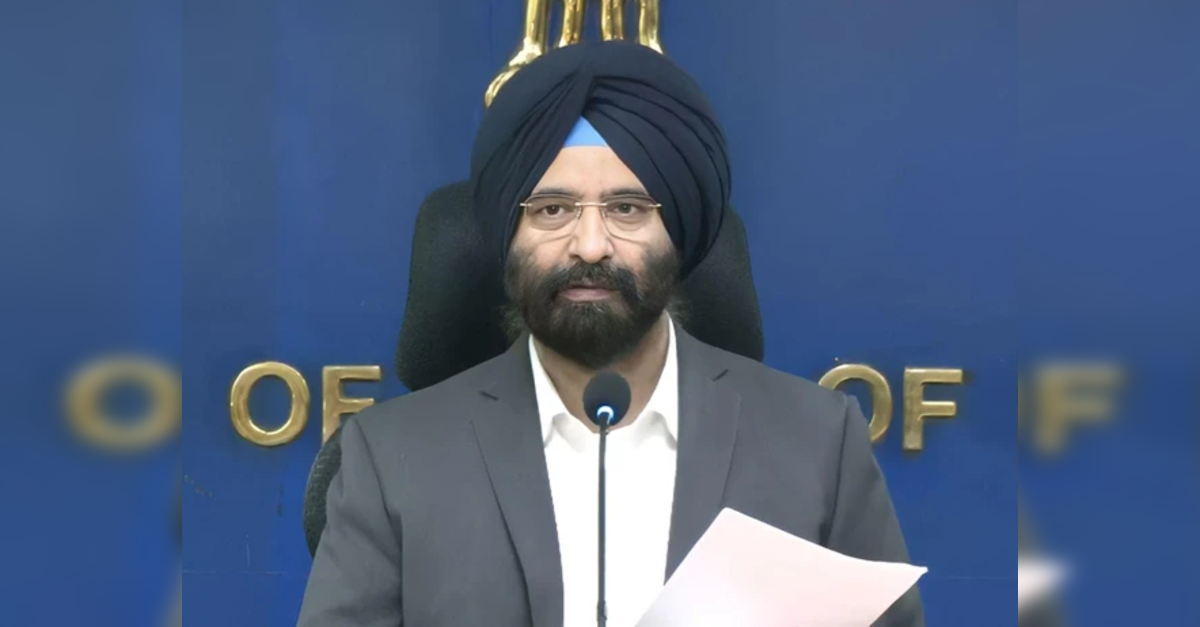
The energy investment landscape is increasingly shaped by a complex interplay of global supply-demand fundamentals, geopolitical shifts, and crucially, evolving environmental regulations at every level of government. A recent development in Delhi, India, serves as a compelling case study. The local government has affirmed its commitment to the ‘No Pollution Under Control (PUC), No Fuel’ policy, even as broader Graded Response Action Plan (GRAP) IV restrictions are eased. This stringent measure, which prohibits vehicles without a valid PUC certificate from operating and, by extension, refueling, represents a localized but potent force impacting fuel sales. From an investor’s perspective, this isn’t just a regional headline; it’s a potential harbinger of stricter environmental enforcement globally, signaling a future where regulatory compliance directly dictates fuel consumption. The policy’s immediate impact was significant, driving the issuance of over 212,000 new PUC certificates shortly after its strict enforcement began. This rapid uptake underscores the power of regulatory mandates to swiftly alter consumer behavior and, consequently, localized demand for refined petroleum products.
Navigating Volatility: Current Market Snapshot and Investor Concerns
In a global market grappling with significant volatility, even localized demand shifts can reverberate through the system. Investors are keenly watching every data point, especially given the recent turbulence in crude prices. As of today, Brent crude trades at $90.06, reflecting a marginal decline of 0.41% within a day range of $93.87 to $95.69. Similarly, WTI crude sits at $86.5, down 1.05% with a daily range of $85.5 to $87.47. Gasoline prices currently stand at $3.03, experiencing a slight dip of 0.33% within a $3.00 to $3.05 range. This current stability, however, comes on the heels of a sharp correction; Brent crude, for instance, has shed a substantial $23.49, or nearly 20%, plummeting from $118.35 on March 31st to $94.86 just yesterday. Such dramatic swings underscore the fragility of market sentiment. Our proprietary reader intent data reveals a prevalent question among investors: “Is WTI going up or down?” This reflects the pervasive uncertainty surrounding short-term price movements. While Delhi’s policy might seem geographically contained, its implications for refined product demand in a major consumption hub like India cannot be entirely dismissed, especially when global supply-demand balances are so finely tuned. Any policy that could potentially curtail fuel demand, even marginally, adds another layer of complexity for investors trying to predict market direction.
Regulatory Headwinds and the Road Ahead for Energy Investments
The sustained enforcement of Delhi’s ‘No PUC, No Fuel’ policy highlights a broader trend: the increasing commitment of governments worldwide to environmental protection, often with direct consequences for the fossil fuel sector. Inspections in Delhi revealed significant issues, with numerous PUC centers non-operational and 12 found using faulty equipment. Authorities responded by suspending these centers and issuing strict warnings, demonstrating a firm hand in ensuring compliance. Furthermore, the approval of four new vehicle emission testing centers and additional facilities for commercial vehicles indicates an expansion of regulatory capacity and oversight. This isn’t merely about current enforcement; it’s about building out the infrastructure to sustain and broaden such policies. For oil and gas investors, this translates into a heightened regulatory risk. Companies operating in refining, distribution, and even upstream segments must now factor in the potential for similar, or even more expansive, environmental mandates that could suppress demand for their products. The proposed allocation of ₹100 crore for water body rejuvenation, while separate, reinforces the government’s holistic approach to environmental measures, signaling a long-term strategic pivot towards greener initiatives. This holistic regulatory push demands that investors broaden their analysis beyond traditional supply-demand metrics to include an increasingly impactful environmental policy dimension.
Key Catalysts: Upcoming Events Shaping the Oil & Gas Landscape
While local policies like Delhi’s provide crucial micro-insights, the broader trajectory of oil and gas investments will also be heavily influenced by a series of upcoming macro-level events. The next 14 days are particularly dense with market-moving catalysts that investors should closely monitor. Tomorrow, April 21st, the OPEC+ Joint Ministerial Monitoring Committee (JMMC) meeting will take place, offering potential signals on future production quotas and supply strategies. This is a critical event for those asking about the future price of oil, including the end-of-2026 outlook. Following this, the EIA Weekly Petroleum Status Report on April 22nd and April 29th will provide essential data on U.S. crude oil and product inventories, offering a real-time pulse on demand and supply dynamics. The Baker Hughes Rig Count, scheduled for April 24th and May 1st, will give insights into North American drilling activity, a key indicator for future production capacity. Further data points from the API Weekly Crude Inventory on April 28th and May 5th will offer preliminary inventory figures. Finally, the EIA Short-Term Energy Outlook on May 2nd stands as a seminal release, providing comprehensive forecasts that will undoubtedly influence investor sentiment and long-term price predictions. Integrating the insights from these global events with an understanding of localized demand pressures, such as those emerging from Delhi’s environmental policies, is essential for constructing a robust investment strategy in today’s dynamic energy market.


