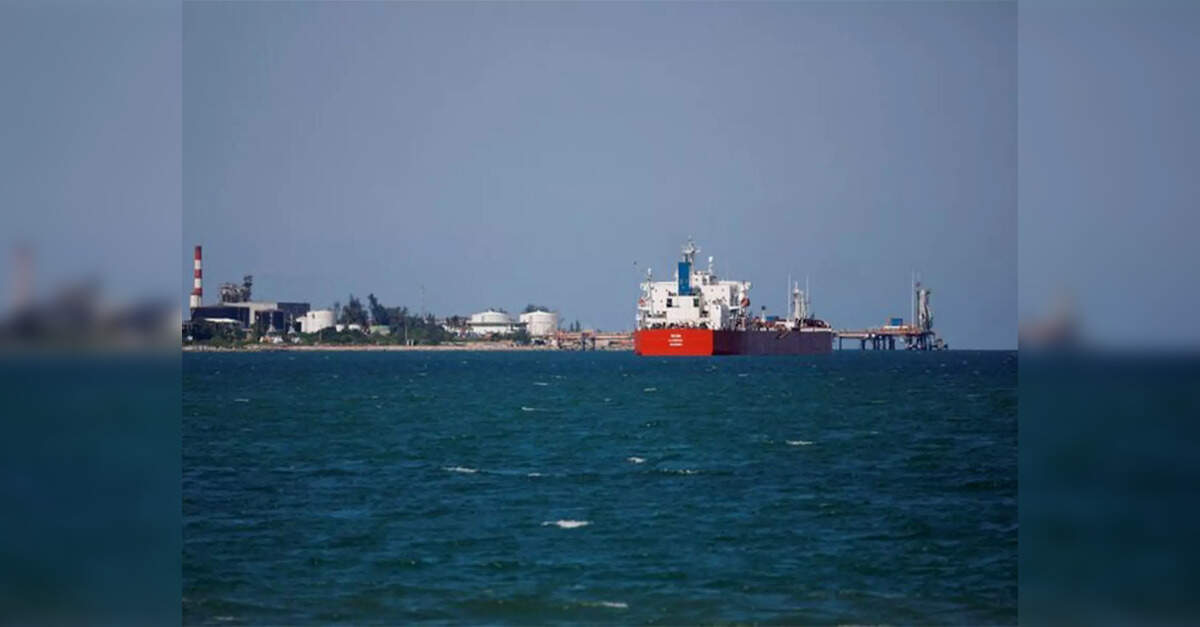
The global oil market is once again confronting escalating geopolitical tensions, this time centered on Venezuela. Recent actions by the United States Coast Guard, involving the active pursuit and interception of vessels identified as part of a “dark fleet” engaged in Venezuelan oil trade, signal a significant hardening of Washington’s stance. For investors, this isn’t merely a headline; it introduces a renewed layer of supply risk and uncertainty into an already volatile market. While crude benchmarks have recently seen downward pressure, the aggressive enforcement of sanctions near a major oil-producing nation warrants close attention, potentially setting the stage for unexpected price movements and demanding a re-evaluation of market fundamentals.
Geopolitical Tensions Escalate: The ‘Dark Fleet’ Confrontation
The US government has dramatically ramped up its enforcement actions against what it describes as a “shadow fleet” facilitating sanctioned oil shipments. The recent pursuit of the vessel “Bella 1” in international waters off Venezuela, following its refusal to comply with US Coast Guard directives, marks a direct confrontation. Authorities confirmed the vessel was sanctioned due to its ties to Iranian oil and was reportedly en route to load Venezuelan crude, operating under a false flag and subject to a judicial seizure order. This incident, notably the second such interception in as many days, underscores a deliberate and intensified strategy by the US to disrupt Venezuela’s oil exports and its alleged evasion of sanctions.
Caracas has vehemently denounced these actions, labeling them as “acts of piracy” and a direct affront to its sovereignty. The Venezuelan Foreign Ministry accused the US of “theft and hijacking” and even the “forced disappearance” of the crew, framing the interventions as part of a “colonialist model” aimed at seizing the nation’s energy resources and undermining its leadership. This clash of narratives – US enforcement against sanctions evasion versus Venezuelan condemnation of aggression – highlights the deep chasm in geopolitical relations and the potential for further escalation. President Trump’s recent directive for a “total and complete” blockade of sanctioned tankers entering or leaving Venezuela, coupled with stark warnings of a large-scale naval presence, reinforces the gravity of the situation, directly challenging Venezuela’s ability to monetize its vast oil reserves.
Market Reaction and the Shifting Price Landscape
Despite the palpable increase in geopolitical risk surrounding Venezuelan oil supply, the immediate market reaction has been counterintuitive, with crude benchmarks experiencing significant downward pressure. As of today, Brent Crude trades at $91.87, marking a sharp 7.57% decline, while WTI Crude has fallen by 7.86% to $84. This daily volatility follows a broader trend; over the past fourteen days, Brent has shed approximately $20.91, dropping by 18.5% from its earlier high of $112.78. Gasoline prices have also seen a notable dip, currently at $2.95, down 4.85% today.
This apparent disconnect raises critical questions for investors. Is the market currently underpricing the potential for supply disruptions from Venezuela, or are other macroeconomic headwinds, such as global demand concerns or an easing of broader supply fears, outweighing the geopolitical risk premium? The significant daily and bi-weekly declines suggest that while the Venezuelan situation is a clear upside risk to prices, it is currently being overshadowed by other factors. However, the aggressive nature of the US enforcement actions means this risk factor is not to be dismissed; any tangible reduction in the ‘dark fleet’s’ operational capacity could, in a tightly supplied market, swiftly translate into upward price pressure, challenging the current bearish sentiment.
Investor Focus: Navigating Supply Uncertainty and Future Price Trajectories
For many investors, the paramount concern remains the future trajectory of oil prices, especially given the current volatility and geopolitical complexities. Our proprietary data indicates a strong investor interest in understanding where oil prices per barrel might settle by the end of 2026, and how current OPEC+ production quotas factor into this outlook. The escalating situation in Venezuela directly impacts these considerations. While Venezuelan crude output has been significantly curtailed by sanctions for years, the ‘dark fleet’ has provided a critical, albeit illicit, avenue for some supply to reach the market. Any successful US efforts to cripple this shadow network effectively removes a marginal source of global supply, tightening balances at the periphery.
This added supply uncertainty from Venezuela complicates the already intricate supply-demand equation that investors use to project future prices. It means that even small disruptions or reductions in ‘dark fleet’ activity could have an outsized impact on sentiment and prices, especially if global inventories remain constrained. Investors are keenly aware that the interplay between sovereign production decisions, as reflected in OPEC+ quotas, and unexpected geopolitical disruptions like the Venezuelan tanker pursuits, will be key determinants of oil’s value proposition over the next 12-18 months. Therefore, assessing the durability and effectiveness of the ‘dark fleet’ operations becomes a crucial input for any serious long-term oil price model.
Upcoming Events: A Catalyst for Volatility?
The immediate future holds several critical events that could either amplify or mitigate the market’s response to the Venezuelan situation. Today, April 18th, the OPEC+ Full Ministerial Meeting is scheduled, representing a pivotal moment for global oil supply policy. Given the current price volatility and the emerging geopolitical friction surrounding Venezuela, the market will be keenly watching for any adjustments to production quotas or forward guidance from the alliance. Will OPEC+ members perceive the Venezuelan enforcement actions as a potential tightening of supply, necessitating a recalibration of their own output strategies, or will broader demand concerns dominate their deliberations?
Beyond today’s crucial meeting, the market will quickly shift focus to the upcoming inventory reports. The API Weekly Crude Inventory report on April 21st and the EIA Weekly Petroleum Status Report on April 22nd will provide fresh insights into US crude stockpiles and overall petroleum demand. In an environment where every barrel matters and supply disruption risks are elevated, these data points will be scrutinized for signs of tightening or loosening global balances. Any unexpected drawdowns, especially in the context of persistent geopolitical friction around Venezuela, could trigger sharp price reactions, underscoring the interconnectedness of fundamental supply data and geopolitical flashpoints for oil and gas investors.


