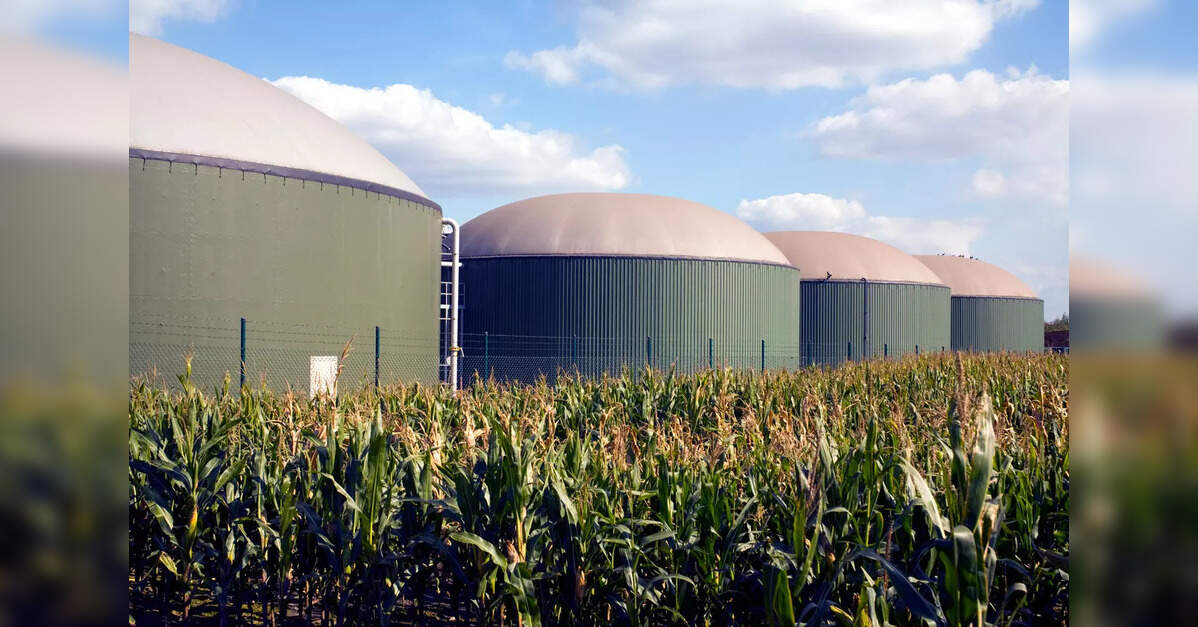
The Indian biogas sector is poised for a transformative period, with projections pointing to over ₹5,000 crore in fresh investments by 2026-27. This significant capital inflow, highlighted by the Indian Biogas Association, underscores a burgeoning confidence in sustainable energy solutions within one of the world’s fastest-growing economies. For energy investors, this represents a strategic opportunity to diversify portfolios and tap into a market driven by both environmental imperatives and robust government support. While traditional oil and gas markets grapple with inherent volatility, India’s pivot towards a cleaner energy mix, with biogas at its forefront, offers a compelling narrative for long-term growth and stable returns. Our analysis delves into the underlying drivers, market dynamics, and forward-looking indicators shaping this promising landscape.
India’s Biogas Boom: A ₹5,000 Crore Horizon
The commitment of over ₹5,000 crore in investments towards India’s biogas sector by 2026-27 signals a clear inflection point for the nation’s green energy transition. This substantial figure is not merely speculative; it builds on tangible progress already observed in the field. Data indicates that over 100 Compressed Biogas (CBG) plants have successfully been commissioned, demonstrating a functional and scalable model. More specifically, 94 operational CBG plants collectively sold over 31,400 tonnes of CBG during FY 2024-25. This volume provides concrete evidence of increasing market uptake and operational viability, moving beyond pilot projects to significant commercial activity.
Beyond new plant installations, there is immense untapped potential within existing infrastructure. Millions of small-scale traditional biogas digesters across the country offer significant room for efficiency improvements and capacity utilization. Government programs are actively scaling up support for medium-sized plants, which are recognized for their multi-faceted benefits, including providing cleaner cooking fuel for rural communities, generating local employment, and producing organic manure. This dual approach – developing new, larger facilities while optimizing existing ones – creates a comprehensive growth trajectory for the sector, ensuring both rapid expansion and foundational stability.
Policy Tailwinds and Economic Incentives Driving Growth
A critical catalyst for this projected investment surge is the evolving policy landscape. The Indian government’s proactive stance, particularly with the relaxed Goods and Services Tax (GST) regime, is set to significantly enhance project viability. Industry experts anticipate that a 7% reduction in the applicable GST rate for the CBG sector will directly translate into a 4-5% increase in new investments over the short to medium term. This fiscal incentive not only improves the internal rate of return for developers but also signals a strong governmental commitment to fostering a conducive business environment for renewable energy.
The ripple effects of such policy support are expected to extend across the entire industry value chain, generating a much larger multiplier effect. Consequently, the CBG industry’s market size is projected to expand dramatically, soaring to an estimated $3-4 billion in 2026 and further escalating to approximately $5 billion by 2030. These figures underscore the robust economic rationale behind investing in India’s biogas sector, driven by a combination of favorable regulations, growing demand for sustainable energy, and a clear path to commercial scale.
Navigating Volatile Crude Markets: Biogas as a Diversifier
Against the backdrop of India’s green energy ambitions, the broader global energy market continues to exhibit significant volatility, presenting both challenges and opportunities for investors. As of today, Brent Crude trades at $91.87 per barrel, marking a 7.57% decline, with its daily range spanning $86.08 to $98.97. Similarly, WTI Crude stands at $84 per barrel, down 7.86%, fluctuating between $78.97 and $90.34. This recent downturn is part of a more substantial trend, with Brent crude having shed $20.91, or 18.5%, from $112.78 just 14 days ago. Gasoline prices have also followed suit, currently at $2.95, down 4.85% for the day.
This persistent instability in traditional hydrocarbon markets, characterized by sharp price swings and geopolitical sensitivities, highlights the inherent appeal of diversifying into less correlated asset classes. For investors seeking insulation from these dramatic fluctuations, India’s biogas sector offers a compelling alternative. Its growth is underpinned by domestic demand, supportive government policies, and a tangible shift towards energy independence, rather than being solely dictated by global supply-demand dynamics and geopolitical events. This provides a valuable counter-cyclical element within a broader energy investment portfolio, mitigating risk while capturing growth in a critical emerging market.
Anticipating Key Energy Events and Investor Sentiment
The coming weeks are packed with events that could further shape the global energy landscape, and our readers are keenly aware of these dynamics. We’ve seen a surge in questions regarding the future trajectory of oil prices, with many asking, “what do you predict the price of oil per barrel will be by end of 2026?” and inquiring about “OPEC+ current production quotas.” These questions directly underscore the market’s anxiety and the pressing need for clarity on supply management.
Indeed, the upcoming OPEC+ Ministerial Meeting scheduled for April 18th is a pivotal event, with potential decisions on production levels likely to influence crude prices significantly. Following this, the API Weekly Crude Inventory reports on April 21st and 28th, along with the EIA Weekly Petroleum Status Reports on April 22nd and 29th, will offer crucial insights into U.S. supply and demand. The Baker Hughes Rig Count on April 24th and May 1st will further inform market sentiment on future production capacity. While these events primarily impact traditional oil markets, their outcomes can indirectly influence investment appetite across the broader energy spectrum. A volatile crude market might, for instance, accelerate the shift towards stable renewable investments. For investors interested in specific energy companies, such as Repsol, whose performance is often linked to the broader market, understanding these macro trends is paramount. The clear investor intent data we capture confirms that diversification and understanding market drivers are top priorities.
Investment Outlook: Seizing the Green Energy Momentum
The convergence of robust policy support, demonstrated market uptake, and significant investment projections positions India’s biogas sector as a compelling opportunity for forward-thinking energy investors. The planned ₹5,000 crore capital injection by 2026-27 is a testament to the sector’s maturity and potential. While the global oil and gas markets continue to navigate periods of intense volatility, illustrated by recent crude price drops and upcoming critical OPEC+ decisions, India’s green energy initiatives offer a comparatively stable and high-growth alternative.
The economic benefits, including rural employment and cleaner fuel, coupled with a supportive regulatory framework like the relaxed GST regime, create a fertile ground for sustainable returns. Investors should carefully consider the strategic value of incorporating exposure to India’s burgeoning biogas industry within their portfolios. This is not merely an environmental play but a sound economic investment in a sector poised for exponential growth, offering a tangible hedge against the uncertainties of traditional energy markets and aligning with the global transition towards a more sustainable energy future.


