The strategic re-emergence of the Middle Corridor stands as a pivotal development in the Eurasian trade landscape, creating a vital transcontinental artery stretching from China, through Kazakhstan and across the Caspian Sea, to Europe. This ambitious network is rapidly evolving beyond a mere cargo route; it represents a fundamental reshaping of geopolitical and economic dependencies, particularly in the wake of global shifts post-February 2022. For savvy oil and gas investors, understanding the implications of this new artery extends beyond immediate crude flows, touching upon regional stability, diversified supply chains, and the long-term investment attractiveness of the Caspian region. Kazakhstan, leveraging its significant geographic position and infrastructure, is at the forefront of this transformation, laying groundwork that will influence energy logistics and investment decisions for decades to come.
Reshaping Eurasian Geopolitics and Trade Diversification
The Middle Corridor’s growing prominence signifies a deliberate and strategic pivot away from traditional northern transit routes, offering European and Asian companies faster and more secure movement of goods. This initiative, strongly championed by Kazakhstan and Azerbaijan, leverages critical land and sea infrastructure to create a resilient alternative. The broad support from international financial institutions, including the Asian Development Bank (ADB), the European Bank for Reconstruction and Development (EBRD), and the World Bank, underscores its long-term viability and strategic importance beyond commercial freight. This institutional backing provides a layer of de-risking for private sector investments, signaling a concerted international effort to fortify global supply chains. The numbers speak for themselves: container volumes are projected to reach 5.2 million tons, with the corridor’s capacity set to expand significantly to 10 million tons per year by 2027. This growth trajectory is not just about moving consumer goods; it fundamentally alters the strategic calculus for regional energy security and the potential for future energy transit, enhancing the overall investment profile of the Caspian basin.
Kazakhstan’s Infrastructure Catalyst: Private Capital Paving the Way
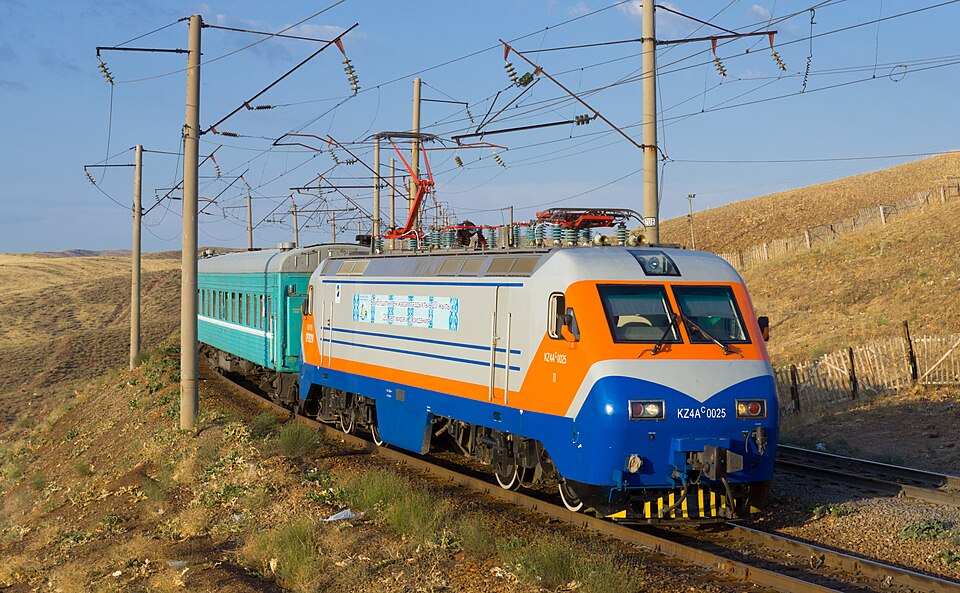
At the heart of the Middle Corridor’s physical manifestation is Kazakhstan’s robust infrastructure and the proactive engagement of private sector players. The nation currently boasts over 3,500 kilometers of strategic railway infrastructure connecting China directly to Caspian Sea ports, a critical backbone for this expanding network. A prime example of private capital driving this transformation is Kusto Group and its subsidiary, Kusto Logistics. Led by prominent Kazakh businessman Yerkin Tatishev, Kusto Logistics has emerged as a major player, investing substantially in an integrated logistics ecosystem. Their strategy, launched in 2024, includes the acquisition of its own rolling stock—specifically fitting platforms for multimodal rail and road transportation. More significantly for long-term investors, the company is leading the construction of a state-of-the-art logistics terminal in the Almaty region during 2025–2027. This hub will feature a container terminal, cross-docking facilities, and two temporary storage warehouse zones with integrated customs services, alongside a modern 15,000-square-meter warehouse to expand 3PL services. Such substantial, tangible investments in logistics infrastructure are foundational, not only for general cargo but also for laying the groundwork for more efficient and secure energy-related equipment and potentially even refined product transport in the future, enhancing the overall attractiveness of regional energy projects.
Navigating Current Volatility Amidst Long-Term Strategic Shifts
The broader energy market currently presents a volatile backdrop against which these long-term infrastructure plays are unfolding. As of today, Brent crude trades at $91.87, representing a sharp 7.57% decline within the day, with prices ranging between $86.08 and $98.97. WTI crude mirrors this downtrend, settling at $84, down 7.86%, with its daily range between $78.97 and $90.34. This recent dip is part of a broader correction, with Brent having shed $20.91, or 18.5%, since March 30th when it traded at $112.78. Gasoline prices are also feeling the pressure, currently at $2.95, a 4.85% drop. This significant market movement naturally leads to investor questions, and our proprietary reader intent data shows a recurring theme: “What do you predict the price of oil per barrel will be by end of 2026?” While the Middle Corridor’s direct impact on global crude prices might be nascent, its strategic value for regional stability and supply chain resilience cannot be overstated. By diversifying trade routes and bolstering infrastructure, it indirectly reduces geopolitical risk in a crucial energy-producing region, which can contribute to long-term price stability by ensuring more reliable access and lower transit costs for resources originating from or destined for the Caspian basin. This infrastructure development supports the broader investment thesis for Caspian energy assets, cushioning them against the sharp swings seen in daily spot prices.
Upcoming Events and the Strategic Outlook for Energy Investors
For investors focused on the energy sector, the coming weeks are packed with events that will shape short-term market dynamics, even as the Middle Corridor builds its long-term impact. Our calendar highlights several critical dates. The OPEC+ Full Ministerial Meeting on April 18th is paramount, as participants will discuss production quotas, a topic frequently asked about by our readers who inquire, “What are OPEC+ current production quotas?” The outcome of this meeting will heavily influence global supply. Additionally, investors will be closely monitoring the API Weekly Crude Inventory reports on April 21st and April 28th, followed by the EIA Weekly Petroleum Status Reports on April 22nd and April 29th, which provide crucial insights into U.S. supply and demand. The Baker Hughes Rig Count on April 24th and May 1st will further signal future drilling activity and production trends. While these events dictate immediate market sentiment, the Middle Corridor’s development offers a powerful counter-narrative of structural, long-term growth and diversification. For investors, the takeaway is clear: while navigating short-term volatility driven by supply-side decisions and inventory data, allocating capital towards foundational infrastructure projects like the Middle Corridor represents a strategic play on future energy security, regional economic integration, and the de-risking of crucial energy supply routes. These developments ensure that the Caspian region remains a vital, and increasingly resilient, component of the global energy landscape, warranting close attention from forward-thinking oil and gas investors.