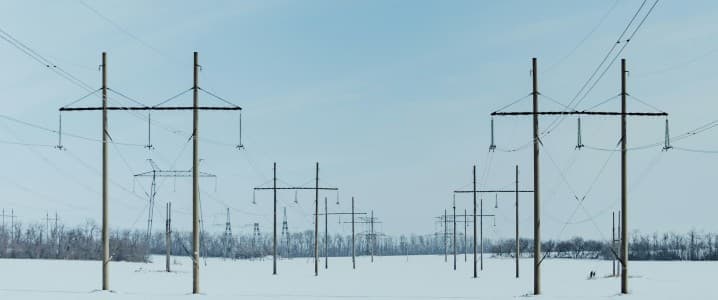
Norway, a critical anchor of European energy security and a leading oil and gas producer, is taking decisive steps to fortify its national power grid against emergent threats. The nation’s water and energy directorate, NVE, has unveiled a proposal for significantly stricter regulations aimed at bolstering the resilience of power grid operators. This move, driven by heightened geopolitical tensions and recent sabotage incidents in Northern Europe, signals a profound commitment to energy infrastructure integrity, with direct implications for investment sentiment across the broader energy sector.
For investors, understanding Norway’s proactive strategy is paramount. The proposed rules mandate that grid operators possess the necessary crews, expertise, and spare parts to swiftly restore essential functions and withstand simultaneous, severe incidents over extended periods. This initiative, while designed to prevent a systemic collapse in an economy heavily reliant on electricity—where hydropower accounts for approximately 90% of generation and electric vehicles dominate new car sales—will inevitably introduce new operational costs and, consequently, impact grid fees for households. This analysis will delve into the strategic rationale behind Norway’s actions, the immediate financial implications, and how these developments intersect with current market dynamics and upcoming energy events.
Norway’s Strategic Imperative: Fortifying the Electric Backbone
Norway’s energy landscape is uniquely positioned, making the stability of its power grid a national security priority. As Western Europe’s largest oil and gas producer, the country also boasts one of the most highly electrified economies globally. Its power generation mix is overwhelmingly green, with hydropower supplying around 90% and wind power contributing approximately 10% of electricity output. Natural gas, despite Norway’s vast reserves, plays only a minimal role in domestic power generation. This deep reliance on electricity extends to transportation, with electric vehicle sales now accounting for over 90% of all new cars sold. As NVE’s director general Kjetil Lund aptly stated, “If the power system stops functioning, Norway will stop functioning within a short time.”
The proposed regulations are a direct response to a perceived escalation in threats and sabotage incidents across Northern Europe following the Russian invasion of Ukraine. This geopolitical backdrop has already seen Norway increase security at key oil and gas installations and forge a collaborative pact with Denmark, Belgium, Britain, Germany, and the Netherlands to enhance protection measures for vital underwater energy assets, including gas pipelines and electricity cables. The new grid regulations are a natural extension of this broader national security posture, reflecting a strategic imperative to safeguard the foundational infrastructure supporting both its domestic economy and its critical role as an energy supplier to Europe. Investors should view these measures not merely as compliance burdens, but as essential de-risking actions in a volatile global environment, ultimately enhancing the long-term stability of Norway’s energy sector.
The Cost of Resilience in a Volatile Market
Implementing these heightened preparedness requirements will not come without a price. The NVE acknowledges that grid companies will face increased costs, which will translate into higher grid fees for Norwegian households. The projected increase for an average household is estimated to be between $10 and $29 (100-300 Norwegian crowns) per year. While these individual household costs appear modest, they represent a tangible increase in operational expenditure for the grid companies responsible for maintaining this critical infrastructure.
This financial outlay unfolds against a backdrop of significant volatility in the broader energy markets. As of today, April 18, 2026, Brent Crude is trading at $91.87 per barrel, marking a sharp 7.57% decline from its open earlier in the day. WTI Crude is similarly affected, currently at $84, down 7.86%. This daily downturn compounds a more extended negative trend: Brent has shed $20.91, or 18.5%, from its price of $112.78 just two weeks ago on March 30. Gasoline prices have also seen a notable dip, currently at $2.95, down 4.85%. This environment of falling crude prices and broader market uncertainty adds a layer of complexity to the introduction of new, mandatory costs for energy infrastructure. While the cost is necessary for security, investors will be scrutinizing how these additional expenses are absorbed by grid operators and how they might impact their profitability in a market already under pressure. The current downturn in crude prices may also influence the broader economic sentiment, making any new cost imposition, however small, a point of focus for consumers and businesses alike.
Navigating Regulatory Timelines and Forward Market Signals
The proposed regulations are currently undergoing a consultation period, which is scheduled to conclude on March 15, 2026. Following this, the NVE will review the feedback received before adopting the final regulations, with a planned effective date of July 1, 2026. This timeline offers a clear roadmap for investors to monitor the regulatory evolution and its potential impact on affected entities.
However, the broader energy market will not stand still during this period. The present moment is particularly dynamic, with a full OPEC+ Ministerial Meeting taking place today, April 18, 2026. The decisions emerging from this crucial gathering—specifically regarding production quotas—could significantly influence crude oil price trajectories for the remainder of the year and into 2027. Investors are keen to understand if the cartel will maintain existing cuts, deepen them, or signal any intention to increase supply in response to the recent price declines. Over the next two weeks, further insights into market fundamentals will emerge with the API Weekly Crude Inventory reports on April 21 and 28, and the EIA Weekly Petroleum Status Reports on April 22 and 29. These data points, alongside the Baker Hughes Rig Count reports on April 24 and May 1, will provide critical indicators of supply, demand, and drilling activity. Any sustained downward pressure on crude prices or indications of weakening demand could amplify concerns about the profitability of energy infrastructure investments, even those bolstered by enhanced security. Conversely, a strong OPEC+ stance or unexpected inventory drawdowns could provide a floor for prices, making the cost of Norway’s grid resilience a more manageable factor within a healthier market.
Investor Intent: De-risking Future Supply and Long-Term Value
Our proprietary reader intent data reveals a clear focus among investors on the future trajectory of oil prices, with a recurring question being, “What do you predict the price of oil per barrel will be by end of 2026?” This overarching concern about market stability and future profitability underscores the importance of actions like Norway’s grid fortification. While the immediate costs of enhanced security might appear as a drag, in a landscape increasingly defined by geopolitical risks and supply chain vulnerabilities, such investments inherently de-risk future energy supply. A stable, resilient power grid in a major energy-producing nation like Norway contributes significantly to the broader energy security thesis that underpins long-term oil and gas investments.
Even as investors track the performance of individual energy companies—such as inquiries about “How well do you think Repsol will end in April 2026″—the fundamental drivers remain market stability and predictable energy flows. Norway’s commitment to safeguarding its highly electrified economy and its role as a key energy exporter provides a valuable, albeit costly, layer of insurance against future disruptions. While the short-term market is experiencing significant price corrections, as evidenced by the recent Brent decline, strategic investments in critical infrastructure like Norway’s power grid support the long-term value proposition of the energy sector by mitigating risks that could otherwise lead to far more severe economic consequences. Analysts will be watching how these security investments are integrated into the financial models of affected grid companies and what precedents they set for other European nations facing similar threats to their energy infrastructure.


