The global energy landscape continues to present investors with paradoxes, and few are as compelling as the current dynamic emanating from China’s automotive sector. While Beijing’s aggressive push into electric vehicles (EVs) has successfully reshaped its domestic market, it has also inadvertently created a powerful new driver for global gasoline demand. The displacement of traditional internal combustion engine (ICE) vehicles within China has led to a massive surge in exports of these gasoline-powered cars to emerging and second-tier markets worldwide. This trend is not merely a footnote; it represents a significant, underappreciated factor influencing crude oil and refined product markets, compelling astute oil and gas investors to reassess their demand models.
China’s Export Flood: A Counter-Intuitive Boost to Oil Demand
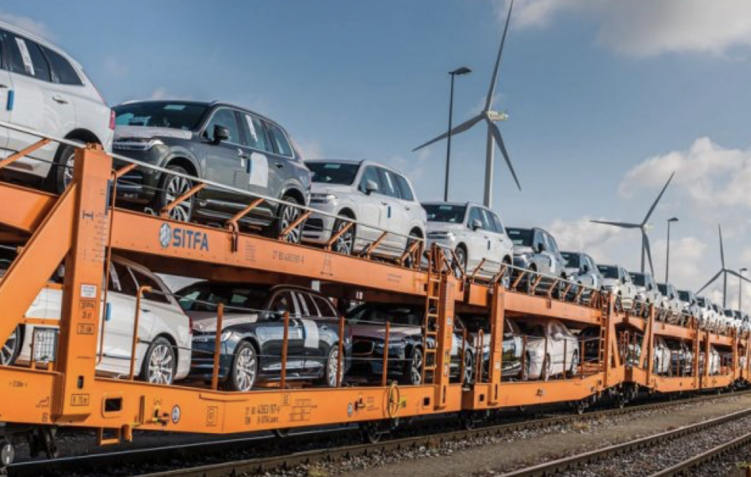
The scale of China’s gasoline car export phenomenon is striking and directly impacts the global oil demand outlook. As domestic EV adoption soared, capturing half of China’s market in a few short years, many legacy automakers found their traditional gasoline vehicle sales plummeting. Their response has been a strategic pivot: flood international markets with these cars. Since 2020, fossil-fuel vehicles have constituted a remarkable 76% of China’s total auto exports. More critically, total annual shipments of Chinese automobiles have skyrocketed from approximately 1 million to an anticipated 6.5 million-plus vehicles this year. Last year alone, China’s gasoline-vehicle exports were sufficient to crown it the world’s largest auto-exporting nation by volume. This export surge, ironically, is a direct byproduct of the very EV subsidies and policies designed to transform China’s energy consumption profile. For oil and gas investors, this translates into a substantial, sustained, and largely unexpected demand floor for gasoline in a world increasingly focused on decarbonization. It’s a crucial counter-narrative to the prevailing assumption that EV growth automatically means an immediate, sharp decline in oil demand.
Navigating Market Volatility: Demand Surges Amid Price Swings
This robust demand driver from Chinese gasoline car exports emerges at a time when crude markets are experiencing considerable volatility. As of today, Brent crude trades at $91.87, representing a significant 7.57% drop from its daily high, with prices fluctuating between $86.08 and $98.97. Similarly, WTI crude sits at $84, down 7.86% within a $78.97-$90.34 range. The broader market trend over the past two weeks has seen Brent decline from $112.57 on March 27th to $98.57 on April 16th, a 12.4% reduction. Meanwhile, gasoline prices currently stand at $2.95, a 4.85% decrease from recent highs, trading within a daily range of $2.82-$3.1. These price movements underscore the various geopolitical and macroeconomic pressures at play. However, the underlying, expanding demand base for gasoline, fueled by China’s export strategy, provides a fundamental support mechanism that could prevent deeper price corrections or accelerate recoveries. Investors asking about the oil price outlook for the end of 2026 should factor in this substantial, growing demand component, which adds resilience to long-term projections despite short-term market fluctuations.
Forward Outlook: Geographies, Inventories, and OPEC+ Decisions
The destination of these millions of gasoline-powered vehicles is equally critical for oil market analysis. They are primarily flowing into emerging and second-tier markets across continents, from Poland to South Africa to Uruguay. These regions often have less developed EV charging infrastructure and lower purchasing power for new EV models, making China’s competitively priced ICE vehicles an attractive option. For investors, this implies a geographical shift in gasoline demand growth, potentially benefiting refiners and logistics providers with strong presences in these markets. Looking ahead, this dynamic will undoubtedly feature in the upcoming energy calendar. The OPEC+ Joint Ministerial Monitoring Committee (JMMC) meeting on April 17th, followed by the full Ministerial meeting on April 18th, will be paramount. As investors frequently inquire about OPEC+ current production quotas, the unexpected strength in global gasoline demand driven by Chinese exports could influence discussions around supply adjustments. Stronger-than-anticipated demand might offer OPEC+ more flexibility, or at least provide a buffer against arguments for deeper cuts. Furthermore, the weekly API and EIA crude inventory reports on April 21st, 22nd, 28th, and 29th will be crucial indicators. A sustained draw on gasoline inventories, particularly in regions receiving these exports, would signal the real-time impact of this demand surge. Investors should also monitor the Baker Hughes Rig Count on April 24th and May 1st to gauge future supply responses in light of these evolving demand dynamics.
Investment Implications: Beyond the EV Hype
For oil and gas investors, the implications of China’s gasoline car export strategy are profound and warrant a nuanced approach. While the narrative around EV adoption correctly points to long-term decarbonization goals, the immediate and medium-term reality is that global oil demand is receiving an unexpected boost. This trend reinforces the investment case for companies involved in crude oil production, refining, and refined product distribution, particularly those with exposure to the emerging markets where these vehicles are landing. The phenomenon highlights the resilience of fossil fuel demand, even as major economies push for energy transitions. It also underscores how government industrial policies, even those aimed at greening an economy, can have far-reaching, complex, and sometimes counter-intuitive effects on global commodity markets. Investors should look beyond simplistic narratives and integrate this robust export growth into their models for global gasoline consumption, recognizing it as a significant, ongoing factor that will shape the oil market for the foreseeable future.