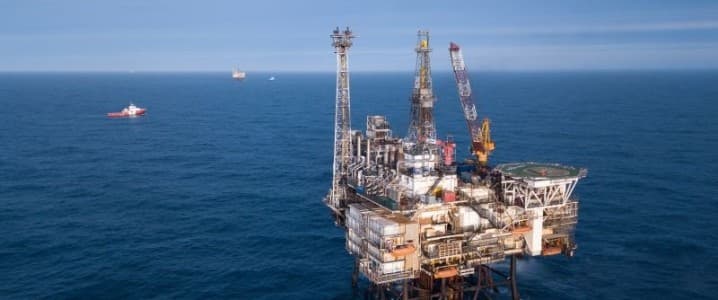
A recent London court ruling has provided a critical, albeit modest, reprieve for the UK’s North Sea oil and gas sector, pushing back a legal challenge that sought to halt 28 offshore exploration licenses. While not a green light for immediate drilling, this judicial decision prevents further entanglement for an industry already navigating complex political headwinds and an uncertain global market. For investors eyeing the UK upstream, this outcome means that existing avenues for potential development remain open, even as the path to actual production continues to be fraught with regulatory and economic hurdles. It underscores a delicate balance in the UK energy landscape, where geological reality persistently clashes with evolving climate policy ambitions.
Judicial Clarity Offers a Defensive Win for North Sea Exploration
The High Court’s decision to dismiss a lawsuit challenging 28 offshore oil and gas exploration licenses is more about preserving options than unlocking new opportunities. The core of the ruling clarifies that these are “early scoping permissions,” not final drilling permits, and therefore do not require the full suite of environmental impact assessments at this initial stage. This distinction is crucial for the industry, as it ensures that the foundational steps for future development can proceed without immediate legal obstruction. However, it doesn’t resolve the deeper issues facing UK producers, who continue to grapple with a challenging operating environment. Companies like Shell, with its Jackdaw project, and Equinor, with Rosebank, have seen significant projects delayed due to the current regulatory and fiscal climate, highlighting that even with legal clarity, the investment pathway remains arduous. The court’s judgment mainly prevents the situation from worsening, offering a degree of stability where further uncertainty could have permanently chilled interest in the region.
Navigating Global Headwinds Amidst Investor Scrutiny
The UK North Sea’s future is inextricably linked to broader global market dynamics, a reality keenly felt by our investor community. We’ve seen significant investor interest this week around the trajectory of crude prices, with many asking about the potential for WTI to move up or down, and what the price of oil per barrel might be by the end of 2026. These questions underscore the prevailing uncertainty. As of today, Brent Crude trades at $90.25, reflecting a significant 5.48% drop for the day, with its 14-day trend showing a steep decline from $118.35 to $94.86, representing a near 20% contraction. WTI Crude, while down a more modest 0.63% today to $86.87, still mirrors this volatility. This market softness, driven by concerns of potential oversupply next year and a nuanced stance from OPEC+, creates a tougher environment for high-cost, high-risk projects like new North Sea developments. The UK’s “stop-start” regulatory approach, coupled with punishing taxes and requirements to account for downstream emissions, makes it an increasingly difficult arena for capital deployment, especially when global prices are under pressure. The court’s ruling, while positive, does not fundamentally alter the perception that the UK is a challenging jurisdiction for new oil and gas investment.
Upcoming Catalysts and the Path Forward for UK Energy
Looking ahead, several key events on the energy calendar will shape the broader investment landscape, influencing decisions in regions like the North Sea. The upcoming OPEC+ Joint Ministerial Monitoring Committee (JMMC) Meeting, scheduled for April 21st, 2026, is a critical near-term catalyst. Any signals from this meeting regarding production adjustments will significantly impact global supply expectations and crude pricing, directly affecting the economic viability of UK projects. Investors will also be closely monitoring the EIA Weekly Petroleum Status Reports on April 22nd and 29th, as well as the Baker Hughes Rig Count on April 24th and May 1st, for insights into US supply and demand fundamentals. Perhaps most impactful for long-term outlooks will be the EIA Short-Term Energy Outlook on May 2nd, which will provide updated forecasts for global oil and gas markets through 2027. For the UK, these international developments overlay a domestic political landscape where a permanent fracking ban is being pursued, and new exploration licenses face resistance. While the court ruling protects the existing 28 licenses, the industry’s immediate focus is likely on tiebacks to existing infrastructure – a cleaner, cheaper, and politically less contentious path to maximize recovery from aging fields before they are permanently decommissioned. This forward-looking approach suggests that while the door isn’t closed on UK exploration, the emphasis remains firmly on capital efficiency and mitigating political risk.
Strategic Implications for UK Energy Security and Investor Confidence
The preservation of these 28 exploration licenses is a strategic win for UK energy security, even if it doesn’t immediately translate into a surge of new investment. The UK’s increasing reliance on energy imports, despite significant remaining reserves in the North Sea, highlights a critical vulnerability. The court’s decision means that the potential to tap into these “millions of barrels stranded near aging hubs” remains viable. For investors, this translates into a retained optionality, a flicker of hope that the UK might yet find a pragmatic middle ground between energy independence and climate goals. Future investment, however, will hinge not just on legal clarity but on genuine policy stability and fiscal attractiveness. The industry needs a consistent regulatory framework that acknowledges the long lead times and substantial capital commitments required for offshore projects. Without such an environment, even defensive legal victories will struggle to overcome the broader disincentives. The focus for investors should remain on companies demonstrating strong balance sheets and a disciplined approach to capital allocation, prioritizing lower-risk tie-back projects and opportunities that offer clear pathways to production within the evolving UK energy strategy.


