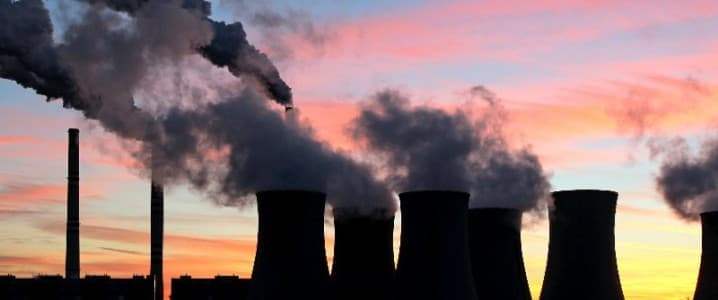
The European energy landscape is undergoing a profound transformation, with recent developments in the Czech Republic underscoring the accelerating shift away from coal-fired power and the subsequent bullish implications for natural gas. Czech energy firm Sev.en, owned by prominent investor Pavel Tykac, has announced the expedited closure of three major coal-fired power plants – Pocerady, Chvaletice, and Kladno – by March 2027 at the latest. This move, driven by unfavorable economics rather than regulatory deadlines, will strip 2.4 gigawatts (GW) of baseload power from the Czech grid in a little over a year, forcing a critical re-evaluation of the country’s energy supply and creating a significant demand vacuum. For discerning investors, this regional pivot highlights a growing opportunity within the natural gas sector, even as global crude markets navigate their own complex dynamics.
The Inexorable Decline of Coal Economics
Sev.en’s decision to shutter its three major coal plants, with operations ceasing as early as December 2026, marks a watershed moment, significantly predating the Czech Republic’s national coal phase-out target of 2033. This accelerated timeline is not a matter of choice but necessity, rooted deeply in the deteriorating profitability of coal-fired generation. The company explicitly cited “very unfavorable” economics for plants utilizing domestic brown coal, pointing to the confluence of low expected near-term electricity prices and the escalating cost of carbon emission allowances. These factors combine to threaten permanent losses, making continued operation unsustainable. When a major energy producer, even one with deep ties to the local resource base, is compelled to abandon 2.4 GW of capacity due to pure financial pressures, it sends a clear signal to the market: the era of coal-fired power in Europe is not just receding, but actively being pushed out by market forces. Investors must recognize this fundamental shift as a powerful driver shaping future energy infrastructure.
Natural Gas: The Immediate Beneficiary of Europe’s Energy Transition
The impending removal of 2.4 GW of baseload coal capacity from the Czech grid by early 2027 presents a substantial energy gap that must be filled. While the long-term vision includes increased renewable penetration, the intermittency of solar and wind power means a reliable, dispatchable source will be crucial for grid stability. This is where natural gas steps in as the most viable and readily deployable bridge fuel. Currently, natural gas constitutes a 15.2% share of Czechia’s total energy supply, according to IEA estimates, significantly trailing coal (25.3%), oil (25.1%), and nuclear (20.6%). The forced retirement of such a substantial coal fleet will inevitably accelerate demand for natural gas, positioning it to capture a larger share of the energy mix sooner than anticipated. This shift creates a compelling investment thesis for natural gas producers, infrastructure providers, and related midstream assets operating in or supplying the European market. The uncertainty Sev.en cited regarding future natural gas prices, in addition to renewables’ pace, underscores the market’s awareness of this impending demand surge.
Navigating Broader Market Volatility: A Look at Crude and Investor Sentiment
While regional energy transitions create specific opportunities, the broader global energy market remains a complex tapestry of supply, demand, and geopolitical factors. Investors are keenly aware of this volatility, with many actively seeking clarity on market direction. Our proprietary intent data shows a strong focus on core commodity prices, with questions like “what do you predict the price of oil per barrel will be by end of 2026?” and direct inquiries about “WTI going up or down” dominating investor queries this week. This sentiment comes against a backdrop of significant recent movement in crude benchmarks. As of today, Brent Crude trades at $95.49, reflecting a relatively stable day with a narrow range between $93.87 and $95.69. However, this stability follows a notable correction, with Brent having declined by approximately 19.8% in the past 14 days, falling from $118.35 on March 31st to $94.86 on April 20th. Similarly, WTI Crude currently trades at $87.29, experiencing a slight dip of 0.15% within a day range of $85.50 to $87.47. This recent downward pressure on crude prices highlights the dynamic nature of global energy markets, emphasizing that even as natural gas demand strengthens in specific regions, the overall investment landscape requires a holistic view of intersecting commodity trends.
Upcoming Catalysts for Informed Energy Investing
For investors positioning themselves in this evolving energy landscape, the coming weeks present several critical data points and events that could significantly influence market sentiment and price action for both crude and natural gas. Tomorrow, April 21st, the OPEC+ Joint Ministerial Monitoring Committee (JMMC) meeting will be closely scrutinized for any signals regarding future production policy. Given the recent softness in crude prices, any indications of supply adjustments from this influential group could prompt a swift market reaction. Beyond crude, the EIA Short-Term Energy Outlook (STEO), scheduled for release on May 2nd, will offer comprehensive projections for both oil and natural gas markets, providing crucial insights into supply, demand, and price forecasts through 2027. This report will be particularly relevant for evaluating the longer-term outlook for natural gas, especially in light of accelerated coal phase-outs like that in Czechia. Additionally, weekly updates such as the EIA Weekly Petroleum Status Report (April 22nd and April 29th), the Baker Hughes Rig Count (April 24th and May 1st), and API Weekly Crude Inventory data (April 28th and May 5th) will offer granular, near-term indicators of inventory levels and drilling activity, informing short-term trading strategies and providing ongoing market pulse checks. These events collectively underscore the importance of continuous monitoring for investors seeking to capitalize on opportunities and mitigate risks in a rapidly changing global energy sector.


