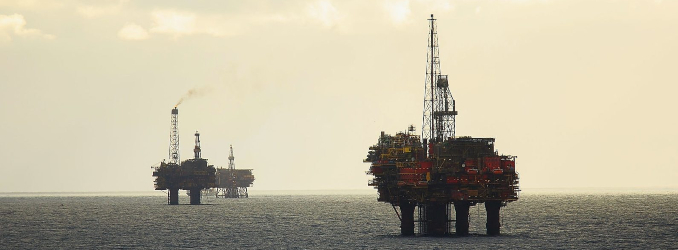
The UK government’s resolute decision to maintain the Energy Profits Levy (EPL) at a formidable 78% headline tax rate continues to cast a long shadow over investment prospects within the North Sea. This unwavering fiscal stance, confirmed with no immediate policy adjustments, effectively leaves North Sea operators grappling with the same profound uncertainty that has hampered capital deployment for months. While global energy markets present a complex interplay of demand, supply, and geopolitical factors, the UK’s domestic tax regime introduces an additional layer of risk, making long-term planning an increasingly precarious exercise for companies considering new projects in the region. For investors, understanding this policy’s entrenched impact is crucial for navigating the UK Continental Shelf (UKCS) landscape.
The Persistent Headwind of Fiscal Instability
The 78% Energy Profits Levy, originally introduced during a period of elevated energy prices and subsequently extended to 2030, fundamentally alters the economic calculus for North Sea oil and gas ventures. Industry stakeholders have consistently warned that this elevated tax burden acts as a significant disincentive, leading to deferred final investment decisions, increased perceived risk premiums, and a clear shift in portfolio allocations away from the UKCS. The absence of a predictable, long-term fiscal framework is not merely an inconvenience; it is a critical barrier to attracting the substantial capital required for exploration, development, and maintenance activities. This uncertainty permeates beyond the major upstream producers, impacting the intricate web of supply-chain firms, local contractors, and regional economies that rely on a vibrant domestic energy sector. Without a consistent and durable policy approach, the UK risks deepening a slowdown in activity at a time when energy security and investment visibility are paramount.
Market Dynamics and Divergent UKCS Outlooks
Against this backdrop of domestic fiscal challenges, the broader energy market presents its own set of complexities. As of today, Brent crude trades at $94.72 per barrel, experiencing a modest 0.8% dip within a daily range of $93.87 to $95.69. Similarly, WTI crude stands at $86.48, down 1.08% within its $85.50 to $86.78 range. While these price points remain robust by historical standards, offering healthy margins for many producers globally, the recent trajectory underscores market volatility. Over the past 14 days, Brent crude has seen a notable decline, dropping from $118.35 on March 31st to $94.86 on April 20th, representing a significant reduction of nearly 20%. This sharp contraction in a relatively short period highlights the inherent price risk in the sector. For investors, this volatility, when combined with the UK’s 78% EPL, creates a potent cocktail of uncertainty that makes long-cycle, capital-intensive North Sea projects considerably less appealing compared to opportunities in basins with more stable and predictable fiscal regimes, even if global prices appear favorable today.
Addressing Investor Concerns Amidst Policy Stagnation
Our proprietary reader intent data offers a window into the immediate concerns of oil and gas investors, revealing a strong focus on price direction and future market outlooks. Queries such as “is WTI going up or down?” and “what do you predict the price of oil per barrel will be by end of 2026?” underscore a deep desire for clarity in a volatile market. Investors are actively seeking to de-risk their portfolios by understanding future price trends, and the UK’s unyielding tax policy directly complicates this endeavor for any UKCS-focused investment. The EPL adds a layer of political and regulatory risk on top of inherent market fluctuations, making it exceptionally challenging for companies to model returns and allocate capital with confidence. This policy effectively forces investors to demand higher risk premiums for UK-based projects, potentially diverting capital towards jurisdictions that offer greater fiscal predictability, regardless of the underlying geological prospectivity of the North Sea.
Navigating Upcoming Catalysts: A UKCS Conundrum
Looking ahead, the next two weeks are packed with critical energy events that will undoubtedly influence global market sentiment, yet their impact on UKCS investment remains uniquely constrained by the EPL. Investors are keenly awaiting the OPEC+ JMMC Meeting on April 21st, which could signal shifts in supply policy and crude production quotas. Following this, the EIA Weekly Petroleum Status Reports on April 22nd and 29th, alongside API Weekly Crude Inventory data on April 28th and May 5th, will provide crucial insights into demand trends and inventory levels in the key US market. The Baker Hughes Rig Count, scheduled for April 24th and May 1st, will offer a real-time snapshot of drilling activity. Finally, the EIA Short-Term Energy Outlook on May 2nd will deliver comprehensive forecasts for the coming months. While these global events can generate bullish or bearish signals for the wider oil and gas sector, the persistent 78% tax levy in the UK acts as a structural impediment. Even if global market signals point towards strengthening prices or increased demand, the elevated and extended EPL will continue to limit the attractiveness of the UKCS, potentially diverting capital and expertise to regions where the fiscal environment is more conducive to long-term investment, thereby undermining the UK’s own energy security objectives and the health of its broader energy ecosystem.


