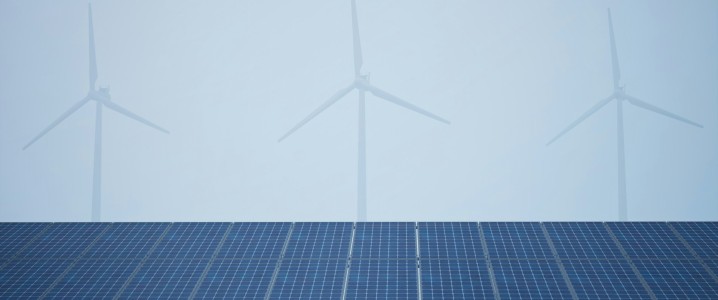
EDF, the French state-controlled utility, is embarking on a significant strategic realignment, signaling its intent to divest between 50% and 100% of its substantial U.S. renewable energy business. This move, confirmed by CEO Bernard Fontana, marks a decisive pivot from previous plans to sell only a minority stake. For investors tracking the global energy transition and capital allocation within major utilities, this represents a major transaction that will reshape market dynamics in North American renewables and underscore a renewed focus on nuclear power in Europe.
EDF’s Strategic Pivot: Doubling Down on Nuclear, Divesting Renewables
The decision to consider a full sale of EDF’s U.S. renewables unit is a direct reflection of a high-stakes mandate from the French government. Bernard Fontana, who took the helm in May, has been tasked with prioritizing nuclear power projects within France. This includes President Emmanuel Macron’s ambitious pledge to build six new European pressurized reactors (EPRs) to meet France’s climate objectives and modernize its nuclear fleet, which currently supplies around 70% of the nation’s electricity. Fontana’s predecessor faced criticism for slow progress and escalating costs on these crucial nuclear initiatives. Therefore, this divestment is not merely a portfolio optimization exercise but a fundamental capital reallocation to fund a core, state-backed strategic imperative.
The scale of the asset on offer is considerable. EDF’s North American power solutions unit, which spans the U.S., Canada, and Mexico, boasts a portfolio of 23 gigawatts (GW) of developed projects and manages an additional 16 GW under service contracts. The majority of these assets are located in the United States and encompass a diverse range of technologies including solar, wind, energy storage, green hydrogen, and transmission projects. This broad and substantial portfolio makes the divestment a landmark event, offering a ready-made platform for an acquiring entity to significantly expand its footprint in one of the world’s most dynamic renewable energy markets.
Implications for the North American Renewables Investment Landscape
The potential sale of EDF’s entire U.S. renewables arm introduces a substantial opportunity for strategic buyers and financial investors in North America. Given the breadth of technologies and the sheer scale of the portfolio, potential acquirers could range from large independent power producers, other major international utilities seeking to establish or grow their U.S. presence, or even private equity funds with a strong infrastructure focus. The valuation of such a diverse and mature asset base will be a critical factor, influenced by contract structures, operational performance, and future growth potential in sectors like green hydrogen and energy storage.
For investors, this transaction signals both consolidation and growth within the U.S. clean energy sector. A successful sale will inject significant capital into EDF, enabling its nuclear buildout, while simultaneously empowering the buyer with a substantial, revenue-generating portfolio. The competitive landscape for renewable energy assets remains robust, driven by supportive policies, increasing corporate demand for clean energy, and a global push towards decarbonization. This sale could set a new benchmark for valuations in the sector, particularly for integrated platforms capable of developing and managing multiple renewable technologies.
Broader Energy Market Dynamics and Investor Sentiment
EDF’s strategic shift comes amidst a volatile period for the broader energy markets, a factor keenly observed by our readers. As of today, Brent crude trades at $94.72 per barrel, down 0.8% on the day, with a range of $93.87 to $95.69. Similarly, WTI crude is at $86.48, marking a 1.08% decline today, fluctuating between $85.50 and $86.78. These figures reflect a significant downward trend over the past two weeks, with Brent having plummeted by nearly 20% from its March 31st high of $118.35 to $94.86 just yesterday. Gasoline prices have also seen a slight dip, currently at $3.03, down 0.33%.
This macro backdrop of fluctuating crude prices undoubtedly influences capital allocation decisions across the energy sector. Investors are asking critical questions, such as “is WTI going up or down” and “what do you predict the price of oil per barrel will be by end of 2026?” EDF’s decision to divest its U.S. renewables unit, even as oil prices have softened, suggests a belief in the strong underlying value of its clean energy assets, making it an opportune time to monetize. It also highlights a pragmatic approach to capital management: focusing resources on areas of strategic national importance while leveraging well-developed assets in a mature, competitive market.
Forward Outlook and Key Data Points for Energy Investors
The coming weeks hold several critical events that will further shape the energy market landscape and inform investment decisions. On April 21st, the OPEC+ JMMC Meeting will be closely watched for any signals regarding production policy, which could directly impact crude oil price trajectories. This is particularly relevant given the recent downward trend in Brent and WTI prices.
The EIA Weekly Petroleum Status Reports, scheduled for April 22nd and April 29th, will provide crucial insights into U.S. crude oil and product inventories, refinery activity, and demand, directly addressing investor concerns about supply-demand balances. Complementing this, the Baker Hughes Rig Count on April 24th and May 1st will offer a snapshot of U.S. drilling activity, hinting at future production trends. Furthermore, the EIA Short-Term Energy Outlook on May 2nd will offer official projections for oil, natural gas, and other energy markets, providing valuable context for long-term investment strategies.
For investors, EDF’s proposed divestment is a tangible example of how major players are navigating the energy transition, balancing decarbonization goals with national energy security and capital efficiency. The success and valuation of this sale will be closely monitored, not just for its impact on EDF’s balance sheet and nuclear ambitions, but also as a bellwether for the appetite and valuation multiples within the increasingly competitive and dynamic North American renewable energy sector. As investors look beyond short-term crude price volatility towards the end of 2026 and beyond, strategic moves like EDF’s offer a glimpse into the evolving capital allocation priorities of global energy giants.


