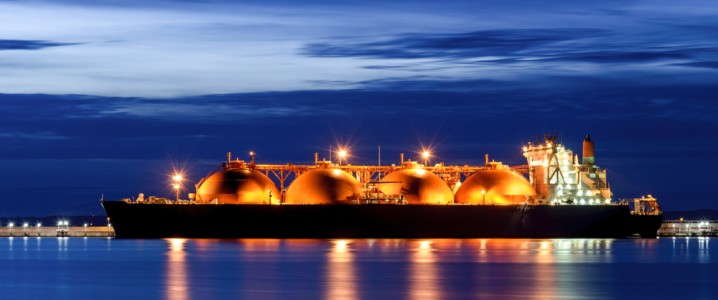
The global natural gas market is witnessing a significant structural shift, nowhere more evident than in China’s evolving energy landscape. For the 13th consecutive month, China’s imports of liquefied natural gas (LNG) are projected to decline in November, signaling a profound reorientation of the nation’s energy strategy. This sustained downturn, driven by robust domestic production growth and expanded pipeline imports, has far-reaching implications for LNG suppliers, global trade flows, and the investment theses underpinning major energy projects. As senior analysts, we must dissect these trends to understand the complex interplay of economics, geopolitics, and national energy security shaping the future of gas investment.
China’s Domestic Drive Reshapes LNG Demand
The projected 5.81 million tons of LNG imports for November represent a 5.5% year-over-year decrease, marking a continuation of a persistent trend. While this decline is less steep than the double-digit percentage drops observed in the preceding two months, it underscores China’s strategic pivot towards self-sufficiency. This shift follows a period last year where the country aggressively filled its storage caverns, leading to a 14.3% annual increase in total natural gas imports during the first half of the year, reaching 64.65 million tons. Once those facilities were at capacity, the impetus for imports naturally weakened.
A primary driver for the sustained reduction in LNG intake is China’s remarkable success in boosting domestic natural gas production. Earlier in 2025, the nation’s gas output hit an all-time high, directly contributing to LNG imports plummeting by 19% year-on-year over the first seven months of that year. This commitment to enhancing indigenous energy supply is a cornerstone of China’s long-term energy security strategy, reducing its vulnerability to volatile international markets and geopolitical pressures. Investors in LNG export terminals and related infrastructure must acknowledge that China, once a seemingly insatiable buyer, is now a more discerning and self-reliant participant in the global gas market.
Geopolitical Currents and Pipeline Power Influence Energy Flows
Beyond domestic production, geopolitical considerations have significantly influenced China’s energy import portfolio. The “tariff offensive” initiated by the previous U.S. administration, which saw Beijing retaliate with import tariffs on U.S. energy, led to a dramatic slump in shipments of U.S. LNG and crude oil to zero. This episode highlighted the risks of relying too heavily on any single source or trade route, accelerating China’s diversification efforts.
Simultaneously, China has substantially increased its reliance on pipeline gas from Russia. Discussions finalized in September for an expansion of the Power of Siberia pipeline underscore this strategic alignment. The planned expansion is set to boost the pipeline’s capacity to over 100 billion cubic meters annually, a volume nearly equivalent to the combined capacity of the twin Nord Stream pipelines that once supplied gas to Germany. This massive increase in pipeline capacity from a geopolitically aligned partner provides China with a stable and less costly alternative to seaborne LNG, further eroding its need for spot market purchases and long-term LNG contracts. For global energy investors, this pivot necessitates a reassessment of long-term demand growth projections for new LNG liquefaction and regasification projects, particularly those targeting Asian markets.
Investor Focus: Navigating Volatility and Long-Term Trends
Our proprietary reader intent data reveals that investors are grappling with significant uncertainty, frequently asking about the future trajectory of crude oil prices, with questions ranging from “is WTI going up or down?” to “what do you predict the price of oil per barrel will be by end of 2026?” This sentiment underscores a broader anxiety about global energy demand and supply balances. The fundamental shifts in China’s natural gas procurement strategy add another layer of complexity to these forecasts.
As of today, Brent Crude trades at $94.55, down 0.97% within a day range of $93.87-$95.69, while WTI Crude stands at $86.33, down 1.25%. This immediate market softness, coupled with a more significant 14-day trend showing Brent declining from $118.35 on March 31st to $94.86 on April 20th, a nearly 20% drop, illustrates the current volatility. While these are crude prices, they reflect a broader market sentiment influenced by demand signals globally. China’s reduced LNG appetite, even if distinct from crude, contributes to a perception of softening energy demand in a key economic powerhouse. This pressure on LNG demand can indirectly impact integrated energy companies and their capital allocation decisions across the hydrocarbon value chain. Investors must analyze how major LNG producers are diversifying their portfolios and securing off-take agreements in a market where a dominant buyer is actively reducing its import dependency.
Upcoming Catalysts and Forward-Looking Analysis
Looking ahead, the next few weeks present several key events that could further shape the energy investment landscape, even as the longer-term trends in China unfold. The OPEC+ Joint Ministerial Monitoring Committee (JMMC) Meeting scheduled for April 21st will be closely watched for any indications regarding production policies that could impact crude prices. Following this, the EIA Weekly Petroleum Status Reports on April 22nd and April 29th, alongside the Baker Hughes Rig Counts on April 24th and May 1st, will provide crucial insights into U.S. supply dynamics.
Crucially, the EIA Short-Term Energy Outlook on May 2nd will offer updated projections for global supply and demand, which will be essential for investors trying to answer those pressing questions about where oil prices might land by the end of 2026. While these events primarily focus on crude, their outcomes will influence the broader sentiment and capital flows within the energy sector, impacting companies with significant gas assets. A weaker crude market, for instance, could pressure overall energy investment, potentially delaying or derailing new LNG projects already facing headwinds from China’s changing demand profile. Savvy investors will integrate these macro catalysts with the micro-level shifts in major consumption markets like China to construct resilient energy portfolios.


