The Unrelenting Pressure for Cost Efficiency in Oil & Gas
The global oil and gas industry constantly navigates a landscape defined by volatility and the relentless pursuit of efficiency. While much investor focus naturally gravitates towards upstream exploration and production or geopolitical catalysts, a silent revolution in operational logistics is rapidly gaining traction, offering substantial cost savings and a critical competitive edge. Advanced warehouse management technologies, leveraging data science to optimize material flow, are no longer confined to traditional retail or manufacturing; they represent a potent strategic lever for oil and gas companies seeking to bolster profitability and resilience.
As of today, Brent crude trades at $90.55 per barrel, marking a significant 8.89% drop from its opening. WTI crude similarly saw an 8.88% decline, settling at $83.07. This daily downturn extends a broader trend, with Brent having fallen from $112.57 on March 27th to $98.57 just yesterday, representing a $14 reduction or a 12.4% decrease over the past two weeks. Such pronounced market fluctuations underscore the non-negotiable imperative for O&G companies to identify and implement every possible cost-reduction strategy. In this environment, the ability to shave operational expenditures through smarter logistics, like optimizing warehouse pick-to-pallet processes, translates directly into stronger margins and greater investor confidence.
Smart Logistics: A Strategic Lever Across the O&G Value Chain
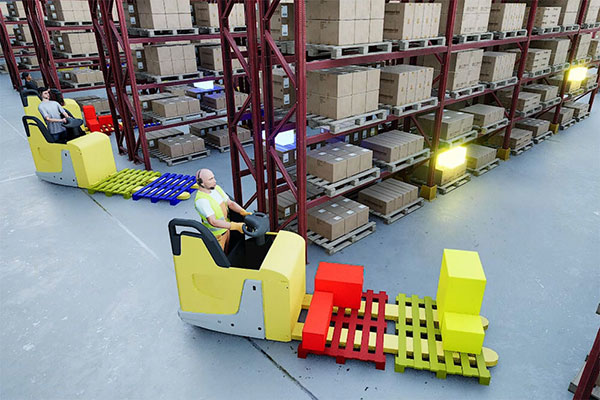
The concept of “smarter warehouses” might initially seem distant from the complexities of drilling rigs, pipelines, or refineries. However, the oil and gas industry relies on an incredibly vast and intricate supply chain. From thousands of spare parts for upstream equipment to specialized chemicals for midstream processing, and the distribution of refined products downstream, efficient material handling is paramount. New pick-to-pallet technology, utilizing data science to automatically identify the most efficient pallet matches for each picking assignment, offers a substantial upgrade from traditional, often simplistic, methods.
This advanced system continuously updates as new orders arrive, ensuring that workers are always guided to the optimal two or three pallets for each trip across a distribution center. The benefits are tangible: some early adopters in high-volume environments have reported travel time reductions and productivity increases ranging from 15% to an impressive 30%. For an oil and gas major operating multiple large-scale distribution centers for drilling equipment, MRO supplies, or refined product inventories, these gains are transformative. They directly impact operational expenditure, reduce the need for additional labor, and speed up critical material delivery, ultimately supporting the efficiency of core operations from the wellhead to the gas pump.
Investor Scrutiny: Driving Profitability in Uncertain Times
Investors are keenly focused on future performance and how companies will navigate an unpredictable market. Our proprietary reader intent data reveals a common question: “What do you predict the price of oil per barrel will be by end of 2026?” This highlights the pervasive uncertainty. While external factors heavily influence commodity prices, a company’s internal operational efficiency remains a controllable and critical driver of profitability. When investors ask, “How well do you think Repsol will end in April 2026?”, they are implicitly asking about the company’s ability to manage its cost base and maximize returns across its integrated operations, including its extensive logistics network.
For integrated oil and gas giants, optimizing downstream distribution centers for lubricants, fuels, and chemicals, or even managing vast parts warehouses for upstream equipment, directly impacts the bottom line. Reducing travel paths and increasing picking accuracy and speed through data-driven pallet matching means lower labor costs, fewer errors, and faster throughput. These efficiencies translate into improved financial performance, making companies that embrace such technological advancements more resilient and attractive investment propositions in a volatile market. The competitive advantage lies not just in finding new reserves, but also in making existing operations dramatically leaner and more cost-effective.
Operational Agility in the Face of Upcoming Market Catalysts
The coming weeks are packed with events that could significantly sway oil market sentiment. The OPEC+ Joint Ministerial Monitoring Committee (JMMC) meets on April 17th, followed by the Full Ministerial meeting on April 18th. These gatherings are crucial for understanding future supply-side dynamics, particularly concerning production quotas, a topic frequently raised by our readers. Beyond OPEC+, we have the API Weekly Crude Inventory report on April 21st, the EIA Weekly Petroleum Status Report on April 22nd, and the Baker Hughes Rig Count on April 24th, with subsequent reports on April 28th, 29th, and May 1st, respectively.
These events provide critical insights into supply, demand, and drilling activity, shaping market expectations and price movements. In such an environment, O&G companies with highly optimized logistics and supply chains are better positioned to adapt quickly. Lower operational costs derived from smarter warehouses mean greater flexibility to absorb potential price shocks, whether from an unexpected OPEC+ decision or shifting inventory levels. By reducing non-core expenditures through advanced logistics, companies can allocate capital more strategically, maintain profitability even with tighter margins, and ultimately enhance their operational agility to respond to market signals as they emerge from these upcoming pivotal dates.