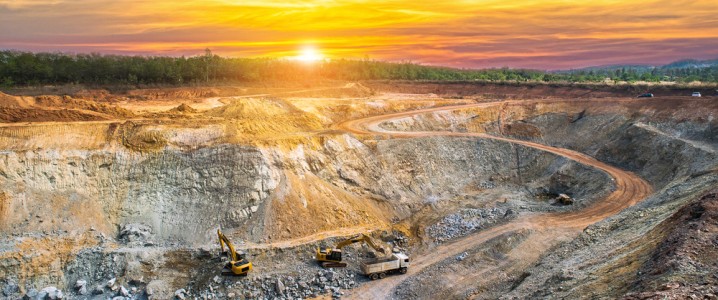
China’s recent launch of a global cooperation initiative on green minerals marks a pivotal moment in the ongoing scramble for critical resources. Unveiled by Chinese Premier Li Qiang at the G-20 summit, this alliance aims to consolidate Beijing’s already formidable dominance in rare earth elements and other strategic minerals essential for the global energy transition. For investors, this move underscores the escalating geopolitical competition over supply chains for electric vehicles, wind turbines, and advanced defense systems, demanding a closer look at the long-term implications for energy markets and the broader industrial landscape.
China’s Deepening Grip on the Green Mineral Supply Chain
The “international economic and trade co-operation initiative on green minerals” announced by China is more than just a diplomatic gesture; it’s a strategic maneuver to formalize and expand its control over the vital arteries of the green economy. By inviting over a dozen developing nations, including resource-rich countries like Zimbabwe, Cambodia, Nigeria, and Myanmar, alongside the UN Industrial Development Organization, China is creating a formidable bloc. Premier Li Qiang articulated a vision of promoting “mutually beneficial cooperation and peaceful use of key minerals,” while also emphasizing the safeguarding of developing countries’ interests and prudently addressing military applications. This initiative is a clear reinforcement of China’s existing, overwhelming market position. As of last year, China controlled an estimated 59% of rare earth mining, a staggering 91% of refining capacity, and an almost monopolistic 94% of the crucial magnet manufacturing sector. This unprecedented concentration, particularly in permanent magnets used in critical applications from industrial motors to wind turbines, signals a powerful leverage point for Beijing in shaping the future of global green technology development.
Western Counter-Strategies Amid Supply Chain Vulnerabilities
In response to China’s tightening grip, Western nations, led by the U.S., have been actively seeking to diversify and secure their own critical mineral supply chains. The U.S. government, for instance, has been channeling funding into North American rare earth and lithium companies, often acquiring minority stakes to bolster domestic production. Similarly, European and American companies are forging direct alliances with miners and refiners to establish independent magnet supply chains, aiming to reduce reliance on Chinese processing and manufacturing. This scramble highlights the acute vulnerabilities within the global rare earth supply chain, which the International Energy Agency has repeatedly flagged as one of the most concentrated across all stages of the value chain. Investors are increasingly aware of these geopolitical undercurrents, often asking about the stability of long-term commodity prices and the resilience of supply chains. While questions like “What do you predict the price of oil per barrel will be by end of 2026?” often focus on traditional energy, the underlying concern about market certainty and access to critical inputs extends directly to the rare earth sector. The lack of supply chain diversification for essential components like permanent magnets, where China holds a 94% production share, introduces significant geopolitical risk and potential volatility for companies operating in the renewable energy and advanced technology sectors. Understanding these concentrated choke points is crucial for assessing the true costs and risks of the energy transition.
Navigating Energy Market Volatility and Green Mineral Geopolitics
The strategic importance of green minerals is set against a backdrop of fluctuating traditional energy markets. As of today, Brent crude trades at $94.55, reflecting a 0.97% decline within a day range of $93.87-$95.69. WTI crude similarly saw a decrease of 1.25% to $86.33, with its day range between $85.5 and $86.78. This softness in crude prices is part of a broader trend; Brent has seen a significant drop of $23.49, or 19.8%, from $118.35 on March 31 to $94.86 just yesterday. Such volatility in traditional energy markets often sharpens the focus on the long-term transition to renewables, inherently increasing the strategic value of the critical minerals that power them. For investors, these dynamics create a complex landscape: while lower oil prices might temporarily ease inflationary pressures, they also underscore the imperative for nations to secure future energy independence through green technologies. The geopolitical maneuvering around rare earths, exemplified by China’s new initiative, adds another layer of risk and opportunity to the investment thesis for companies involved in the energy transition. Access to these minerals is not just an economic concern but a matter of national security and industrial future, making the stability of their supply chains paramount.
Upcoming Events and Forward-Looking Investment Strategy
As we look ahead, the interplay between traditional energy market signals and the evolving green mineral landscape will be critical for investors. On the traditional front, the upcoming OPEC+ JMMC Meeting on April 21 will be closely watched for any indications regarding crude production quotas, which could significantly impact near-term oil price stability. Following this, the EIA Weekly Petroleum Status Reports on April 22 and April 29, along with the Baker Hughes Rig Count on April 24 and May 1, will provide essential insights into U.S. supply and demand dynamics. Crucially, the EIA Short-Term Energy Outlook (STEO) due on May 2 will offer updated projections for both crude oil and natural gas, influencing sentiment across the entire energy complex. For investors navigating the green transition, these traditional market indicators are vital because sustained higher oil prices typically accelerate investment in renewable alternatives, thereby increasing the demand and strategic importance of rare earth elements. Conversely, if traditional energy remains abundant and affordable, the pace of transition might slow, though the underlying geopolitical race for critical minerals will persist. Given the intense focus from our readers on predicting market movements — from specific stocks like Repsol to the overall direction of WTI crude — tracking these scheduled events, while simultaneously monitoring the unfolding geopolitical competition in critical minerals, provides a more holistic and informed investment perspective. The long-term implications of China’s green minerals initiative will continue to ripple through global supply chains, demanding continuous monitoring beyond the immediate news cycle.


