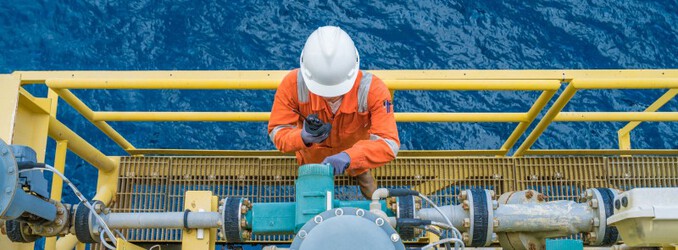
The UK North Sea, once a cornerstone of global energy production and innovation, faces an existential threat from the government’s Energy Profits Levy (EPL), commonly known as the windfall tax. Influential voices within the energy sector are issuing stark warnings: the current fiscal regime is not only stifling crucial investment but actively driving a world-class workforce and essential offshore capabilities out of the UK. For investors tracking the global oil and gas landscape, understanding the implications of this policy on future supply, energy security, and the viability of transitioning energy infrastructure is paramount as the UK government approaches critical budgetary decisions.
Erosion of UKCS Investment and Workforce
The “punitive” nature of the Energy Profits Levy is demonstrably accelerating a significant exodus of capital and expertise from the UK Continental Shelf (UKCS). Industry leaders highlight that companies are actively withdrawing investment, leading to a loss of operational capabilities and, more critically, a depletion of the highly skilled workforce that has underpinned the region’s energy prowess for decades. This isn’t just about current oil and gas production; the very foundation required to develop and commercialize large-scale offshore renewables in the future is being undermined. Without a robust upstream ecosystem, the UK risks losing its competitive edge in emerging energy technologies, further compromising its long-term energy independence and economic vitality. The argument is clear: pushing operators away through an uncompetitive tax regime ultimately increases reliance on higher-carbon energy imports, presenting an incoherent strategy from both an economic and environmental perspective.
Market Volatility Exacerbates EPL’s Burden
Against a backdrop of fluctuating global energy markets, the UK’s windfall tax imposes an even heavier burden on North Sea operators. As of today, Brent Crude trades at $90.61 per barrel, marking an 8.83% decline within the day, with WTI Crude similarly falling 8.84% to $83.11. This sharp intraday drop, coupled with a broader trend seeing Brent fall from $112.57 on March 27th to $98.57 on April 16th – a significant $14 or 12.4% reduction over two weeks – underscores the inherent volatility in the crude market. While prices remain elevated compared to historical averages, such rapid declines directly impact the profitability of projects and heighten investment risk. When a substantial portion of these profits is immediately siphoned off by a levy, the economic viability of long-cycle offshore projects diminishes rapidly. This market instability, combined with a fiscal regime perceived as unpredictable and confiscatory, significantly deters new capital allocation to the UKCS, favoring regions with more stable and attractive investment environments, even for projects that could enhance energy security.
Investor Scrutiny and Forward-Looking Signals
Our proprietary reader intent data reveals a clear focus from investors on market stability and future price predictability. Questions like “what do you predict the price of oil per barrel will be by end of 2026?” and inquiries into “OPEC+ current production quotas?” demonstrate a deep concern for the global supply-demand balance and its impact on asset valuations. This investor scrutiny directly intersects with the challenges facing the North Sea. For long-term capital to flow into critical infrastructure projects, a stable and predictable fiscal environment is paramount. Upcoming events on the energy calendar will provide further clarity on global market dynamics that will influence these investment decisions. The OPEC+ Joint Ministerial Monitoring Committee (JMMC) meeting on April 17th and the full Ministerial meeting on April 18th are pivotal. Any adjustments to production quotas or forward guidance will directly impact future crude price trajectories, influencing the economic calculus for North Sea projects. Similarly, the recurring API and EIA Weekly Crude Inventory reports (April 21st, 22nd, 28th, 29th) and Baker Hughes Rig Count updates (April 24th, May 1st) will offer granular insights into immediate supply-demand fundamentals, all of which contribute to the broader investment climate that the UKCS must compete within. Without policy certainty, the North Sea struggles to attract capital even amidst global supply concerns.
A Call for Decisive Policy Reversal
Industry leaders are not merely sounding alarms; they are presenting a clear roadmap for the UK government to avert a looming crisis. Their recommendations are threefold and urgent: first, an immediate commitment to end the Energy Profits Levy at the close of the next financial year; second, swift approval for shovel-ready UKCS projects currently awaiting sanction; and third, a reversal of the current ban on new oil and gas licensing. Implementing these measures, they argue, would provide an immediate and much-needed boost to investor confidence, re-energize the UK economy, and crucially reinforce national energy security by ensuring domestic supply. Moreover, maintaining a vibrant upstream sector is not seen as an alternative to the energy transition, but rather a prerequisite for a “fair and just transition,” allowing the region’s unparalleled skills base to pivot effectively towards future offshore renewables. The window for decisive action is rapidly closing, and the stakes – for the economy, energy security, and the future of the North Sea workforce – could not be higher.