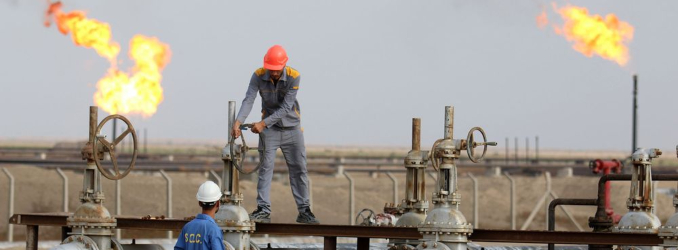
Iraq’s Hamrin Field: A Critical Step Towards Bolstering Global Oil Supply Amidst Volatility
In a significant development for Iraq’s energy sector and global oil markets, HKN Energy has finalized crucial technical terms with the Ministry of Oil (MOO) for the development of the Hamrin oil field. This agreement, building on the Heads of Agreement signed in July 2025, marks a pivotal step toward a full field development contract. For investors tracking long-term supply dynamics and geopolitical influences on crude prices, this move signals Iraq’s unwavering commitment to expanding its production capacity, even as the immediate market grapples with considerable price swings. The deployment of U.S. technical expertise and investment promises to modernize this underdeveloped asset, bringing new barrels online and strengthening Iraq’s position as a key global energy producer.
Strategic Expansion in Iraq’s Upstream Sector
The finalization of technical terms for the Hamrin field is more than just a procedural update; it represents a strategic advancement for Iraq’s upstream ambitions. HKN Energy, already recognized as the largest privately held firm with significant energy investments in the country, is poised to deepen its footprint by focusing on Hamrin, an asset with substantial untapped potential. This initiative aligns perfectly with Iraq’s broader national strategy to boost domestic production, modernize aging brownfield assets, and enhance operational reliability, particularly within its northern fields. The agreement, concluded at the North Oil Company (NOC) headquarters in Kirkuk, underscores a concerted effort to leverage international expertise and capital to unlock value from existing resources. For investors, this signals a de-risking of future Iraqi production growth, as such agreements lay the groundwork for sustained output increases, moving beyond mere maintenance of current levels.
Navigating Current Market Turbulence: Hamrin’s Future Role
This positive development from Iraq arrives at a moment of pronounced volatility in the global crude market. As of today, April 17th, 2026, Brent Crude trades at $91.1 per barrel, marking an 8.34% drop within the day’s range of $86.08 to $98.97. Similarly, WTI Crude has fallen to $83.32, down 8.61%, having traded between $78.97 and $90.34 in the same period. This daily turbulence follows a more extended downtrend, with Brent having shed $14, or 12.4%, from $112.57 just a fortnight ago on March 27th to $98.57 yesterday. This significant price correction has naturally led investors to question the future trajectory of crude. Many are keenly asking what the price of oil per barrel will be by the end of 2026, and developments like Hamrin offer a glimpse into potential long-term supply additions that could influence these projections. While Hamrin’s new barrels won’t impact immediate supply, the prospect of increased, reliable output from a major OPEC+ producer like Iraq is a factor that longer-term oriented investors must integrate into their supply-demand models, potentially acting as a moderating force on future price spikes driven by geopolitical instability or demand surges.
Forward-Looking Catalysts and Investor Inquiries
The Hamrin agreement sets the stage for future production increases, but the timeline remains a critical consideration for investors. HKN Energy’s Vice President, Srood Mukhtar, has expressed an eagerness to “quickly concluding contract negotiations to deliver a project that strengthens Iraq’s energy capacity and directly benefits its people.” This commitment to rapid deployment, backed by the promise of U.S. technical expertise and investment, suggests a relatively swift ramp-up once the full contract is signed. For market participants, this forward momentum is particularly relevant given upcoming calendar events. The OPEC+ Joint Ministerial Monitoring Committee (JMMC) meeting is scheduled for tomorrow, April 17th, immediately followed by the full Ministerial meeting on April 18th. Investors are actively scrutinizing every potential new supply source, and many are asking about OPEC+’s current production quotas and how new capacity from member states like Iraq might be managed within that framework. While Iraq consistently advocates for higher quotas, enhanced efficiency and increased production from fields like Hamrin bolster its negotiating position. Furthermore, the market will be closely watching the API Weekly Crude Inventory reports on April 21st and 28th, and the EIA Weekly Petroleum Status Reports on April 22nd and 29th, as these will provide immediate insights into market tightness, offering a contrast to the long-term supply additions promised by projects like Hamrin.
Investment Implications and the Path Ahead for Iraq
For investors focused on the upstream oil and gas sector, the Hamrin field development represents a compelling long-term thesis. The finalization of technical terms de-risks a significant portion of the project, moving it closer to execution and eventual production. HKN’s commitment to deploying advanced U.S. technical expertise and equipment suggests a focus on operational efficiency and accelerated output, which is crucial for maximizing value from brownfield assets. This strategic partnership underscores Iraq’s intent to not only maintain but also grow its role in global energy markets. While the immediate market sentiment is shaped by current price volatility and OPEC+ decisions, the Hamrin development signals a robust pipeline of future supply. Investors seeking exposure to long-term growth in the Middle East’s energy sector should view this as a positive indicator of Iraq’s improving investment climate and its potential to deliver consistent crude supply. The successful development of Hamrin could pave the way for further international investment in Iraq’s vast, yet often challenging, oil reserves, offering a valuable counterbalance to supply concerns from other regions and contributing to a more diversified global energy landscape.