Shell Plc continues to sharpen its strategic pivot towards a more diversified energy portfolio, underscoring a proactive stance in the global energy transition. The company’s recent announcement of a significant power purchase agreement (PPA) in Germany for a substantial solar project is not merely a transaction; it represents a calculated move to secure a critical component for its burgeoning green hydrogen ambitions. This investment decision, viewed through the lens of current market dynamics and anticipated future trends, reveals Shell’s commitment to decarbonizing its operations while simultaneously building resilience against the inherent volatilities of traditional hydrocarbon markets. For investors, understanding the strategic underpinnings of such deals is paramount to evaluating the long-term trajectory and risk profile of integrated energy giants.
Securing the Future: Shell’s Green Hydrogen Infrastructure Takes Shape
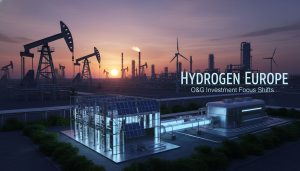
Shell’s latest PPA is a foundational element in its broader strategy to establish a robust green hydrogen ecosystem within Europe. The agreement secures approximately 75% of the output from a 230-MW solar project in Germany, which is currently under construction and will comprise two identical 115-MW plants. This 10-year commitment is earmarked to power the 100-MW Refhyne II proton-exchange membrane (PEM) electrolyser, a facility currently undergoing installation near Shell’s Energy and Chemicals Park Rheinland, close to Cologne. Once operational in 2027, this electrolyser is projected to produce up to 16,000 tonnes of renewable hydrogen annually, a critical volume intended to partially decarbonize Shell’s own industrial operations. This solar PPA complements an existing five-year agreement for roughly one-third of the output from the 332-MW Nordsee One offshore wind farm, collectively ensuring a significant and stable supply of renewable electricity for the Refhyne II project. These long-term, fixed-price contracts de-risk the power supply for one of Europe’s largest green hydrogen facilities, providing a clear pathway for Shell to meet its decarbonization targets and solidify its position in the emerging hydrogen economy.
Navigating Volatility: A Strategic Diversification Amidst Crude Swings
The timing of Shell’s intensified focus on securing renewable energy assets for internal consumption is particularly telling when juxtaposed against the backdrop of the volatile global crude markets. As of today, Brent Crude trades at $90.71, marking a significant decline of 8.73% within the day, with its range fluctuating wildly between $86.08 and $98.97. This daily swing is part of a broader trend; over the past two weeks, Brent has shed substantial value, dropping from $112.57 on March 27th to $98.57 just yesterday, April 16th, before today’s further slump. Similarly, WTI Crude stands at $82.9, down 9.07% today. This sustained downward pressure, reflecting shifting geopolitical landscapes and demand uncertainties, underscores the inherent risks associated with an overreliance on conventional hydrocarbon revenues. Shell’s strategic investments in renewable power for its green hydrogen initiatives serve as a vital hedge against such commodity price fluctuations. By securing long-term, often price-stable, renewable energy sources, the company effectively insulates a portion of its operational costs from the unpredictable swings of the oil and gas markets, enhancing financial predictability and stability for its downstream and new energies segments. This diversification is not just about sustainability; it’s about building a more robust and resilient business model in an increasingly unpredictable energy environment.
Addressing Investor Concerns: A Proactive Response to Future Energy Landscapes
The investment community is keenly observing how integrated energy companies are positioning themselves for the future, particularly in light of ongoing energy transition narratives and persistent market volatility. Our proprietary investor intent data reveals a strong focus on long-term oil price predictions, with questions like “what do you predict the price of oil per barrel will be by end of 2026?” dominating investor inquiries. Furthermore, there’s a clear interest in the performance of peer companies, exemplified by questions such as “How well do you think Repsol will end in April 2026,” indicating a desire to gauge the health and strategic effectiveness of major oil and gas players in the current climate. Shell’s latest PPA directly addresses these underlying concerns. By making concrete, large-scale investments in renewable power for its green hydrogen production, Shell demonstrates a tangible commitment to future-proofing its operations. This move signals to investors that the company is actively de-risking its long-term revenue streams from pure hydrocarbon exposure and is building a viable pathway for growth in the decarbonized economy. This strategic clarity helps alleviate fears about the long-term viability of traditional business models and positions Shell as a forward-thinking entity capable of thriving in a rapidly evolving energy landscape, thus bolstering investor confidence in its ability to generate sustainable returns beyond the current cycle of commodity price uncertainty.
Forward Outlook: Upcoming Catalysts and Shell’s Strategic Resilience
The energy market remains a dynamic arena, with several significant events on the immediate horizon that could introduce further volatility into crude prices. This week, attention will be squarely on the OPEC+ Joint Ministerial Monitoring Committee (JMMC) meeting on April 17th, followed by the full OPEC+ Ministerial Meeting on April 18th. These gatherings have the potential to significantly impact global oil supply quotas and, consequently, crude prices. In the subsequent weeks, market participants will closely monitor the API Weekly Crude Inventory reports on April 21st and 28th, along with the EIA Weekly Petroleum Status Reports on April 22nd and 29th, which provide crucial insights into demand and inventory levels. Further supply-side intelligence will come from the Baker Hughes Rig Count on April 24th and May 1st. While these events are critical for short-to-medium-term crude oil price discovery, Shell’s latest strategic moves highlight a deliberate strategy to build long-term resilience that transcends these immediate market fluctuations. The commitment to power its Refhyne II electrolyser with renewable energy by 2027 demonstrates a focus on a future where operational costs and carbon footprints are less dictated by the outcomes of OPEC+ meetings or weekly inventory reports. Instead, Shell is locking in power costs and securing a sustainable energy supply for a key decarbonization project, effectively creating a buffer against the very market forces that continue to preoccupy many investors. This forward-looking approach positions Shell to capitalize on the secular shift towards lower-carbon energy, regardless of the immediate ripples caused by traditional industry catalysts.