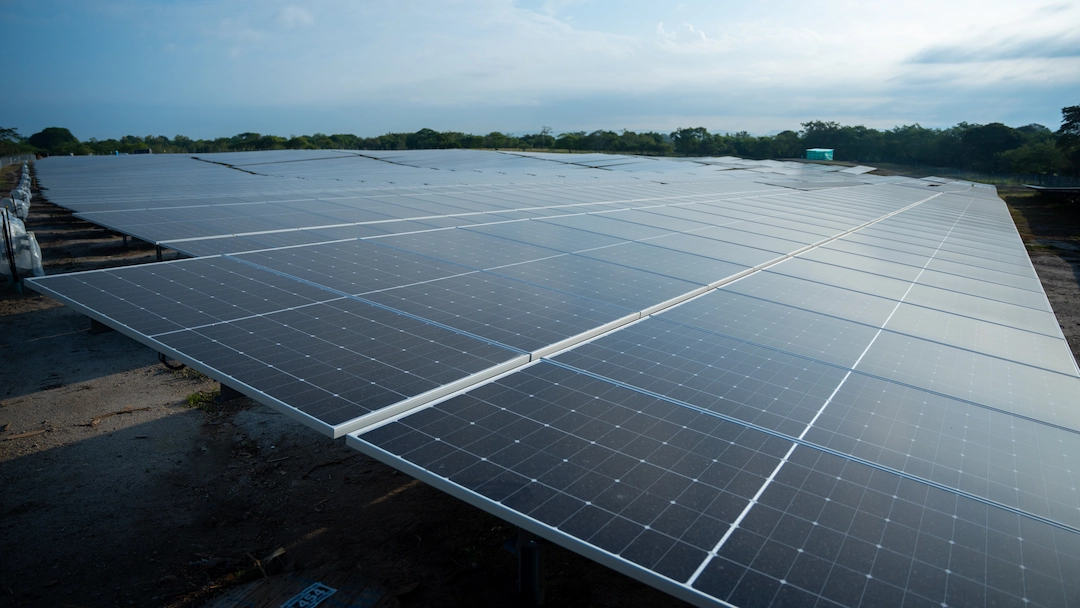
A New Frontier for Energy Investment: Colombia’s Solar Surge Backed by Strategic Capital
As the global energy landscape continues its dynamic shift, the deployment of significant capital into renewable energy infrastructure in emerging markets presents compelling opportunities for investors. The recent milestones in Colombia, particularly the commercial operation of the Pétalo del Norte I solar plant and the accelerated development of the Pradera solar-plus-storage facility, underscore a strategic pivot towards grid resilience and energy diversification. These projects, spearheaded by Climate Fund Managers (CFM) and Colombian developer Erco Energía with robust European Union backing, are not merely about adding megawatts; they represent a blueprint for de-risking large-scale green infrastructure and attracting substantial private investment, offering a tangible alternative or complement to traditional oil and gas portfolios amidst ongoing market volatility.
Colombia’s Strategic Shift: Building Resilience Through Solar and Storage
Colombia’s energy matrix has historically been heavily reliant on hydropower, a vulnerability increasingly exposed by climate-driven weather patterns leading to heightened volatility and expensive spot market purchases. The new solar facilities in northern Colombia are a direct response to this challenge. Pétalo del Norte I, now commercially operational, boasts a capacity of 26.4 MWdc (19.9 MWac) and is projected to generate over 45 GWh of clean electricity annually, powering approximately 32,600 homes and offsetting around 13,276 tonnes of CO₂ emissions. Building on this success, the Pradera project, located on adjacent land, is set to become Colombia’s largest solar-plus-storage installation. With 40 MWac of solar capacity paired with an 18 MWh battery system, Pradera is expected to produce over 95.8 GWh annually, avoiding an estimated 129,000 tonnes of CO₂ and supplying power to about 71,000 people. These projects are critical components of a broader national effort to diversify the energy mix, enhance grid stability, and provide sustainable power solutions to growing populations.
Blended Finance: De-Risking the Energy Transition for Private Capital
The financing structure behind these Colombian solar projects offers a crucial insight for energy investors. They exemplify the power of “blended finance,” a model where public capital is strategically deployed to mitigate risks, thereby making large-scale infrastructure projects more attractive for private investment. CFM’s Climate Investor One fund injected nearly USD 20 million into Pétalo del Norte I, with significant support from the European Union. This public-private partnership approach is vital for derisking ventures in emerging markets, addressing perceived political, regulatory, or market uncertainties that might deter purely private capital. Furthermore, the 15-year power purchase agreement (PPA) secured for Pétalo del Norte I provides long-term revenue stability, a critical factor for project finance and a strong signal of predictable returns, contrasting sharply with the often-fluctuating revenues in traditional fossil fuel markets. This model demonstrates how foundational public funding can unlock a multiplier effect for private investment in the global energy transition.
Navigating Volatility: Renewable Stability Amidst Oil Market Swings
The investment case for projects like Pétalo del Norte I and Pradera becomes particularly salient when viewed against the backdrop of current oil market dynamics. As of today, Brent crude trades at $90.7, representing an 8.74% decline from its daily high of $98.97. Similarly, WTI crude is down 9.24% at $82.75. This downward pressure continues a trend observed over the past two weeks, with Brent having fallen $14, or 12.4%, from $112.57 on March 27th to $98.57 just yesterday. Such pronounced daily and bi-weekly swings underscore the inherent volatility and geopolitical sensitivities of the global oil market. For investors seeking stable, long-term returns, the predictable revenue streams offered by renewable energy projects, backed by long-term PPAs and essential service provision, present a compelling diversification strategy. These assets offer a degree of insulation from the short-term speculative movements that often characterize traditional crude markets, providing a more predictable financial outlook.
Forward Outlook: Strategic Diversification Ahead of Key Energy Events
As investors look ahead, the upcoming OPEC+ Joint Ministerial Monitoring Committee (JMMC) meeting on April 17th, followed by the full Ministerial meeting on April 18th, will be critical. Market participants are keenly watching for any signals on production quotas, which could further impact global supply and price stability. In the subsequent weeks, the API Weekly Crude Inventory reports (April 21st, 28th) and the EIA Weekly Petroleum Status Reports (April 22nd, 29th), alongside the Baker Hughes Rig Count (April 24th, May 1st), will provide ongoing insights into supply and demand fundamentals. While these events predominantly influence the traditional oil and gas sector, they inadvertently highlight the strategic importance of diversifying energy portfolios. The long-term commitments to renewable energy, exemplified by the Colombian solar projects, offer a structural hedge against the uncertainties that routinely emanate from these traditional energy market catalysts. Investing in resilient, domestically generated clean energy, especially with storage capabilities, mitigates exposure to global commodity price shocks and enhances national energy security.
Addressing Investor Concerns: Long-Term Value in a Transitioning Energy Mix
Our proprietary reader intent data reveals significant investor interest in the future trajectory of energy markets, with questions such as “what do you predict the price of oil per barrel will be by end of 2026?” frequently surfacing. This consistent query highlights a fundamental desire for stability and predictable returns amidst a complex geopolitical and economic landscape. While forecasting exact oil prices remains challenging, the underlying sentiment points to a recognition of market volatility. Projects like Pétalo del Norte I and Pradera offer a compelling answer to this concern. By providing essential power generation through established 15-year PPAs, they deliver a degree of financial predictability and risk mitigation that can be attractive. Beyond financial returns, these projects also contribute significantly to local economic development, creating 270 jobs for Pétalo del Norte I (64% local, 30% women) and an estimated 380 construction jobs for Pradera. Community development programs further embed these projects within their local fabric, enhancing social license and reducing long-term operational risks, factors increasingly valued by discerning investors in the evolving energy mix.


