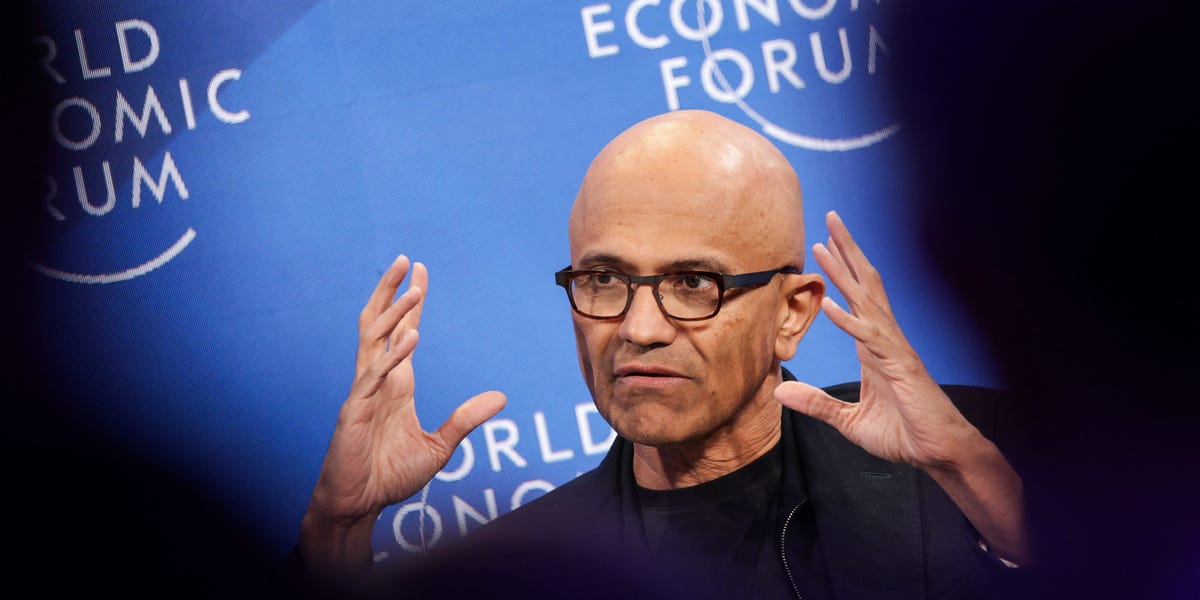
Nadella’s Culture Play Drives Microsoft Long-Term Value
While the intricacies of tech giants like Microsoft might seem a world away from the gritty realities of oil and gas exploration and production, the fundamental drivers of long-term shareholder value often transcend industry boundaries. Satya Nadella, a leader credited with revitalizing one of the world’s largest companies, frequently emphasizes the critical role of corporate culture – not as a soft, secondary concern, but as a strategic imperative. His insights into managing internal dynamics, fostering productive tension, and ensuring leadership controls the narrative are remarkably pertinent for investors scrutinizing the resilience and future prospects of energy companies navigating an era of unprecedented volatility and transition. For the oil and gas sector, where external pressures from geopolitics, ESG demands, and market swings are constant, a robust and adaptable internal culture, guided by strong leadership, is not merely advantageous; it is an essential ingredient for sustainable growth and value creation.
The Invisible Hand of Culture in O&G Performance
Just as Nadella recognized how external caricatures could define Microsoft’s internal culture, the oil and gas industry constantly battles external narratives – from environmental activism to the “peak demand” debate. These external voices, if not effectively countered and managed by internal leadership, can permeate an organization, affecting employee morale, strategic focus, and ultimately, operational efficiency. In a sector characterized by vast capital expenditures and multi-decade project timelines, internal cohesion and a unified vision are paramount. Whether it’s integrating upstream exploration with downstream refining operations or pivoting towards new energy ventures, a company’s ability to execute hinges on its internal culture. Divisions within an integrated major that are not strategically aligned, or worse, are in internal competition rather than market competition, risk squandering resources and losing momentum. Smart investors understand that a CEO’s ability to orchestrate these diverse segments towards a common goal, much like Nadella’s approach, is a key indicator of long-term organizational health and profitability.
Navigating Volatility: Culture as a Strategic Asset
The oil and gas market is inherently volatile, demanding agile and unified responses from its players. As of today, Brent crude trades at $90.7 per barrel, reflecting an 8.74% decline on the day, within a range stretching from $86.08 to $98.97. Similarly, WTI crude is priced at $82.75, down 9.24% today, fluctuating between $78.97 and $90.34. This intraday swing underscores the acute sensitivity of the market. Looking back, Brent crude has seen a significant shift over the past 14 days, falling from $112.57 on March 27th to $98.57 on April 16th – a sharp 12.4% contraction. Such rapid price movements require more than just sound financial planning; they demand a corporate culture that can quickly adapt, reallocate resources, and maintain focus on strategic objectives without internal friction. A company where leadership has cultivated trust and a clear internal narrative, as Nadella advocates, is better equipped to pivot in response to these market shocks, ensuring that teams remain aligned and productive, rather than being paralyzed by uncertainty or internal discord. This cultural resilience directly translates into better capital allocation and project execution during turbulent times, safeguarding investor value.
Leadership, Narrative, and Investor Confidence
OilMarketCap.com readers are keenly focused on future performance and market direction, asking questions like, “What do you predict the price of oil per barrel will be by end of 2026?” and “How well do you think Repsol will end in April 2026?” These inquiries highlight the constant need for clarity and confidence in a company’s strategic trajectory. Nadella’s emphasis on leadership defining the internal narrative, rather than letting external “memes” dictate it, is directly applicable here. In the oil and gas sector, leadership’s ability to articulate a compelling vision – be it through energy transition strategies, operational efficiency drives, or disciplined capital returns – and crucially, to foster a culture that believes in and executes that vision, profoundly influences investor perception. A CEO who can effectively communicate strategy to employees, building trust and ensuring internal alignment, is far more likely to instill confidence in external investors. This clear alignment helps mitigate the impact of market uncertainties, assuring stakeholders that the company is well-positioned to achieve its long-term goals despite the sector’s inherent challenges.
Upcoming Catalysts and Cultural Agility
The energy calendar is punctuated by events that can swiftly reshape market dynamics, demanding prompt and coordinated responses from oil and gas firms. Investors are keenly observing upcoming catalysts, with the OPEC+ Joint Ministerial Monitoring Committee (JMMC) meeting scheduled for tomorrow, April 17th, followed by the full Ministerial meeting on Saturday, April 18th. These meetings often lead to significant shifts in production quotas, directly impacting supply and prices. Additionally, the API Weekly Crude Inventory report on April 21st and the EIA Weekly Petroleum Status Report on April 22nd will offer crucial insights into demand and inventory levels. Our readers are already asking, “What are OPEC+ current production quotas?”, underscoring the immediate impact of these events. For an energy company, a robust and agile internal culture, one where information flows freely and decisions can be made swiftly and executed uniformly, is critical. Nadella’s philosophy of fostering “productive tension” aimed at winning in the marketplace, rather than simple social cohesion, ensures that teams are geared towards external performance. This cultural preparedness allows companies to rapidly adapt to OPEC+ decisions, adjust operational strategies based on inventory reports, or capitalize on market shifts signaled by events like the Baker Hughes Rig Count on April 24th and May 1st, ultimately bolstering their competitive edge and long-term value.


