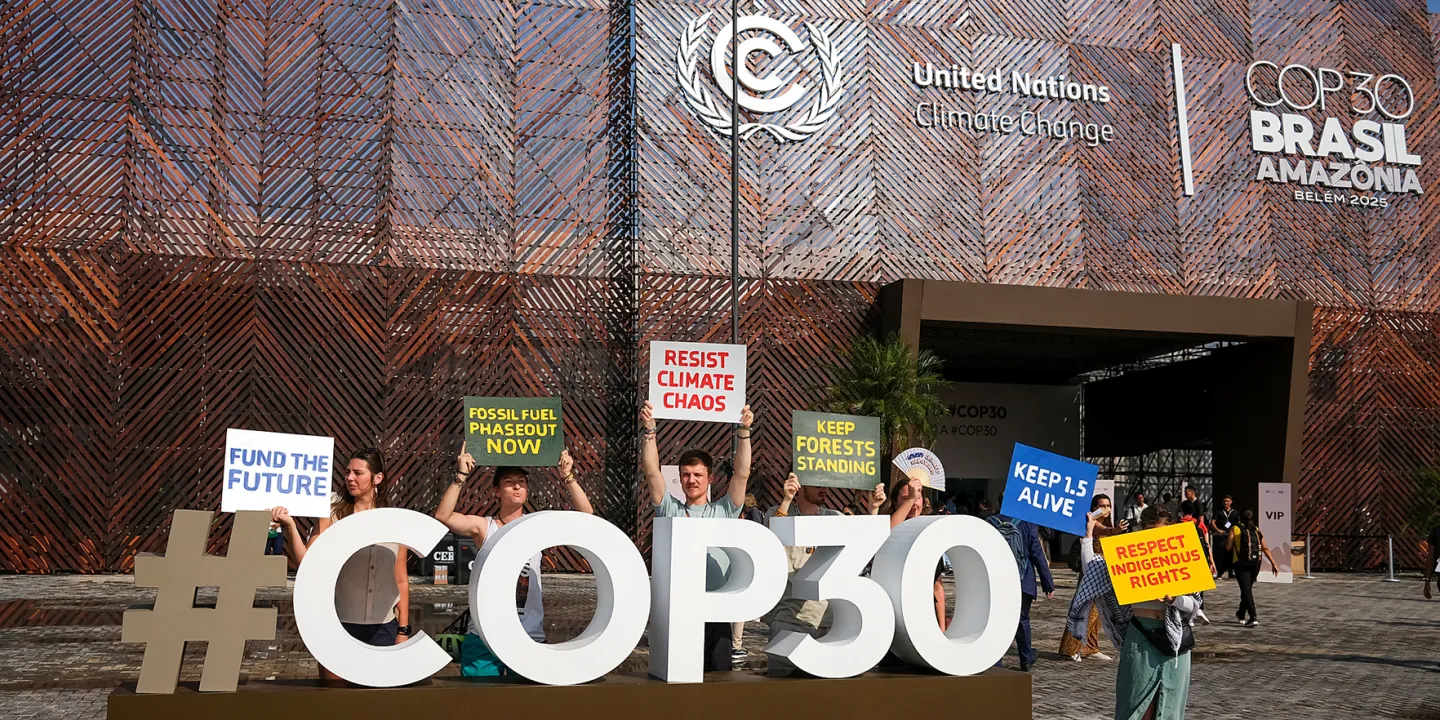
The recent COP30 summit in Belém, Brazil, ostensibly centered on climate adaptation and human well-being, delivered a clear and resonant message for oil and gas investors: the scope of ESG risk is expanding, and the redirection of global capital towards climate-resilient initiatives is accelerating. While daily market fluctuations often dominate headlines, the long-term structural shifts signaled by international climate diplomacy, coupled with significant financial commitments, are creating a new investment landscape. For those navigating the complexities of energy markets, understanding these evolving signals is paramount to assessing future project viability, securing social license, and positioning portfolios for resilience.
The $1 Trillion Adaptation Pivot: Redefining Capital Flows
A standout development from COP30 was the launch of the FINI initiative, spearheaded by the Atlantic Council’s Climate Resilience Center and the NRDC. FINI targets an ambitious USD 1 trillion in adaptation project pipelines by 2028, with a significant 20% earmarked for private investors. This initiative, leveraging USD 500 million from multilateral and philanthropic actors for risk assessment and local capacity building, is not merely a philanthropic endeavor; it represents a tangible commitment to channel substantial capital into climate adaptation. For oil and gas investors, this signals an intensified competition for investment dollars. As governments and financial institutions increasingly prioritize and de-risk adaptation projects, traditional fossil fuel ventures may face higher hurdles in attracting capital, potentially increasing their cost of financing. This directly addresses underlying concerns many of our readers are asking about the long-term price trajectory of oil and gas, as a structural shift in capital allocation can impact future supply-demand dynamics by influencing investment in both traditional and alternative energy sources.
Navigating Volatility: Market Signals Amidst ESG Headwinds
Even as COP30 laid out a long-term vision, the immediate market presents its own set of challenges and opportunities. As of today, Brent Crude trades at $90.38 per barrel, marking a significant -9.07% drop today alone, with its range spanning $86.08 to $98.97. WTI Crude mirrors this volatility, currently at $82.59, down -9.41% within a day range of $78.97 to $90.34. This sharp downturn, following a 14-day trend where Brent shed nearly 20% from $112.78, highlights the acute sensitivity of global energy markets to geopolitical shifts, supply expectations, and demand outlooks. While these immediate price movements are driven by a confluence of factors, they occur against a backdrop where the broader ESG narratives, reinforced by events like COP30, contribute to underlying uncertainty. Investors are keenly watching whether this recent dip represents a temporary correction or the beginning of a more sustained downturn, with the long-term implications of climate policy increasingly factored into their outlooks, alongside traditional supply-demand fundamentals.
Upcoming Catalysts: Short-Term Decisions, Long-Term Implications
The coming weeks will offer critical insights into the immediate direction of energy markets, but investors must weigh these short-term catalysts against the enduring shifts highlighted by COP30. On April 19th and 20th, the OPEC+ Joint Ministerial Monitoring Committee (JMMC) and Ministerial Meeting are scheduled. These gatherings are poised to significantly impact crude supply, and any decisions on production quotas will be closely scrutinized, especially following the recent price depreciation. Further guidance will come from the API Weekly Crude Inventory reports on April 21st and 28th, followed by the EIA Weekly Petroleum Status Reports on April 22nd and 29th, offering snapshots of U.S. inventory levels and demand. Additionally, the Baker Hughes Rig Count on April 24th and May 1st will provide vital information on drilling activity and future supply capacity. While these events dictate near-term trading dynamics, smart investors understand that the long-term structural pressures emanating from COP30’s adaptation agenda will continue to influence capital allocation and regulatory frameworks, shaping the investment horizon for the oil and gas sector well beyond these immediate data points.
Expanding ESG: Human Well-being as a New Investment Hurdle
COP30 marked a pivotal shift by placing human well-being at the heart of climate action, introducing initiatives like the Belém Health Action Plan and strengthening the Greening Education Partnership. The Health Action Plan, backed by USD 300 million in philanthropic funding, aims to build climate-resilient health systems, reflecting a “whole-of-society approach” to climate-linked health risks. Similarly, the education initiatives emphasize climate literacy and equipping future generations for adaptation. For oil and gas investors, these developments signify an expansion of ESG criteria. Beyond emissions reduction, companies will face increasing scrutiny on their contributions to social equity and human rights, particularly in vulnerable communities affected by climate change. Securing a social license to operate for new projects, especially in regions susceptible to climate impacts, will likely involve demonstrating tangible benefits related to health, education, and community resilience. This broadened definition of social responsibility could translate into increased operational costs, extended project timelines, and new compliance requirements, necessitating a more holistic approach to ESG integration in investment strategies.


