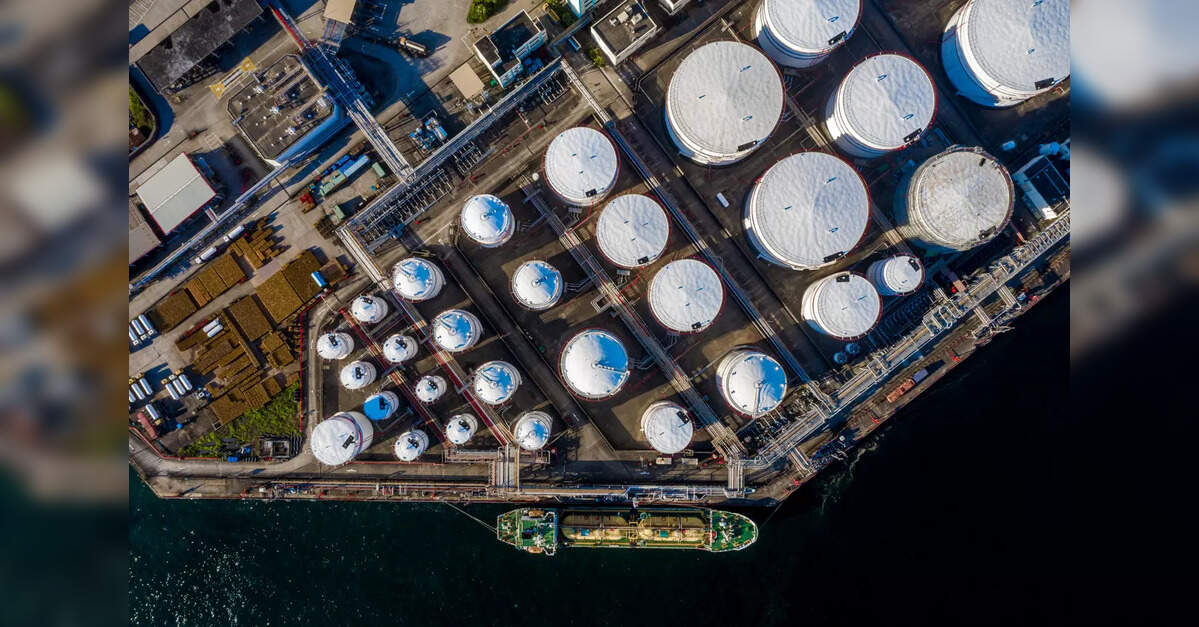
India’s recent agreement to secure its first annual liquefied petroleum gas (LPG) supply deal with the United States marks a pivotal moment in global energy trade, signaling a strategic realignment that extends far beyond a simple transaction. This landmark pact, committing India to import approximately 2.2 million tonnes per annum (MTPA) of LPG from the US Gulf Coast for the 2026 contract year, represents close to 10% of India’s annual LPG imports. For investors, this deal is not merely about physical volumes; it underscores India’s proactive pursuit of energy security and the US’s strategic push to rebalance trade relationships, all within a dynamic and often volatile global energy market. Understanding the multifaceted drivers behind this agreement, from geopolitical risk mitigation to evolving trade economics, is crucial for navigating future investment opportunities in the oil and gas sector.
India’s Strategic Diversification: De-Risking a Critical Energy Supply
India’s energy landscape is characterized by a significant dependence on imported LPG, with two-thirds of its consumption met by international markets. Historically, this reliance has been heavily concentrated, with Gulf suppliers – predominantly Saudi Arabia, the UAE, and Qatar – accounting for over 90% of these critical imports. This high concentration has long been identified as a strategic vulnerability, particularly in a region prone to geopolitical instability. The recent deal directly addresses this concern, aiming to diversify India’s supply base and enhance its energy resilience. The stated 2.2 MTPA commitment for 2026 is a substantial move towards mitigating the “risk of relying on a single region,” a lesson starkly reinforced by past regional flare-ups.
The political sensitivity of LPG supply in India cannot be overstated. With consumption more than doubling in a decade to serve 3.3 million households, any disruption in supply carries significant domestic implications. Unlike crude oil, where India maintains larger inventories and has a more diversified source portfolio, LPG stockpiles are notably thin. This makes LPG far more exposed to import shocks than other fuels like petrol, diesel, or aviation turbine fuel (ATF), which India exports in large volumes and can redirect for domestic use if necessary. This strategic imperative for diversification, therefore, is not just economic but also deeply intertwined with national stability and public welfare, making the US deal a cornerstone of India’s long-term energy planning.
The US-India Trade Nexus and Evolving LPG Arbitrage
From the US perspective, this deal serves a dual purpose: strengthening trade ties with a key ally and securing a vital market for its burgeoning energy output. The US propane sector has witnessed remarkable growth, with output more than doubling over the past decade and exports increasing for 17 consecutive years. As geopolitical shifts, such as the US-China trade dynamics, impact traditional export markets, finding alternative, stable buyers like India becomes paramount. This agreement aligns with India’s prior commitment in February to substantially boost energy purchases from the US, targeting an increase of $10 billion to $25 billion, thereby actively working to rebalance the trade relationship with Washington.
A critical element of this new trade corridor is the pricing mechanism. Indian state-run companies, including IndianOil, Hindustan Petroleum, and Bharat Petroleum, will procure US LPG based on the Mont Belvieu benchmark, the primary US spot reference. This contrasts with traditional Gulf suppliers, who typically price LPG against Saudi Aramco’s contract price (CP). The viability of this trans-oceanic trade hinges on the spread between Mont Belvieu and Saudi CP, needing to be wide enough to cover the substantial freight costs, including Panama Canal fees, to make US LPG competitive in Asian markets. Interestingly, the contract includes a flexibility clause, allowing US suppliers to ship one in every four cargoes from other countries if American volumes become uneconomic. This adaptive structure provides a crucial safeguard against unfavorable market conditions, underscoring the innovative nature of this long-term agreement.
Navigating Current Volatility and Future Market Signals
Investors closely monitor the broader crude oil market for signals, and the current environment presents a complex picture. As of today, Brent crude trades at $90.38, reflecting a significant 9.07% drop within the day’s range of $86.08-$98.97. WTI crude similarly saw a steep decline, currently at $82.59, down 9.41% within its daily range of $78.97-$90.34. This recent downturn follows a notable trend over the past 14 days, with Brent crude shedding nearly 20% from $112.78 on March 30th to its current level. Such sharp corrections naturally lead investors to ask: “is WTI going up or down?” and “what do you predict the price of oil per barrel will be by the end of 2026?”
This volatility is a key consideration for the new India-US LPG deal. While LPG markets have their own dynamics, they are not entirely decoupled from crude. The arbitrage window, dependent on Mont Belvieu and Saudi CP spreads, can be influenced by global energy price trends. Looking ahead, the immediate horizon is packed with events that could shape market sentiment. Investors will be keenly watching the OPEC+ Joint Ministerial Monitoring Committee (JMMC) meeting on April 19th, followed by the full OPEC+ Ministerial Meeting on April 20th. Any decisions on production levels could significantly impact crude prices, and by extension, the competitive landscape for LPG. Further insights into supply-demand balances will come from the API Weekly Crude Inventory report on April 21st and the EIA Weekly Petroleum Status Report on April 22nd, with subsequent reports later in the month. These forward-looking data points provide critical context for understanding the long-term viability and profitability of new trade routes like the India-US LPG corridor, influencing how investors position their portfolios through 2026 and beyond.
Investment Implications: Beyond the Barrel
This India-US LPG deal offers a compelling case study for investors keen on understanding the evolving global energy architecture. For companies in the US midstream sector, particularly those involved in LPG export infrastructure along the Gulf Coast, this agreement signals sustained demand and justifies further investment in export capacity. For Indian energy companies, the diversification strengthens their supply chain resilience and potentially provides more stable pricing, reducing exposure to regional geopolitical premiums. The competitive response from traditional suppliers is also noteworthy; anticipating increased US volumes into Asia, Saudi Aramco already reduced its CP prices in November, marking its lowest level since August 2023. This proactive adjustment underscores the competitive pressures that new trade routes can exert on established markets.
For investors seeking to answer the broader question of “what do you predict the price of oil per barrel will be by end of 2026?”, this deal highlights a crucial theme: resilience through diversification. While crude prices remain subject to macro-economic forces and geopolitical tensions, strategic agreements for specific products like LPG create pockets of stability and growth within the broader energy complex. This shift towards more diversified and secure supply chains, driven by national energy security imperatives and trade rebalancing efforts, will continue to shape investment opportunities. Companies with robust logistics, flexible sourcing strategies, and strong government backing in critical energy markets are well-positioned to thrive in this evolving landscape.


