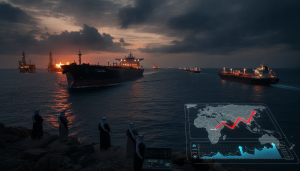
The global energy landscape is bracing for significant upheaval as legislative efforts gain momentum to impose unprecedented tariffs on nations continuing to purchase Russian energy. This initiative, signaling strong support for intensified legislative efforts to disrupt Moscow’s financial lifelines, could fundamentally reshape international crude flows and introduce a new layer of volatility for oil and gas investors. The proposed measures, which include tariffs as high as 500% on imports from nations that continue to purchase Russian energy without actively backing Ukraine, specifically target major consumers like China and India. This marks a notable shift from prior hesitancy, where previous efforts focused on brokering peace talks between the warring nations. As the prospect of extending these punitive measures to include Iran also emerges, the implications for global supply, demand, and price stability become critically important for anyone invested in the energy sector.
Geopolitical Risk Premium Hits Volatile Markets
The specter of aggressive tariffs targeting major crude importers like China and India has immediately amplified geopolitical risk in energy markets. As of today, Brent crude trades at $89.11, marking a significant 10.34% decline from its open, with WTI mirroring this trend at $81.73. This sharp intraday correction, amidst a wide daily range ($86.08-$98.97 for Brent), follows a broader 14-day trend where Brent has shed over 12% from $112.57 on March 27th to $98.57 yesterday. While today’s specific downturn may reflect a confluence of factors, the overarching sentiment is now heavily influenced by the prospect of escalating trade tensions. The introduction of potential 500% tariffs on countries importing Russian energy injects a substantial layer of geopolitical risk premium into an already volatile market. Investors are grappling with the dual threat: reduced global oil supply if Russian crude struggles to find buyers, versus a potential demand shock if these tariffs cripple economic activity in key Asian economies. The potential inclusion of Iran in these measures could further exacerbate supply concerns, given the nation’s significant, though currently constrained, production capacity and its strategic position relative to vital shipping lanes.
OPEC+ Decisions Under Increased Scrutiny
The timing of this legislative push is critical, landing just ahead of pivotal energy events. With OPEC+ scheduled to hold its JMMC and full Ministerial meetings on April 17th and 18th respectively, the cartel’s decisions will be made under an entirely new set of geopolitical pressures. Investors are keenly watching for any signals regarding production quotas, especially given the current backdrop of fluctuating crude prices and the potential for a seismic shift in global trade routes. Our proprietary reader intent data reveals that investors are frequently asking “What are OPEC+ current production quotas?” and seeking insights into the cartel’s strategic direction. The prospect of a significant portion of Russian crude being effectively taken off the market, or redirected at steep discounts, will undoubtedly be a central point of discussion for the cartel. This creates a complex scenario for their strategy: balancing market stability against potential supply shortfalls or gluts caused by these geopolitical shifts. Any move by OPEC+ to either increase or maintain current output levels will have vastly different implications depending on the trajectory of these proposed US tariffs.
Navigating the Long-Term Demand and Supply Outlook
Beyond the immediate market reactions, the proposed tariffs introduce profound uncertainty into the long-term supply and demand outlook for crude oil. Our platform’s reader intent data highlights this concern, with queries such as “what do you predict the price of oil per barrel will be by end of 2026?” becoming increasingly prevalent. If China and India, two of the world’s largest energy consumers, face prohibitive tariffs on Russian oil, their options are stark: either pay significantly more for alternative sources, or face severe economic headwinds. Both scenarios could lead to a global reallocation of crude supplies and a re-evaluation of demand forecasts. A slowdown in Asian economic powerhouses would inevitably dampen global oil demand, potentially counteracting any supply-side disruptions. Furthermore, the downstream implications are notable; gasoline prices currently trade at $2.91, down 5.82% today, reflecting broader market anxiety. The implementation of such aggressive tariffs could dramatically shift these long-term forecasts, introducing an unparalleled level of uncertainty not just for crude, but for the entire energy value chain, from refining margins to consumer fuel costs.
Investment Strategy in a Radically Shifting Landscape
For investors in the oil and gas sector, this evolving geopolitical landscape necessitates a rigorous reassessment of portfolio strategy. Questions such as “How well do you think Repsol will end in April 2026?” underscore the immediate need for investors to assess specific company exposure to these shifting geopolitical sands. Companies with significant refining capacity reliant on specific crude grades, or those with heavy exposure to Asian markets, could face direct impacts from altered trade flows and increased input costs. Conversely, exploration and production (E&P) companies with diverse market access and strong balance sheets might be better positioned to weather the storm or capitalize on new opportunities arising from supply reconfigurations. The potential for higher oil prices due to constrained global supply could benefit producers, but this must be weighed against the risk of a global economic slowdown impacting overall demand. Monitoring industry activity, such as the upcoming Baker Hughes Rig Count reports on April 24th and May 1st, will offer crucial insights into producer confidence and investment levels in this new, highly volatile environment. Diversification, robust hedging strategies, and a keen eye on real-time geopolitical developments will be paramount for navigating the months ahead.