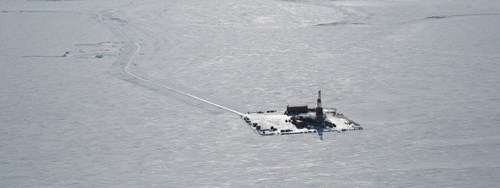
The regulatory landscape for Arctic oil and gas exploration just experienced a seismic shift, with the Trump administration’s decision to rescind restrictions on drilling in Alaska’s vast state petroleum reserve. This move reverses a prior policy by the Biden administration that had placed significant limitations on an area estimated to hold a staggering 8.7 billion barrels of oil. For investors eyeing long-term E&P opportunities and American energy independence, this development signals a renewed commitment to unlocking substantial domestic resources, potentially reshaping the supply narrative for years to come. While current market volatility presents immediate challenges, the strategic implications for companies with existing footprints and ambitions in the Arctic are profound, warranting a closer look at the potential gains and the broader market context.
Arctic Policy Reversal: Unlocking Vast Untapped Potential
The recent policy reversal, finalized on Thursday, directly targets a 2024 rule that had banned drilling on nearly half of the 23 million-acre National Petroleum Reserve-Alaska (NPR-A). This rugged expanse, roughly the size of Indiana, had seen 13 million acres designated as “special areas” under the previous administration, severely limiting future oil and gas leasing and maintaining existing prohibitions on 10.6 million acres. The current administration’s action effectively reopens these 13 million acres, restoring what Interior Secretary Doug Burgum termed “common-sense management” and aiming to bolster “American Energy Dominance.”
This strategic pivot holds significant implications for key players already entrenched in the region. ConocoPhillips, which has actively pursued exploration near its Willow project within the reserve, had previously filed a lawsuit challenging the restrictions. The company, holding 1.8 million acres of state and federal leases in Alaska, including 1 million net undeveloped acres as of 2023, is now well-positioned to advance its exploration efforts, including test wells and seismic studies. Other active operators mentioned in the region include Santos Ltd., Repsol SA, and Armstrong Oil & Gas Inc., all of whom stand to benefit from the expanded access. Furthermore, the Interior Department’s earlier decision to reopen the 1.56 million-acre coastal plain of the Arctic National Wildlife Refuge (ANWR) to oil and gas leasing, coupled with plans for a lease sale this winter in the state petroleum reserve, underscores a comprehensive push to revitalize Arctic production. Alaska’s own forecasts are ambitious, projecting crude production from the NPR-A to climb dramatically from 15,800 bpd in fiscal 2023 to an estimated 139,600 bpd by fiscal 2033, illustrating the long-term vision behind these policy changes.
Navigating Current Market Headwinds Amidst Long-Term Opportunity
While the Arctic policy shift undoubtedly provides a long-term bullish signal for domestic supply, investors must contextualize this development within the prevailing market environment. Our proprietary data indicates a challenging short-term outlook for crude prices. As of today, Brent crude trades at $90.38, reflecting a significant 9.07% decline within the day’s volatile range of $86.08 to $98.97. Similarly, WTI crude has experienced a sharp dip, currently trading at $82.59, down 9.41% today. This daily price action extends a broader bearish trend observed over the past two weeks, with Brent having plummeted nearly 20% from $112.78 on March 30th to its current level. Gasoline prices are also feeling the pressure, sitting at $2.93, down 5.18% today.
Our internal reader intent data highlights this immediate concern, with a frequent query this week being: “Is WTI going up or down?” The answer, in the short term, points to downward pressure. This significant market correction suggests that macroeconomic concerns, potentially related to global demand outlooks or increased supply elsewhere, are currently outweighing the longer-term implications of increased Alaskan access. For E&P companies, this means that while the door to vast reserves has opened, the economics of immediate development will still be heavily influenced by prevailing crude prices. Projects in the Arctic, known for higher upfront capital expenditures and longer lead times, require a more stable and robust price environment to maximize their profitability. Therefore, investors must balance the undeniable long-term resource potential with the current volatility and the potential for a sustained period of lower prices.
Investor Focus: Strategic Implications for E&P Players
The policy reversal offers a tangible, though longer-dated, upside for companies with existing leases and expertise in the challenging Arctic environment. ConocoPhillips, with its established presence and advanced Willow project, stands out as a primary beneficiary. Its previous legal challenges and ongoing exploration applications underscore a strong commitment to the region. The lifting of restrictions removes a significant regulatory hurdle, potentially accelerating project timelines and de-risking future investments in its undeveloped acreage.
Beyond ConocoPhillips, companies like Santos Ltd., Repsol SA, and Armstrong Oil & Gas Inc., also with interests in the NPR-A, will re-evaluate their portfolios for expanded opportunities. For investors, monitoring these companies’ capital expenditure plans and exploration budgets in the coming quarters will be crucial. Our reader intent data shows a specific interest in individual players, with questions like “How well do you think Repsol will end in April 2026?” This highlights the need for investors to dig into specific company strategies. While April 2026 is too soon for significant production impacts from this policy, the long-term potential for these companies to enhance their reserve base and future production profiles is now significantly improved. The strategic advantage lies with those E&P firms possessing the technical know-how, financial strength, and environmental stewardship to operate effectively in such a sensitive and remote region. This development allows them to build a stronger long-term investment thesis, even if current market prices require careful budgeting and project staging.
Upcoming Catalysts and the Long-Term Trajectory of Arctic Oil
Looking ahead, several upcoming events will shape the broader market and, by extension, the economic viability of Alaskan oil and gas projects. The immediate horizon includes critical OPEC+ meetings, with the Joint Ministerial Monitoring Committee (JMMC) scheduled for April 19th and the full Ministerial Meeting on April 20th. Any decisions from these gatherings regarding production quotas could significantly influence global crude prices, either reinforcing current bearish sentiment or providing a much-needed upward impetus. Such shifts directly impact the breakeven costs and profitability of Arctic developments, which typically require higher prices to justify investment.
Domestically, the weekly API and EIA crude inventory reports, scheduled for April 21st/28th and April 22nd/29th respectively, will offer insights into U.S. supply and demand dynamics, potentially reflecting early signs of increased activity or broader market trends. The Baker Hughes Rig Count on April 24th and May 1st will further indicate North American drilling activity, although direct impacts from the Alaskan policy will take longer to materialize. The planned lease sale this winter in the state petroleum reserve is a key forward-looking event, as it will reveal the level of industry interest and commitment to the newly accessible acreage. While the immediate market is volatile, investors asking “What do you predict the price of oil per barrel will be by end of 2026?” should consider that these Alaskan developments, while not a quick fix, contribute to a long-term supply picture that could influence future price ceilings. The trajectory of Arctic oil production, marked by significant growth forecasts through 2033, suggests a patient but potentially rewarding investment horizon for those willing to look beyond immediate market fluctuations and bet on the enduring demand for hydrocarbons coupled with a favorable regulatory environment.


