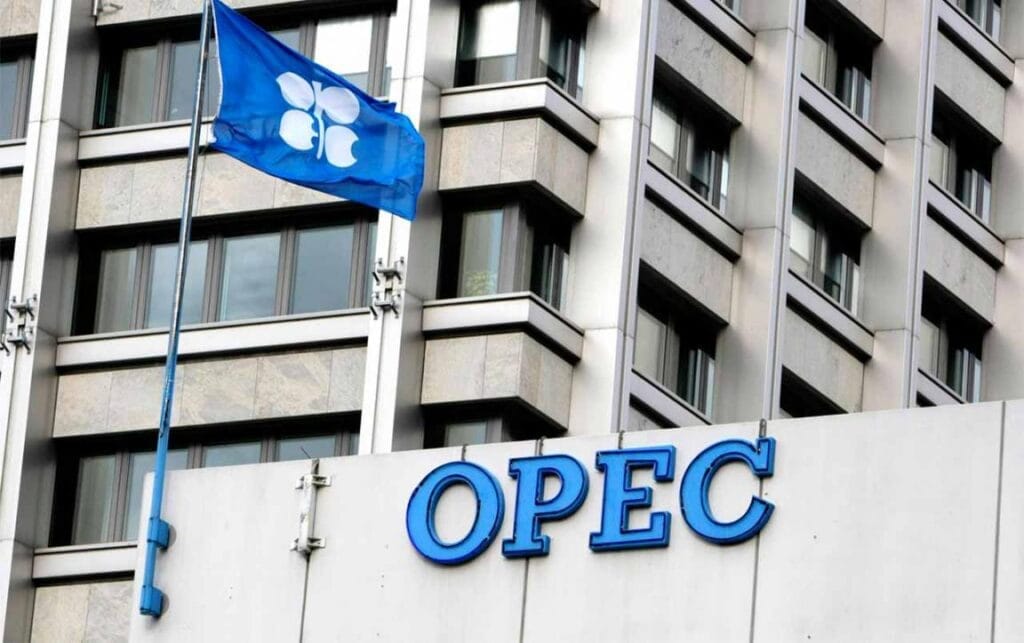
Azerbaijan’s strategic pivot towards sustainable development and energy diversification has received a significant endorsement this week, with the OPEC Fund for International Development committing up to US$1 billion in financing over the next three years. This substantial capital injection is earmarked for critical infrastructure projects spanning water security, transport networks, and urban resilience, alongside robust support for renewable energy initiatives. For astute energy investors, this move signals more than just development aid; it represents a calculated strategy by a key oil-producing nation to build economic stability beyond its hydrocarbon revenues, creating new avenues for growth and de-risking its future in a volatile global energy landscape. Our proprietary analysis suggests this commitment aligns perfectly with the evolving demands of both domestic priorities and international investment standards, positioning Azerbaijan as a compelling case study in energy transition.
Navigating Volatility: Azerbaijan’s Strategic Diversification
The OPEC Fund’s commitment of US$1 billion for Azerbaijan over three years arrives at a crucial juncture for global energy markets. As of today, Brent crude trades at $90.38, marking a sharp 9.07% decline within the day, with its range fluctuating significantly between $86.08 and $98.97. Similarly, WTI crude sits at $82.59, down 9.41% today, experiencing a daily range of $78.97 to $90.34. This immediate downturn is part of a broader trend: Brent has plummeted from $112.78 on March 30th to its current $90.38, a staggering 19.9% decrease in just over two weeks. This dramatic price volatility underscores the inherent risks for economies heavily reliant on crude oil exports.
In this context, Azerbaijan’s pursuit of economic diversification, anchored by its “Azerbaijan 2030” national priorities, becomes not just prudent but essential. The US$1 billion funding package, structured under a Country Partnership Framework signed in June 2025, specifically targets sectors like water and sanitation upgrades, improved transport corridors, and sustainable urban development. These initiatives are designed to foster long-term, stable economic growth, reducing the country’s exposure to the kind of sharp commodity price swings we’re witnessing today. For investors, this signals a nation actively building resilience, creating a more predictable operating environment for non-oil related ventures and strengthening the overall economic fabric.
Fueling Green Growth: A Focus on Sustainable Infrastructure
Beyond traditional infrastructure, a significant portion of the OPEC Fund’s support is directed towards Azerbaijan’s burgeoning clean energy sector. The country is making tangible strides in renewable energy, exemplified by projects such as the 240.5 MW Khizi–Absheron wind project, developed by ACWA Power. This commitment extends to emerging urban rehabilitation efforts, positioning Azerbaijan as a leader in sustainable development within the region. Investors increasingly scrutinize a nation’s commitment to environmental, social, and governance (ESG) principles, and this funding package provides clear evidence of Azerbaijan’s proactive stance. The focus on water security and climate resilience, in particular, addresses critical future challenges, aligning national development with global sustainability mandates.
For global capital seeking responsible and impactful allocations, Azerbaijan’s strategy presents a compelling case. The transparency and clear governance outlined in the Country Partnership Framework provide clarity on project selection and public expenditure alignment with long-term climate and economic plans. This robust framework is crucial for attracting not only multilateral lenders but also private sector partners looking for de-risked opportunities in the green economy. The investment in renewable energy capacity, alongside upgrades to essential public services, creates a dual benefit: enhancing domestic energy independence and fostering a healthier, more productive populace capable of driving future economic expansion.
Investor Questions and the Long View on Energy Markets
Our proprietary reader intent data reveals a keen interest among investors in the trajectory of global energy prices. Questions like ‘will WTI trend upwards or downwards’ and ‘what do you predict the price of oil per barrel will be by end of 2026?’ frequently dominate our platform’s queries. This acute focus on price volatility underscores the uncertainty permeating the oil and gas sector. Azerbaijan’s strategic decision to secure long-term, stable development financing from the OPEC Fund acts as a significant hedge against this market unpredictability. By investing in non-oil infrastructure and renewable energy, the country aims to cultivate new revenue streams and economic drivers that are less susceptible to the ebb and flow of crude oil prices.
This approach offers a valuable lesson for investors evaluating energy-producing nations. While the immediate focus might be on short-term price movements and the performance of traditional oil and gas giants, the long-term viability of these economies increasingly hinges on their ability to diversify. The OPEC Fund, as a stable capital provider, offers a stark contrast to the often-fickle nature of market financing, providing Azerbaijan with a predictable runway for its ambitious development goals. For those seeking durable returns and reduced exposure to commodity price swings, observing how nations like Azerbaijan leverage such partnerships to build diversified, sustainable economies provides critical insight into future investment opportunities.
Upcoming Events and Azerbaijan’s Evolving Role
The immediate future holds several key events that will undoubtedly influence the global energy dialogue, and by extension, the context for Azerbaijan’s ongoing diversification. The OPEC+ Joint Ministerial Monitoring Committee (JMMC) Meeting on April 19th, followed by the full OPEC+ Ministerial Meeting on April 20th, will be closely watched for any signals regarding production policy. While these decisions primarily impact crude oil supply and prices, they indirectly reinforce the strategic imperative for nations like Azerbaijan to diversify. Should OPEC+ opt for production cuts, potentially supporting higher prices, it offers a temporary reprieve; however, the long-term trend towards energy transition and demand uncertainty remains.
Further insights into market fundamentals will come from the API Weekly Crude Inventory on April 21st and the EIA Weekly Petroleum Status Report on April 22nd, providing a snapshot of US supply and demand dynamics. These indicators, along with the Baker Hughes Rig Count on April 24th, contribute to the broader market sentiment that makes economic diversification so critical for oil-dependent states. Azerbaijan, as a significant, albeit diversifying, energy producer, must deftly navigate its commitments within the OPEC+ framework while accelerating its green agenda. This dual strategy positions the nation to benefit from both traditional energy markets and the burgeoning opportunities within the global energy transition, an attractive proposition for forward-thinking investors.


