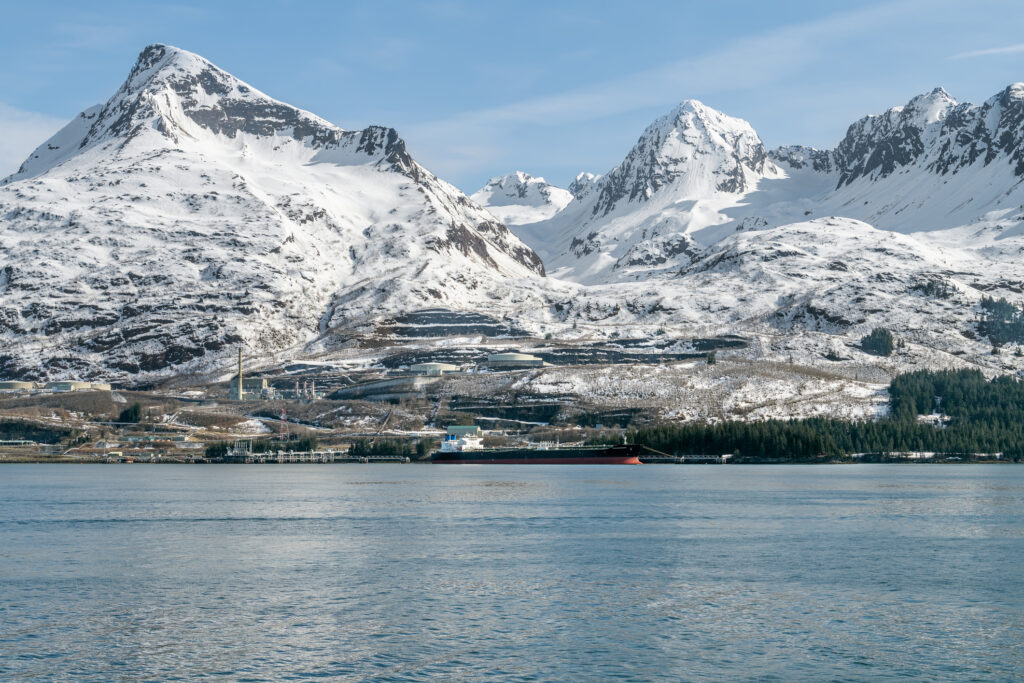
The strategic alliance between Glenfarne Alaska LNG, LLC and Baker Hughes marks a pivotal moment for the Alaska LNG Project, a development poised to significantly impact global energy markets and reinforce U.S. energy security. This partnership, solidified by Baker Hughes’ selection as a key technology supplier and its strategic investment in the project, signals accelerating momentum towards a final investment decision (FID). For investors monitoring the evolving energy landscape, this development highlights the enduring appeal of robust, long-term natural gas infrastructure amidst fluctuating crude markets and a heightened focus on reliable energy supply.
Strategic Alliance Bolsters Alaska LNG’s Path to FID
Glenfarne’s selection of Baker Hughes for critical main refrigerant compressors for the LNG terminal and power generation equipment for the North Slope gas treatment plant is a major endorsement of the project’s technical viability and execution strategy. Baker Hughes, a leader in energy technology, bringing both its expertise and a strategic investment, provides a significant vote of confidence. This alliance, announced with prominent backing from the U.S. Secretaries of Interior and Energy, underscores the project’s national importance. The Alaska LNG Project is envisioned in two financially independent phases to streamline execution. Phase One, an 807-mile, 42-inch pipeline designed to meet Alaska’s domestic energy needs, is progressing rapidly, with Worley expected to complete final engineering and cost analysis in December. This upcoming milestone is critical as it directly precedes an FID for this initial phase, providing a clear timeline for investors to anticipate concrete progress and capital deployment.
Navigating Market Volatility: LNG’s Enduring Value Proposition
The broader energy market currently presents a picture of notable volatility. As of today, Brent crude trades at $90.38, reflecting a significant 9.07% decline within the day, with a range spanning from $86.08 to $98.97. Similarly, WTI crude stands at $82.59, down 9.41% today. This sharp downturn is part of a broader trend, with Brent having fallen by $22.4, or 19.9%, from $112.78 just two weeks ago on March 30. Such rapid price movements in crude oil can create uncertainty across the energy sector. However, the strategic drivers for natural gas and LNG projects often operate on a different timeline and with different underlying fundamentals. The long-term demand for secure, affordable, and reliable natural gas as a transition fuel and a cornerstone of global energy security remains robust. Projects like Alaska LNG, with their significant scale and long operational horizons, are insulated to a degree from daily crude price swings by long-term contracts and strategic national energy objectives, making them attractive for investors seeking stability and predictable returns over the coming decades.
Investor Focus: Long-Term Outlook and Geopolitical Resilience
Our proprietary reader intent data reveals a consistent investor focus on the long-term trajectory of energy markets, particularly questions around crude oil price predictions for late 2026 and the stability of global supply. While precise price forecasts are inherently challenging, the Alaska LNG project offers a critical lens through which to view future supply dynamics. Its successful development, particularly Phase Two which includes the LNG terminal, would introduce a substantial new source of U.S. natural gas to the global market, enhancing supply diversity and potentially mitigating future price volatility driven by geopolitical events or supply disruptions. Investors are keenly aware of OPEC+’s role in managing global supply, and while their current production quotas heavily influence short-to-medium term crude prices, the strategic importance of LNG projects like Alaska LNG lies in their ability to provide a more stable, long-term energy backbone, reducing reliance on potentially volatile regions. This project embodies the U.S. commitment to strengthening energy security for itself and its allies, a fundamental driver often prioritized over short-term commodity price fluctuations.
Upcoming Events and Their Impact on Investment Decisions
The immediate calendar is packed with events that will shape the near-term energy market, indirectly influencing the investment climate for major projects like Alaska LNG. This weekend, the OPEC+ JMMC Meeting on April 19th, followed by the Ministerial Meeting on April 20th, will be closely watched for any signals regarding production policy. Any decision to adjust quotas could significantly impact crude prices and global supply sentiment. Throughout the next two weeks, the API Weekly Crude Inventory reports (April 21st, April 28th) and the EIA Weekly Petroleum Status Reports (April 22nd, April 29th) will provide crucial insights into U.S. supply and demand dynamics, influencing short-term market sentiment for crude, gasoline, and natural gas. Our current gasoline prices, at $2.93 and down 5.18% today, reflect immediate market conditions, but these reports will offer forward indications. Furthermore, the Baker Hughes Rig Count on April 24th and May 1st will shed light on North American drilling activity, reflecting industry confidence and future production trends. While these events directly impact the broader commodity market, the impending completion of Worley’s engineering for Alaska LNG’s Phase One in December, leading to an FID, represents a critical project-specific milestone. This convergence of macro market signals and micro project progress creates a compelling narrative for investors considering long-term positions in strategic energy infrastructure.