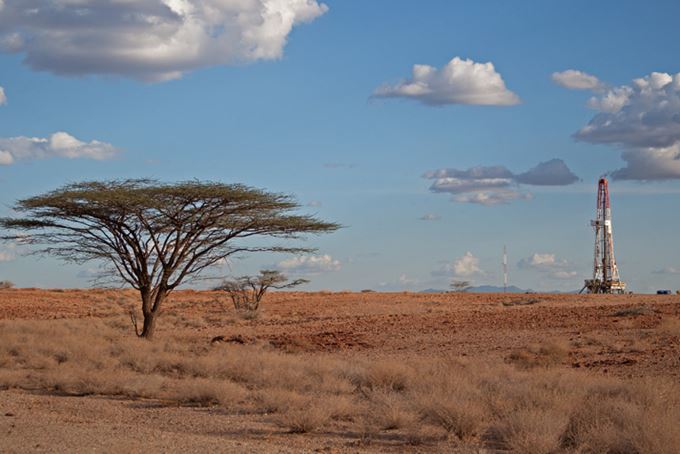
Kenya’s ambitious journey to becoming an oil producer is entering a critical new phase, with local player Gulf Energy Ltd. driving the charge. Following its acquisition of Tullow Oil Plc’s long-stalled crude discoveries in the South Lokichar basin, Gulf Energy has now secured initial approval for its Field Development Plan (FDP), setting sights on first oil by December 2026. This development marks a significant step for East Africa’s energy landscape, presenting a compelling investment narrative against a backdrop of fluctuating global crude prices and an evolving supply-demand dynamic.
Kenya’s Path to Production: A Decade in the Making, Now Accelerating
The path to oil production in Kenya has been protracted, spanning more than a decade since Tullow Oil first made significant discoveries in the South Lokichar basin. Despite the proven reserves, Tullow faced persistent challenges in commercializing the assets, ultimately leading to its decision to divest and focus on debt reduction. Gulf Energy, a Nairobi-based oil and gas trader, stepped in, acquiring the assets for $120 million. This deal, which saw Tullow receive an initial $40 million tranche in September, was contingent upon the buyer submitting a comprehensive FDP to Kenya’s regulator.
The recent announcement by Cabinet Secretary for Energy Opiyo Wandayi, confirming the initial approval of Gulf Energy’s FDP for the South Lokichar project, injects fresh momentum into the venture. The next crucial hurdle involves forwarding the approved FDP to Parliament for ratification. Once ratified, the project will move into its investment and development phases, with an aggressive target of achieving first oil by December 2026. This timeline underscores Gulf Energy’s commitment and the Kenyan government’s resolve to unlock the country’s petroleum potential, transforming these long-dormant discoveries into revenue-generating assets.
Navigating Volatility: Project Economics Amidst a Shifting Oil Landscape
The economic viability of new oil projects, particularly those with multi-year development cycles, is intrinsically linked to the prevailing and projected crude oil prices. As of today, Brent Crude trades at $90.38 per barrel, reflecting a sharp 9.07% decline over the session, with the day’s range spanning from $86.08 to $98.97. Similarly, WTI Crude stands at $82.59, down 9.41% for the day. This immediate volatility is part of a broader trend; Brent has seen a significant downturn of nearly 20% over the past 14 days, plummeting from $112.78 on March 30th to its current level.
Such dramatic price swings present both challenges and opportunities for investments like the South Lokichar project. While a lower price environment can compress margins and make securing financing more complex, the long-term outlook remains critical. For Gulf Energy, bringing production online by December 2026 means making substantial capital commitments today, betting on a future price environment that justifies the investment. Investors closely monitor these daily movements and the broader trends, understanding that the cost of capital and the ultimate profitability of a project are heavily influenced by the market’s perception of future oil prices. The current softness in gasoline prices, at $2.93 per gallon, further reflects a broader energy market adjustment that requires careful consideration for any new upstream venture.
Forward Outlook: Key Events Shaping the 2026 Oil Price Environment
Investors frequently ask about the trajectory of oil prices, with a recurring question being, “what do you predict the price of oil per barrel will be by end of 2026?” For a project targeting first oil in December 2026, understanding this forward outlook is paramount. The global oil market is a complex interplay of supply, demand, and geopolitical factors, all influenced by a regular drumbeat of market-moving events.
In the immediate term, upcoming events will set the tone for market sentiment. The OPEC+ Joint Ministerial Monitoring Committee (JMMC) Meeting on April 19th, followed by the full OPEC+ Ministerial Meeting on April 20th, are critical. Any decisions regarding production quotas or supply management strategies from these gatherings will directly impact global crude availability and, consequently, prices. Further insights into demand and supply fundamentals will come from weekly data releases: the API Weekly Crude Inventory on April 21st and 28th, and the EIA Weekly Petroleum Status Report on April 22nd and 29th, will provide crucial updates on U.S. stock levels and refining activity. Meanwhile, the Baker Hughes Rig Count on April 24th and May 1st will offer an indication of North American production trends. These data points, though short-term, collectively contribute to the market’s long-term price expectations, influencing the investment climate for new projects like South Lokichar. The collective impact of these events, alongside global economic growth projections and geopolitical stability, will paint the picture for oil prices as Gulf Energy approaches its production target.
Investor Considerations: Risks, Rewards, and Local Capacity
The South Lokichar project, under Gulf Energy’s stewardship, presents a unique blend of risks and rewards for investors. On the reward side, successful development could unlock significant value from proven reserves, providing substantial returns if crude prices stabilize at favorable levels by late 2026. Moreover, the project holds strategic importance for Kenya, bolstering its energy independence and potentially creating numerous economic opportunities domestically.
However, significant risks remain. Project development in frontier markets often faces delays due to infrastructure challenges, regulatory hurdles, or unforeseen technical complexities. The parliamentary ratification of the FDP is a necessary and critical step that requires careful monitoring. Furthermore, the volatility observed in crude prices underscores the inherent market risk. While some investors inquire about OPEC+ current production quotas, highlighting the influence of major producers, Gulf Energy’s success will also hinge on its operational efficiency and ability to bring the project online on schedule and within budget.
The local ownership aspect, while potentially fostering stronger government support, also brings scrutiny regarding Gulf Energy’s capacity to raise the necessary capital and deploy the advanced technical expertise typically associated with large-scale upstream developments. Investors will be closely watching for financing announcements, partnership agreements, and concrete progress on the ground to assess the project’s derisking over the next two years. The journey from FDP approval to first oil is capital-intensive and complex, but if executed successfully, it could position Gulf Energy as a key player in East Africa’s emerging energy sector.