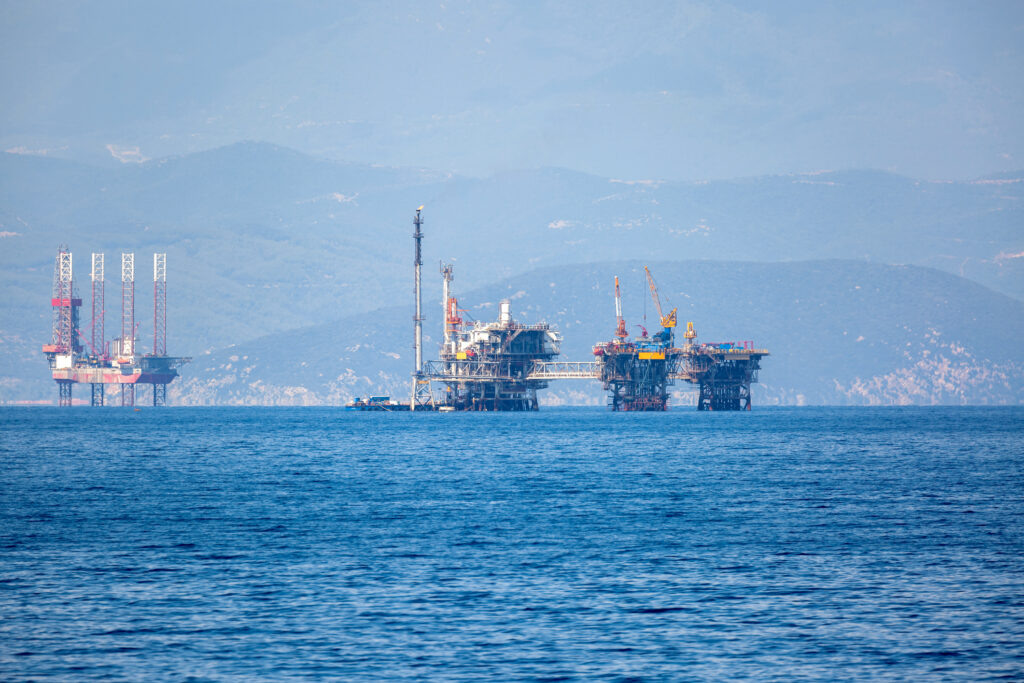
ExxonMobil’s Strategic Deep Dive into Greek Offshore Gas
ExxonMobil is making a significant long-term bet on the Eastern Mediterranean’s burgeoning natural gas potential, solidifying its position in Greece’s offshore exploration landscape. The U.S. supermajor recently announced a farm-in agreement that sees it acquire a 60% participating interest in Block 2, located in the northwestern Ionian Sea, adjacent to the Italian Exclusive Economic Zone. This pivotal move reshapes the consortium, with Energean’s stake adjusting from 75% to 30% and Helleniq Energy’s interest moving from 25% to 10%. While Energean will maintain operatorship during the critical exploration phase, ExxonMobil is poised to take the helm during the development stage should a hydrocarbon discovery be made.
This strategic maneuver underscores the perceived high potential of Block 2, which Energean identifies as the most mature concession in Greece regarding readiness for exploratory drilling. ExxonMobil’s vice president of Global Exploration, John Ardill, highlighted the deal as a pathway for “potential future exploratory drilling investments in the 2027 timeframe.” The Greek government, alongside international energy giants, harbors strong ambitions that the Ionian Sea could mirror the substantial natural gas discoveries seen offshore Egypt and Israel, positioning Greece as a future energy hub and bolstering its energy independence. This commitment from a company of ExxonMobil’s stature provides a powerful signal to the global energy investment community, validating the region’s hydrocarbon prospectivity.
Navigating Market Headwinds: Long-Term Vision Amidst Price Volatility
ExxonMobil’s substantial investment in Greece comes at a time when global crude markets are experiencing considerable volatility, yet it perfectly illustrates the long-term perspective required for major upstream projects. As of today, Brent Crude trades at $90.38 per barrel, marking a significant 9.07% decline, with WTI Crude similarly down 9.41% at $82.59. This sharp intraday drop follows a pronounced bearish trend over the past fortnight, with Brent crude having fallen from $112.78 on March 30th to its current level, representing a nearly 20% contraction. Gasoline prices have also retreated, now at $2.93, down 5.18%.
Despite these immediate market fluctuations, supermajors like ExxonMobil operate on multi-decade horizons. Their investment decisions are less swayed by daily price swings and more by fundamental supply-demand dynamics projected far into the future. Investors frequently ask about the future price of oil per barrel by the end of 2026, and while short-term forecasts remain challenging, ExxonMobil’s commitment to a project with a 2026-2027 drilling timeline indicates a strong conviction in sustained long-term demand for natural gas, regardless of current crude price pressures. Such investments highlight a strategic pivot towards gas, which is often viewed as a crucial transition fuel in the global energy mix, offering stability against the backdrop of an evolving energy landscape.
Upcoming Catalysts and the Path to First Gas
The timeline for exploratory drilling in Block 2 is slated for late 2026 or early 2027, contingent on securing all necessary approvals and permits, along with an extension of the exploration phase. This forward-looking schedule positions the project to benefit from, or be influenced by, a series of upcoming industry and market events, even as they unfold in the near term. The immediate horizon includes key OPEC+ meetings – specifically the JMMC on April 19th and the Ministerial Meeting on April 20th. While these primarily address crude production quotas, their outcomes significantly shape overall market sentiment and the broader investment climate for all hydrocarbon projects.
Furthermore, regular data releases such as the API Weekly Crude Inventory (April 21st, April 28th), the EIA Weekly Petroleum Status Report (April 22nd, April 29th), and the Baker Hughes Rig Count (April 24th, May 1st) provide crucial insights into short-to-medium-term supply and demand dynamics. These indicators, though immediate, contribute to the macro-economic picture that underpins long-cycle investments like the Greek offshore venture. For investors, understanding the interplay between these near-term catalysts and the long-term project development schedule is essential, particularly given the questions surrounding OPEC+ production quotas that frequently surface from our readership. The stability (or instability) of global supply management directly impacts the perceived value and risk profile of new exploration frontiers.
Investor Outlook: Unlocking Value in the East Med Gas Play
For investors, ExxonMobil’s increased footprint in Greece represents a compelling long-term value proposition, particularly for those focused on natural gas growth and geographical diversification. For ExxonMobil shareholders, this move de-risks a potential new basin through early-stage farm-in, aligning with the company’s strategy to expand its global exploration portfolio. The significant 60% stake, coupled with the assumption of operatorship during the development phase, positions XOM to be a dominant player in a potentially high-impact region, complementing its existing global gas assets.
Energean, which remains the exploration operator with a 30% stake, sees its Block 2 interest significantly de-risked by ExxonMobil’s entry. This collaboration provides validation for the asset’s potential and brings substantial capital and technical expertise to the project. For Energean investors, this means reduced exposure to the high-cost, high-risk exploration phase while retaining a meaningful share in a potentially transformative discovery. Similarly, Helleniq Energy’s 10% interest benefits from the same de-risking and the prestige of partnering with a global supermajor. Greece itself stands to gain immensely; as Energean CEO Mathios Riga noted, this collaboration is a “national opportunity to prove that Greece can achieve energy independence.” With Chevron also snapping up blocks in the region, the Eastern Mediterranean is rapidly emerging as a competitive and promising frontier for natural gas, drawing significant interest from major energy players and offering compelling prospects for long-term investors.