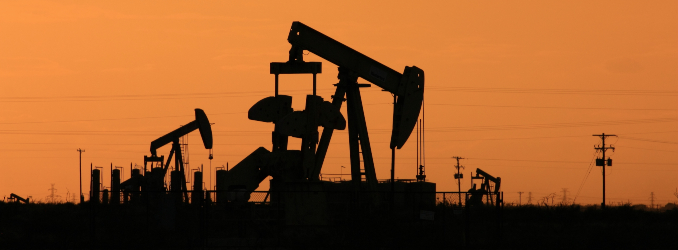
The U.S. shale industry is once again demonstrating its remarkable resilience, pushing ahead with production expansion plans even as global oil markets navigate significant volatility. This sustained growth, driven by relentless technological innovation and cost efficiency, poses critical questions for energy investors regarding future supply dynamics and price stability. Our proprietary data pipelines reveal a fascinating interplay between market pressures and operational fortitude, suggesting that North American producers are far better positioned to weather price fluctuations than many initially believed.
Shale’s Unwavering Output Amidst Market Swings
As of today, Brent Crude trades at $90.38 per barrel, a notable decline of 9.07% within the day, with WTI Crude at $82.59, down 9.41%. This immediate market snapshot follows a broader downturn over the past two weeks, during which Brent prices have plummeted by nearly 20%, falling from $112.78 on March 30th to their current level. Such a sharp correction would typically trigger cautious retrenchment across the oil patch. Yet, U.S. shale operators are largely undeterred, forging ahead with production targets that underscore their enhanced efficiency and lower break-even costs. This resilience challenges conventional wisdom that often links production growth solely to high-flying crude prices. Companies like Diamondback Energy Inc., Coterra Energy Inc., and Ovintiv Inc. have all signaled intentions to subtly increase output for this year or 2026, showcasing their ability to maintain profitability even as prices dip. Exxon Mobil Corp., for instance, recently cemented its dominant position in the Permian Basin by lifting its 2025 production guidance by a substantial 100,000 barrels of oil equivalent per day (boed), a figure that alone surpasses the total output of many smaller producers. This continued momentum, even with Brent trading at levels that were once considered borderline for profitability, highlights a fundamental shift in the shale cost structure.
The Technological Edge: Lowering the Shale Floor
The bedrock of this sustained output growth is a profound transformation in drilling and completion technologies. What was once considered a purely commodity play has evolved into an engineering marvel, leveraging advancements that allow producers to extract more crude with every dollar spent. Diamondback Energy, a bellwether for efficiency, has reduced its break-even oil price to approximately $37 per barrel, an impressive 8% improvement over just two years. This wasn’t achieved through radical breakthroughs but rather through cumulative “small technical gains” across the entire operational spectrum. Faster drilling times, optimized well designs, and improved pumping methods are all contributing factors. Coterra Energy offers another compelling example, projecting a 5% output increase next year to around 168,000 barrels a day while spending “modestly” less. Their innovative approach includes installing microgrids in West Texas, directly reducing power costs and further insulating them from commodity price volatility. Ovintiv, with assets spanning from Western Canada to the Permian, similarly raised the midpoint of its 2026 guidance by nearly 1% to 209,000 bpd while keeping its expenditure plans intact. These examples collectively illustrate that the American engineer continues to find ways to “make more money despite macro headwinds,” fundamentally altering the global supply landscape.
Future Supply Dynamics and Investor Questions
The persistent growth in U.S. shale production naturally leads to critical investor questions, particularly concerning future supply-demand balances and crude price trajectories. Our reader intent data indicates a keen interest in “what OPEC+ current production quotas are” and “what do you predict the price of oil per barrel will be by end of 2026?” These inquiries underscore the market’s anxiety about a potential “record supply glut” in the coming year. The robust output from North America directly impacts the calculus for OPEC+, complicating their efforts to manage global supply and support prices. Investors should closely monitor the upcoming OPEC+ Joint Ministerial Monitoring Committee (JMMC) Meeting on April 19th and the subsequent Ministerial Meeting on April 20th. Any decisions regarding current production quotas will be heavily influenced by the unexpected resilience of U.S. shale. Should OPEC+ maintain or even increase supply, combined with sustained U.S. growth, the pressure on crude prices could intensify through 2026. Furthermore, the weekly API and EIA crude inventory reports, scheduled for April 21st/22nd and April 28th/29th, will provide crucial real-time insights into the immediate supply picture, acting as a barometer for the efficacy of current production levels against demand.
Navigating Investment in a Resilient Shale Environment
For oil and gas investors, the implications of a highly efficient and resilient U.S. shale sector are multi-faceted. On one hand, it suggests a potential cap on extreme upside price movements, as lower break-even costs empower producers to ramp up supply more quickly in response to price rallies. On the other hand, it highlights the importance of cost discipline and technological advantage in selecting investment targets. Companies that continue to drive down their operational expenses and enhance capital efficiency, like those highlighted, are likely to outperform in a volatile or lower-price environment. The Baker Hughes Rig Count, updated on April 24th and May 1st, will offer an early indicator of future drilling activity and confidence levels among producers. Investors should scrutinize these reports for signs of accelerated activity, which would further cement the outlook for sustained production growth. Ultimately, the narrative for oil and gas investing is shifting from a pure play on commodity prices to one that increasingly values operational excellence and technological leadership. Understanding these underlying efficiency trends will be paramount for positioning portfolios effectively in the evolving energy market.