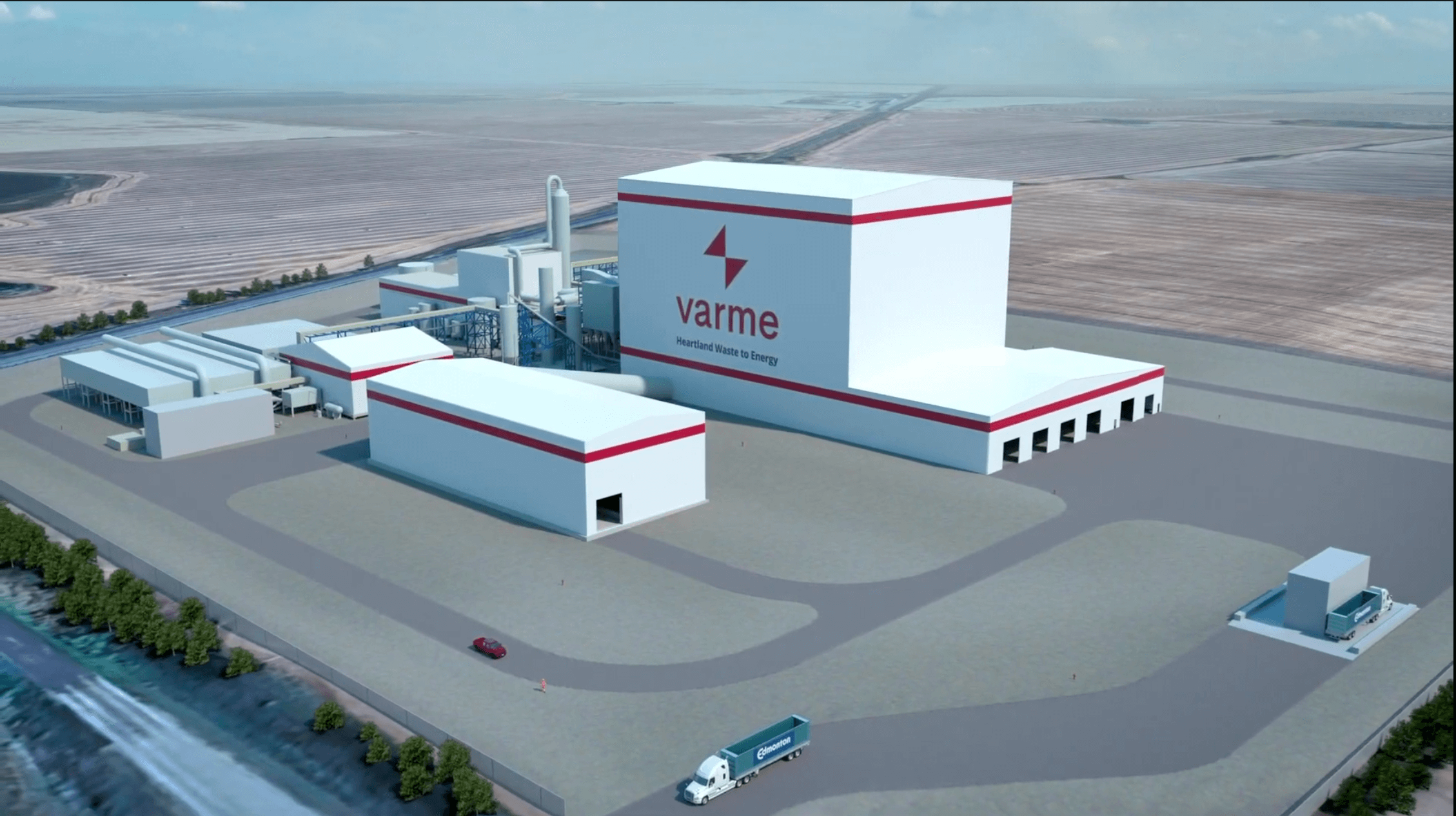
The energy investment landscape is perpetually evolving, and a recent landmark announcement signals a significant stride in Canada’s energy transition efforts. The partnership between Carbon Direct and Varme Energy to commercialize carbon removal credits from the Alberta Industrial Heartland (AIH1) facility marks Canada’s inaugural waste-to-energy (WTE) project with integrated carbon capture and storage (CCUS). This initiative, strategically located northeast of Edmonton, is poised to deliver approximately 130,000 tonnes of verifiable biogenic CO₂ removal credits annually by 2030, positioning Alberta as a key player in the nascent but rapidly growing carbon removal market. For investors navigating a volatile energy sector, this project offers a compelling blend of circular economy principles, clean power generation, and long-term carbon sequestration, backed by robust regulatory frameworks designed to enhance durability and investor confidence.
De-Risking Carbon Removal: The AIH1 Project’s Strategic Edge
The AIH1 facility is engineered for dual impact: diverting municipal waste from landfills while generating low-carbon electricity and capturing significant CO₂. Specifically, the project aims to process around 205,000 tonnes of municipal solid waste annually, translating into over 5 million tonnes diverted from landfills across its 25-year operational lifespan. Crucially, it will permanently store more than 3.2 million tonnes of CO₂ underground via Alberta’s existing CO₂ transport network, utilizing deep saline aquifers for sequestration. This scale of operation, with an annual capture capacity of 130,000 tonnes, places AIH1 among the largest commercial carbon removal projects currently under development globally. Commercial operations are targeted for 2029, with credit deliveries anticipated to commence shortly before 2030.
A significant de-risking factor for investors is Alberta’s regulatory framework, which mandates comprehensive monitoring and, uniquely, transfers long-term liability for stored carbon to the provincial government. This commitment from the provincial government provides an unparalleled layer of assurance regarding the permanence and integrity of the carbon credits generated. Furthermore, the project’s strategic location within Alberta’s established industrial corridor allows it to leverage existing infrastructure, including pipelines and sequestration hubs operated by Atlas and Wolf Midstream, thereby reducing capital intensity and accelerating deployment. The collaboration itself brings together Carbon Direct’s scientific credibility and due diligence expertise in carbon credit certification with Varme Energy’s leadership in project execution and strategic partnerships with industry giants like Babcock & Wilcox and Worley Construction Canada, creating a strong foundation for successful implementation.
Market Volatility and the Evolving Energy Portfolio
The broader energy market continues to exhibit significant volatility, a factor that continuously shapes investment decisions across the sector. As of today, Brent crude trades at $90.38, reflecting a notable 9.07% decline, while WTI crude sits at $82.59, down 9.41%. This intraday movement follows a more pronounced trend; Brent crude has seen a substantial drop of nearly 20% over the past 14 days, falling from $112.78 on March 30th to its current $90.38. Such sharp fluctuations underscore the inherent risks and opportunities within traditional fossil fuel investments. Against this backdrop, projects like AIH1 present a crucial diversification opportunity, offering a revenue stream tied to the burgeoning voluntary carbon market, rather than solely to the ebb and flow of crude prices.
While gasoline prices have also seen a dip, currently at $2.93, down 5.18%, the long-term trajectory for carbon reduction and removal remains robust, driven by global climate commitments and corporate net-zero targets. Investors are increasingly seeking assets that offer both environmental benefits and financial resilience. The AIH1 project, by providing verifiable, permanent carbon removal credits from a biogenic source (waste-to-energy), stands to attract capital from institutions and corporations committed to offsetting their carbon footprints with high-quality, engineered solutions. Its ability to also generate approximately 7 megawatts of firm, low-carbon electricity further enhances its appeal as a multi-faceted asset in an evolving energy portfolio.
Addressing Investor Concerns and Future Outlooks
Our proprietary reader intent data reveals a strong focus among investors on traditional oil market fundamentals, with common questions revolving around “What do you predict the price of oil per barrel will be by end of 2026?” and “What are OPEC+ current production quotas?”. This highlights a natural preoccupation with the immediate and medium-term stability of crude prices. However, these questions also implicitly underscore the need for diversification and hedging strategies as the energy transition gains momentum. While the short-term oil market is unpredictable, the long-term demand for scalable, credible carbon removal solutions, especially those with strong governance and liability frameworks like AIH1, is becoming increasingly clear.
The project’s strategic importance is amplified when considering upcoming energy events that could further influence market dynamics. With the OPEC+ JMMC and Ministerial Meetings scheduled for April 19th and 20th respectively, followed by weekly API and EIA inventory reports, the global supply-demand balance and price stability for crude oil will be closely scrutinized. While these events directly impact the traditional oil and gas sector, their broader implications for energy policy and investment sentiment can indirectly influence the pace and scale of capital allocation to energy transition projects. A stable, or even rising, crude price environment could paradoxically free up capital for diversified investments in technologies like CCUS, which are seen as critical for future energy security and environmental compliance. The AIH1 facility, targeting commercial operation in 2029, is well-positioned to capitalize on the increasing maturity of the voluntary carbon market and the growing corporate demand for robust carbon removal solutions, offering a tangible investment opportunity in the decarbonization journey.


