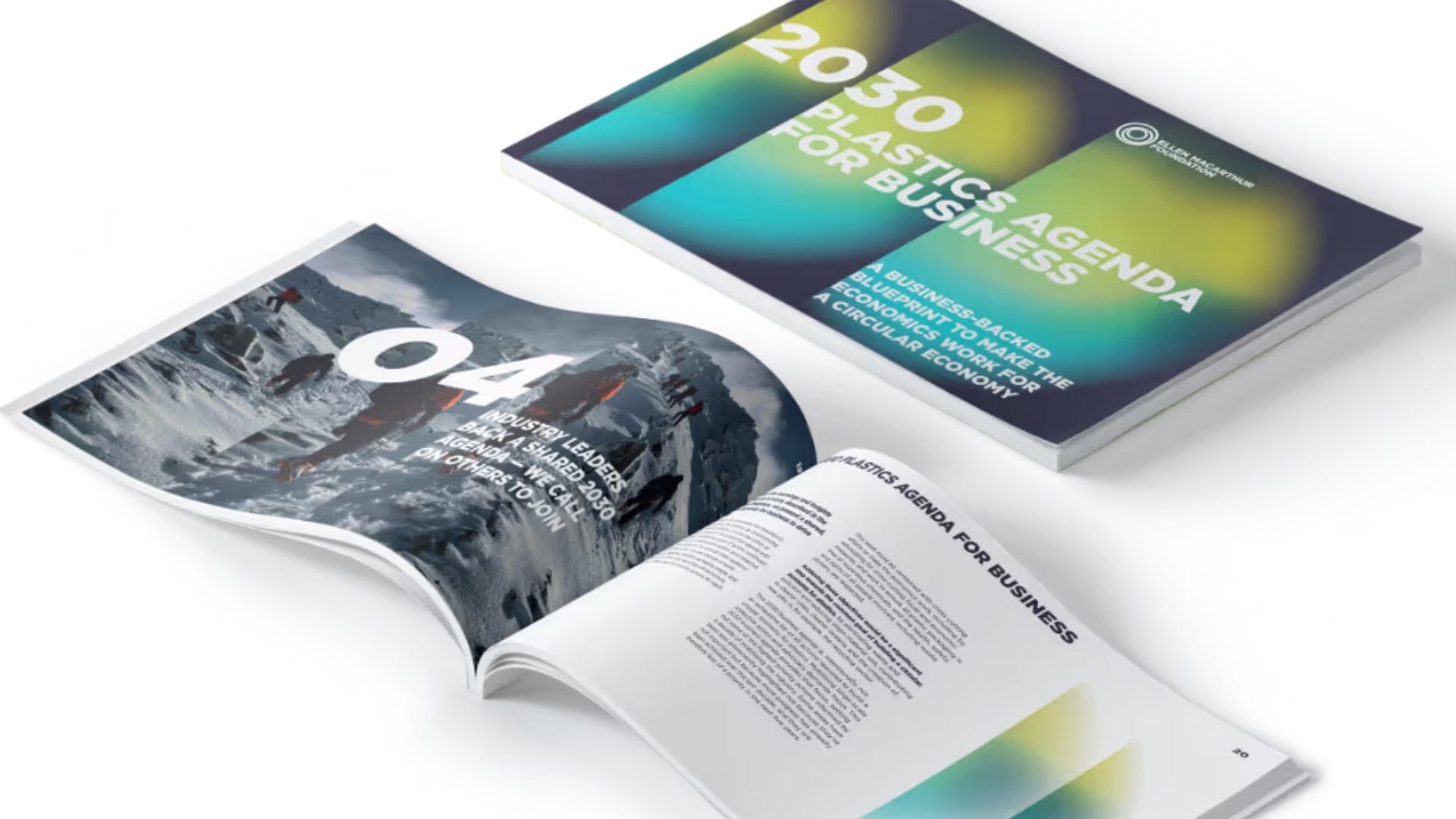
The global oil and gas industry is accustomed to navigating geopolitical shifts and supply-side disruptions, yet a significant, long-term demand-side threat is quietly but firmly taking shape: the global push to transform plastics. A new five-year roadmap, the 2030 Plastics Agenda for Business, endorsed by major consumer brands representing one-fifth of the global plastic packaging market, signals an accelerating shift towards a circular economy. This initiative, moving beyond voluntary commitments to advocate for harmonized policy and systemic change, poses a direct challenge to future petrochemical demand and, by extension, the long-term outlook for crude oil investors. Understanding these evolving dynamics is crucial for portfolio positioning in an increasingly complex energy landscape.
Petrochemical Headwinds Emerge Amidst Market Volatility
While the immediate focus for oil and gas investors often centers on daily price movements and geopolitical catalysts, a deeper structural shift is underway that could redefine demand for crude derivatives. As of today, Brent crude trades at $90.38, reflecting a significant 9.07% decline from its previous close, with a daily range between $86.08 and $98.97. Similarly, WTI crude has seen a sharp 9.41% drop to $82.59. This recent volatility follows a broader trend, with Brent having fallen nearly 20% from $112.78 just two weeks prior. Against this backdrop, the Ellen MacArthur Foundation’s 2030 Plastics Agenda, backed by industry giants like Nestlé, PepsiCo, and Unilever, introduces a long-term demand concern that cannot be ignored. The agenda’s core objective is to drastically reduce virgin plastic use, a move that directly impacts the petrochemical sector, a significant consumer of oil and natural gas feedstocks. By targeting systemic change through policy, innovation, and company-level transformation, this initiative aims to accelerate the transition away from the linear ‘take-make-dispose’ model that has fueled petrochemical growth for decades.
Policy Alignment and Investor Questions on Future Demand
A key pillar of the 2030 Plastics Agenda is its call for collective advocacy for ambitious policy. Businesses are urged to engage governments to develop harmonized and enforceable frameworks, including extended producer responsibility (EPR) schemes, deposit return systems (DRS), and mechanisms supporting waste prevention, reuse, and refill models. These policies are not merely aspirational; they represent a fundamental economic re-engineering of the plastics value chain. The ongoing negotiations for a United Nations treaty to end plastic pollution further underscore the growing global momentum towards legally binding rules. Many investors are keenly aware of these long-term shifts, with questions like “what do you predict the price of oil per barrel will be by end of 2026?” frequently surfacing in our reader queries. While no analyst can offer a crystal ball, the increasing regulatory pressure from initiatives like the Plastics Agenda provides a clear signal that a significant portion of future crude demand – specifically from the petrochemical sector – will face structural headwinds. Businesses that proactively embrace circular solutions now are positioning themselves to shape these effective policies, potentially mitigating future transition costs and securing a competitive edge.
Scaling Circularity: Progress and Persistent Gaps
The journey towards a circular plastics economy has already yielded measurable results, demonstrating the potential for widespread change. Since 2018, signatories to the Global Commitment have collectively avoided the use of 14 million tonnes of virgin plastics, a staggering figure equivalent to 1.8 trillion plastic bags. Furthermore, these companies have tripled their use of recycled content and phased out billions of problematic or non-recyclable items. These achievements prove that circular models are not only feasible but scalable. However, the Ellen MacArthur Foundation estimates that 80% of the global packaging market remains outside these efforts, highlighting the vast scope for further intervention. Addressing this gap requires more than just corporate commitments; it demands significant joint public-private investment in crucial infrastructure – from advanced recycling facilities to efficient collection systems and robust reuse-refill networks. For investors, this implies a potential shift in capital allocation within the broader energy and materials sectors, favoring companies involved in sustainable packaging, recycling technologies, and alternative materials, while traditional petrochemical producers may face long-term demand erosion.
Navigating Short-Term Signals Amidst Long-Term Structural Shifts
For oil and gas investors, the challenge lies in balancing immediate market dynamics with these profound, long-term structural shifts. While the 2030 Plastics Agenda points to a future of reduced virgin plastic demand, the short-term market remains highly susceptible to traditional supply and inventory signals. Investors are closely watching key upcoming events that could influence crude prices. The OPEC+ JMMC Meeting on April 19th and the full OPEC+ Ministerial Meeting on April 20th are critical, as any production policy changes from the cartel could immediately impact global supply. Following closely, the API Weekly Crude Inventory report on April 21st and the EIA Weekly Petroleum Status Report on April 22nd will offer fresh insights into U.S. supply-demand balances and inventory levels. These events, alongside the regular Baker Hughes Rig Count reports on April 24th and May 1st, drive much of the short-term price action. However, overlooking the accelerating push for circular plastics would be a strategic misstep. While OPEC+ decisions and inventory data will continue to dictate day-to-day trading, the plastics agenda represents a fundamental re-evaluation of a significant end-use for crude oil, demanding a strategic, forward-looking perspective on portfolio construction beyond the immediate news cycle.


