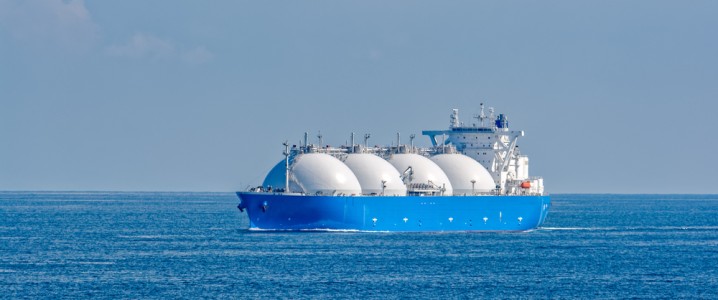
Woodside Energy has unveiled an ambitious growth roadmap extending to 2032, positioning itself to capitalize on surging global energy demand, particularly within the dynamic Asian markets. This strategic blueprint projects a substantial 50% increase in sales of crude oil and natural gas, translating to an impressive 6% annual growth rate that targets 300 million barrels of oil equivalent by 2032. Critically, this expansion is expected to translate directly to the bottom line, with net operating cash flow anticipated to climb 6% annually, reaching a robust $9 billion from $5.8 billion in 2024. For investors seeking long-term value in the energy sector, Woodside’s calculated expansion, heavily weighted towards liquefied natural gas (LNG), offers a compelling narrative amidst evolving market dynamics.
LNG: The Cornerstone of Woodside’s Expansion Strategy
The linchpin of Woodside’s 2032 vision is a dramatic scaling of its LNG capacity. The company forecasts its annual LNG production capability to more than double, escalating from 19 million tons in 2024 to an impressive 40 million tons by 2032. This aggressive expansion is strategically aligned with global energy projections, which anticipate a 60% surge in LNG demand by 2035. Key projects underpinning this growth include the Scarborough LNG facility, slated to commence production in 2026 and contribute an additional 8 million tons of annual capacity. Looking further ahead, the company plans to bring online an additional 16.5 million tons of capacity from its Louisiana LNG plant between 2029 and 2031. This significant Gulf Coast investment, valued at $17.5 billion, broke ground in September and boasts an ultimate potential capacity of 27.6 million tons annually. By strategically expanding across both Atlantic and Pacific basins, Woodside aims to optimize its supply chain and enhance its marketing and trading capabilities to meet diverse customer needs, particularly in energy-hungry regions.
Navigating Market Volatility with Diversified Growth
While Woodside’s long-term strategy focuses on demand growth, current market conditions underscore the importance of a diversified approach. As of today, Brent crude trades at $90.38 per barrel, reflecting a notable decline of 9.07% within the day, with its range fluctuating between $86.08 and $98.97. Similarly, WTI crude stands at $82.59, down 9.41% today. This short-term volatility is consistent with a broader trend; Brent has experienced a significant downturn of nearly 20% over the last 14 days, moving from $112.78 to its current level. Against this backdrop of fluctuating crude prices, Woodside’s plan to boost crude oil production adds a layer of diversification to its predominantly LNG-focused growth. The Trion field, located in Mexican waters, is set to contribute an additional 100,000 barrels per day of crude production starting in 2028. Woodside holds a 60% operating interest in this $7.2 billion project, partnering with Mexico’s Pemex. This balanced approach, blending substantial LNG expansion with strategic crude oil increments, aims to build resilience and ensure consistent cash flow growth, even as commodity markets experience periodic swings.
Forward Outlook: OPEC+ Decisions and Investor Sentiment
The immediate horizon holds several critical events that could shape the near-term energy landscape and influence investor sentiment. The upcoming OPEC+ JMMC Meeting on April 19th, followed by the full OPEC+ Ministerial Meeting on April 20th, will be closely watched for any adjustments to production quotas. Decisions made at these gatherings could significantly impact global crude supply and, consequently, price trajectories. Furthermore, the API Weekly Crude Inventory reports on April 21st and 28th, along with the EIA Weekly Petroleum Status Reports on April 22nd and 29th, will offer crucial insights into short-term supply and demand dynamics. Our proprietary reader intent data highlights that investors are keenly focused on future price stability, with a frequently asked question being: “What do you predict the price of oil per barrel will be by end of 2026?” This query underscores the market’s desire for clarity amid uncertainty. Woodside’s long-term investment in projects like Trion and its expansive LNG portfolio positions the company to potentially de-risk against short-term market fluctuations by anchoring its growth to long-term structural demand, rather than being overly dependent on immediate OPEC+ outcomes or weekly inventory reports.
Capitalizing on Asia’s Energy Transition and Strategic Global Footprint
Woodside’s strategic emphasis on Asia is well-founded. The region continues to drive a significant portion of global energy demand growth, with LNG playing a crucial role in its energy transition pathways. By expanding its LNG capacity to 40 million tons annually and diversifying its geographical reach across both the Atlantic and Pacific basins, Woodside is enhancing its ability to serve key markets effectively. This global scale, combined with its established marketing and trading business, provides a robust competitive advantage. The anticipated 50% increase in sales by 2032 and the projected $9 billion in net operating cash flow are not merely aspirational targets; they are grounded in substantial, multi-billion-dollar projects designed to meet the world’s evolving energy needs. For investors looking for exposure to a major player with a clear, funded growth strategy in the critical LNG sector, Woodside’s 2032 plan offers a compelling long-term investment thesis, aiming to deliver consistent returns even as the broader energy market navigates both short-term volatility and a gradual shift towards cleaner fuels.


