Nvidia’s AI Growth: Energy Sector Implications
The meteoric rise of companies like Nvidia, now commanding unprecedented valuations, is not merely a story of semiconductor innovation; it is increasingly a narrative with profound implications for the global energy sector. As artificial intelligence transitions from its developmental phase into a full-blown industrial revolution, the foundational requirement for this technological leap is power—massive, consistent, and growing power. For energy investors, understanding the scale of this emerging demand is paramount to identifying the next wave of opportunities and risks across oil, natural gas, and broader energy infrastructure.
The Gigawatt Economy: AI’s Insatiable Energy Thirst
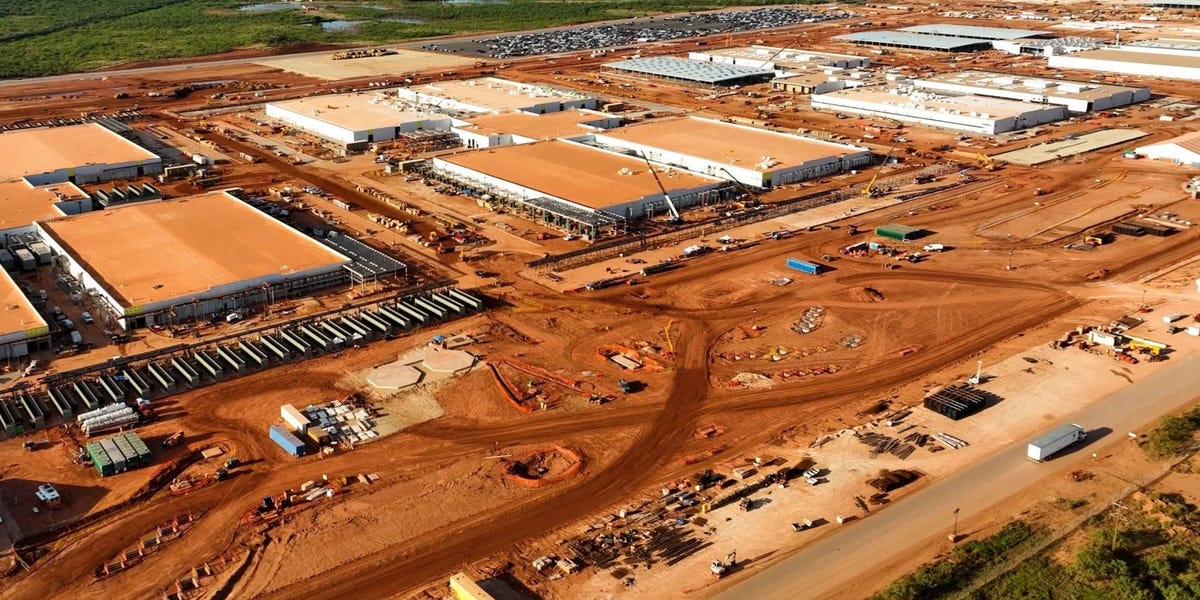
The metrics of computing capacity are rapidly evolving. No longer are advanced data centers measured solely by server racks or square footage; the new benchmark is gigawatts. This fundamental shift underscores the sheer energy intensity required for next-generation AI, with some industry analyses indicating that a single gigawatt of computing capacity is roughly equivalent to the output of a nuclear reactor. This isn’t a theoretical exercise; projects like xAI’s Colossus 2 in Memphis, Meta’s Prometheus in Ohio and Hyperion in Louisiana, OpenAI’s Stargate, and Amazon’s Mount Rainier project in Indiana are already being conceived and built at this colossal scale.
The financial implications are equally staggering. Recent analysis estimates that establishing a 1-gigawatt AI data center capacity demands an investment of approximately $35 billion. While a significant portion of this outlay is dedicated to the compute hardware itself, particularly GPUs and upcoming advanced chips, the remaining capital flows directly into energy systems, construction, networking infrastructure, and the power generation required to fuel these digital behemoths. This represents a new economic foundation for AI, solidifying a direct, escalating link between technological advancement and energy consumption. For investors, this translates into a structural demand growth narrative for primary energy sources, particularly natural gas, which often serves as a flexible and reliable baseload for grid expansion.
Market Swings vs. Structural Demand: A Look at Crude and AI
While the long-term energy demand from AI builds, traditional energy markets continue to exhibit their characteristic volatility. As of today, Brent crude trades at $90.38 per barrel, marking a significant intraday decline of 9.07%, with prices ranging from $86.08 to $98.97. Similarly, WTI crude is priced at $82.59, down 9.41% within a daily range of $78.97 to $90.34. This sharp downturn contrasts with the recent trend, where Brent has fallen from $112.78 on March 30th to its current level on April 17th, representing a substantial 19.9% decrease over just two weeks. Gasoline prices have also followed suit, currently at $2.93 per gallon, down 5.18%.
This market snapshot highlights the ongoing sensitivity of crude prices to geopolitical events, macroeconomic indicators, and immediate supply-demand imbalances. However, savvy energy investors must look beyond these short-term swings to appreciate the emerging structural demand from AI. While crude oil is less directly impacted by data center power needs than natural gas or renewables, the broader economic activity spurred by AI’s industrialization will undoubtedly create secondary demand across all energy vectors. For companies involved in power generation, transmission, and even the natural gas supply chain, AI represents a robust, long-term tailwind that can help insulate against the more transient fluctuations seen in the global oil market.
Investor Focus: Bridging Today’s Questions with Tomorrow’s Energy Reality
Our proprietary reader intent data reveals a clear focus among investors on future price trajectories and the policies shaping global supply. Many are asking about the predicted price of oil per barrel by the end of 2026 and seeking clarity on OPEC+ current production quotas. These are crucial questions, yet the emerging energy demands of AI introduce a complex new variable into these forecasts.
While OPEC+ decisions primarily influence crude oil supply, the monumental increase in electricity demand for AI data centers will put significant pressure on power grids and, by extension, on natural gas for generation. This indirectly affects the entire energy complex. As the need for reliable, scalable power intensifies, the role of natural gas as a bridge fuel and a flexible baseload provider becomes even more critical. Investors evaluating integrated energy companies, or those with significant exposure to natural gas production and power generation, should factor in this escalating AI-driven demand. The question for 2026 oil prices, therefore, must consider not just traditional supply-demand factors, but also the accelerating energy footprint of the digital economy, potentially creating an underlying floor for energy commodities as global power requirements surge.
Forward-Looking Catalysts: OPEC+, Inventories, and the Power Grid Buildout
The coming weeks present several key events that will shape the immediate energy market outlook, even as the AI energy paradigm continues to develop. This Sunday, April 19th, marks the OPEC+ Joint Ministerial Monitoring Committee (JMMC) Meeting, followed by the full OPEC+ Ministerial Meeting on Monday, April 20th. These gatherings will provide crucial insights into the cartel’s production strategy, directly influencing global crude supply and market sentiment. Any adjustments to current production quotas will reverberate across the energy landscape.
Following these, investors will closely watch the API Weekly Crude Inventory report on April 21st and the EIA Weekly Petroleum Status Report on April 22nd, offering critical insights into U.S. supply and demand dynamics. The Baker Hughes Rig Count on April 24th will further inform expectations for future domestic production. While these events typically drive short-term price action, their long-term significance is now intertwined with the growing energy demands of AI. As global power consumption ramps up for these “gigawatt-scale” data centers, the stability and availability of conventional energy sources, particularly natural gas, become increasingly important. Energy companies that can reliably supply these resources, or are investing in grid modernization and expansion, are positioning themselves at the forefront of this new industrial revolution, offering compelling long-term value propositions regardless of short-term crude volatility.


