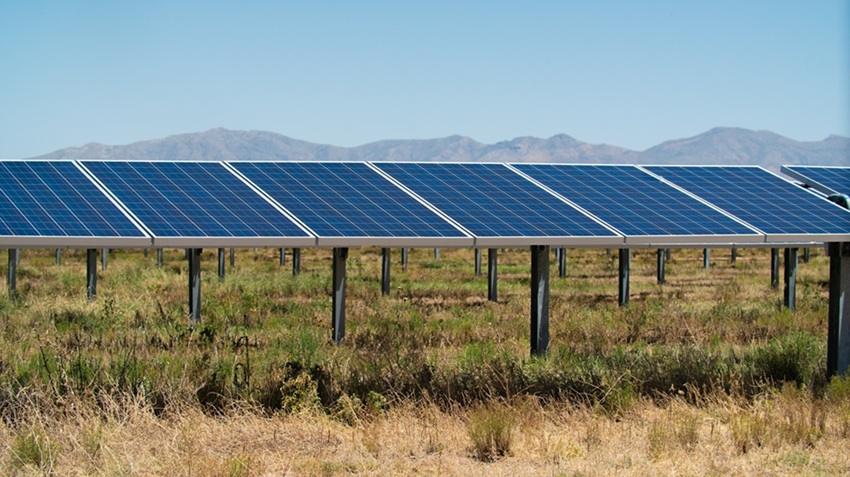
The recent announcement by Meta Platforms and Engie North America, detailing a colossal 600 MW solar power purchase agreement (PPA) in Texas, signals far more than just another corporate commitment to green energy. Valued at an estimated $900 million for the Swenson Ranch Solar project, set to become operational in 2027, this deal underscores a profound shift in how large industrial consumers are securing their energy needs. For oil and gas investors, this isn’t just a headline about Silicon Valley; it’s a critical data point revealing the accelerating pace of the energy transition, impacting future demand for traditional hydrocarbons and reshaping the investment landscape. This analysis will delve into the implications of such mega-deals, examining their interplay with current market volatility, upcoming energy events, and evolving investor concerns about the long-term trajectory of the energy sector.
Corporate PPAs: A Long-Term Demand Signal Investors Can’t Ignore
The scale of Meta’s commitment, totaling over 1.3 GW across four Texas projects with Engie, is a stark reminder of the long-term energy procurement strategies being adopted by hyperscale data center operators. These companies, characterized by their immense and growing electricity consumption, are increasingly locking in renewable energy at fixed prices for decades. Meta’s goal to add 9.8 GW of renewable energy to U.S. grids by the end of 2025 and achieve net-zero emissions across its value chain by 2030 illustrates a foundational shift in demand. Investors frequently ask about the future of crude oil prices, particularly “what do you predict the price of oil per barrel will be by end of 2026?” While this specific PPA doesn’t directly displace crude oil in transportation, it significantly impacts the power generation mix, where natural gas, and to a lesser extent, coal, have historically played a dominant role. Such large-scale renewable deployments exert a persistent, long-term downward pressure on overall fossil fuel demand projections, challenging the traditional growth narratives often associated with energy consumption. This shift influences strategic decisions for oil and gas producers, who must weigh short-term market dynamics against these structural changes in energy consumption patterns.
Navigating Market Volatility Amidst Renewable Growth
The timing of Meta’s latest announcement contrasts sharply with recent turbulence in the traditional energy markets, offering investors a fascinating juxtaposition. As of today, Brent Crude trades at $90.38, reflecting a significant 9.07% decline within the day, with its price range oscillating between $86.08 and $98.97. Similarly, WTI Crude stands at $82.59, down 9.41% today, traversing a range of $78.97 to $90.34. Gasoline prices are also feeling the pressure, currently at $2.93, a 5.18% drop for the day. This daily volatility follows a more pronounced trend for Brent, which has fallen from $112.78 on March 30 to its current $90.38, marking a nearly 20% decline in under three weeks. This short-term price discovery in global crude markets stands in stark relief against the long-term, fixed-price stability that Meta is securing for its power needs through these PPAs. While oil and gas companies contend with these fluctuating spot prices, which impact immediate profitability and investment decisions, large corporations are increasingly insulated from such swings through renewable energy contracts. This divergence highlights a fundamental risk for traditional energy portfolios reliant solely on commodity price cycles, underscoring the strategic advantage of diversified energy assets and the growing attractiveness of renewable energy for industrial consumers seeking cost certainty and sustainability.
Strategic Foresight: Upcoming Events and the Energy Transition
For oil and gas investors, the Meta-Engie deal adds a compelling layer to the analysis of upcoming market events. In the immediate future, market participants are keenly watching the OPEC+ Joint Ministerial Monitoring Committee (JMMC) Meeting on April 19, followed by the full OPEC+ Ministerial Meeting on April 20. These gatherings are crucial for understanding global supply-side management, with investors frequently asking “What are OPEC+ current production quotas?” While OPEC+ decisions directly impact short-term crude supply, the increasing deployment of projects like Swenson Ranch Solar will inevitably factor into their long-term demand forecasts. As companies like Meta continue to shift their energy sourcing, future demand projections for crude and natural gas, especially in the power sector, will come under increasing scrutiny. Furthermore, the weekly API and EIA Crude Inventory reports on April 21/22 and April 28/29, alongside the Baker Hughes Rig Count on April 24 and May 1, will provide snapshots of current supply-demand dynamics. However, the multi-gigawatt renewable build-out by energy-intensive industries points to a future where these inventory figures might be increasingly impacted by the displacement of fossil fuels in the power grid. Oil and gas companies must consider how these macro trends in renewable adoption will influence long-term capital allocation decisions, project viability, and the imperative to diversify or innovate within their existing portfolios to remain competitive in an evolving energy landscape.
Texas: A Bellwether for Energy Convergence
The choice of Texas as the epicenter for Meta’s expanding renewable energy portfolio is particularly symbolic for oil and gas investors. Texas, a historical bedrock of the U.S. oil and gas industry, is simultaneously a national leader in renewable energy generation, particularly wind and increasingly solar. The 600 MW Swenson Ranch Solar project, slated for Stonewall County, exemplifies this convergence. This isn’t merely a green initiative; it’s a strategic move to secure reliable, cost-competitive power in a deregulated market known for its robust energy infrastructure and significant industrial demand. The investment of $900 million into a single solar asset underscores the economic viability and scalability of utility-scale renewables, even in a state synonymous with fossil fuels. For oil and gas companies operating in Texas, this trend signals a need to understand the evolving competitive landscape, potential new revenue streams (e.g., carbon capture, hydrogen production, grid services), and the increasing pressure to reduce operational emissions. The sustained investment by tech giants in Texas’s renewable sector highlights a broader trend: the future of energy in even the most traditional oil and gas regions will be defined by a complex, integrated mix of both conventional and renewable sources, demanding adaptability and strategic foresight from all market participants.


