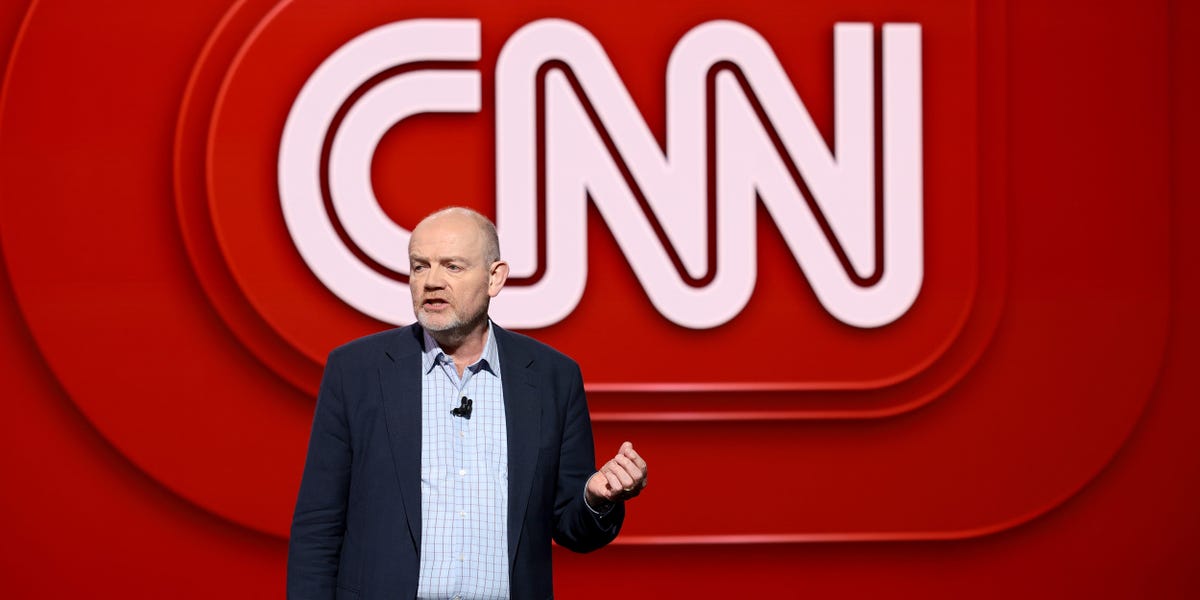
The strategic decisions facing a media giant like CNN, as it navigates the shift from traditional cable bundles to direct-to-consumer streaming, offer profound lessons for investors across all sectors, particularly in energy. While the specifics of digital content valuation might seem far removed from crude oil futures, the underlying challenges are strikingly similar: how do established companies with legacy assets adapt to evolving consumer behavior, technological disruption, and shifting market paradigms? CEO Mark Thompson’s push to launch a $7/month streaming service for CNN is not merely a media story; it’s a case study in asset re-valuation, strategic pivot, and the monetization of brand equity in a rapidly changing world. For oil and gas investors, this scenario mirrors the ongoing energy transition, where traditional hydrocarbon assets must be re-evaluated against new energy technologies and environmental mandates. Understanding how companies manage these transitions is paramount to identifying long-term value in a dynamic market.
The Valuation Puzzle: Legacy Assets in a New Economy
CNN’s $7 monthly subscription introduces a direct valuation metric for its content, a stark contrast to its historical revenue streams derived from cable subscriber fees. This pivot highlights a critical question for investors: what is the intrinsic value of a well-established product or service when its traditional distribution model is under siege? In the oil and gas sector, a similar re-evaluation is underway. Energy majors with vast upstream portfolios and extensive refining capacities are grappling with how to value these legacy assets in a world increasingly focused on decarbonization. The challenge isn’t just about declining demand for fossil fuels; it’s about the cost of maintaining and operating infrastructure, the regulatory landscape, and the shifting preferences of capital markets towards greener investments. Just as CNN must convince viewers to pay directly for news they once received as part of a bundle, oil companies must continuously demonstrate the enduring value and necessity of their core products while simultaneously investing in diversified energy solutions. The ability to articulate and execute a credible transition strategy will be a key differentiator for attracting investment capital.
Market Volatility and the Investor’s Search for Stability
The broader market context in which strategic pivots occur is inherently volatile, and the energy sector is currently experiencing significant turbulence. As of today, Brent crude trades at $90.38 per barrel, marking a substantial 9.07% decline, while WTI crude stands at $82.59, down 9.41%. Gasoline prices have also seen a notable drop to $2.93, representing a 5.18% decrease. This sharp downturn is not an isolated event; our proprietary data shows Brent has plummeted from $112.78 just 14 days ago, representing a nearly 20% reduction. Such pronounced swings in commodity prices underscore the high-stakes environment for energy investors. These fluctuations directly impact the profitability of exploration, production, and refining operations, influencing capital allocation decisions and future project viability. Investors are naturally seeking clarity amidst this instability, with many querying our AI assistant about predicted oil prices by the end of 2026. The current market snapshot serves as a powerful reminder that even the most well-laid strategic plans must contend with unpredictable external forces, demanding agility and robust risk management from energy companies.
Upcoming Catalysts and Forward-Looking Strategy
For energy investors, understanding forward-looking catalysts is as crucial as analyzing current market dynamics. Just as CNN’s streaming launch represents a strategic bet on future revenue, upcoming events in the oil and gas calendar will shape market sentiment and future valuations. The next 14 days are packed with critical junctures, including the OPEC+ Joint Ministerial Monitoring Committee (JMMC) meeting on April 19th, followed by the full OPEC+ Ministerial Meeting on April 20th. These gatherings are pivotal for setting production quotas, directly impacting global supply and price stability. Our reader intent data highlights a strong investor interest in current OPEC+ production quotas, underscoring the market’s reliance on these decisions. Beyond OPEC+, the API Weekly Crude Inventory report on April 21st and the EIA Weekly Petroleum Status Report on April 22nd will offer vital insights into demand trends and domestic supply levels. Furthermore, the Baker Hughes Rig Count on April 24th will provide a gauge of drilling activity and future production capacity. These scheduled events are not just data points; they are potential inflection points that can either validate or challenge existing investment theses, compelling energy companies to adapt their strategies in anticipation of, and reaction to, policy shifts and market revelations.
Investor Intent: Seeking Clarity in a Complex Landscape
The questions our readers are posing reveal a clear desire for certainty in an increasingly complex investment landscape. Beyond immediate price predictions, investors are keen to understand the fundamental drivers of the market, asking about OPEC+ production quotas and the data sources that power our market insights. This quest for transparency and predictive power reflects a deeper concern about the long-term viability and valuation of energy assets. In a similar vein, CNN’s leadership faces continuous critiques regarding its editorial stance and whether there’s a “meaningful audience for down-the-middle news anymore.” This parallels the energy sector’s struggle to define its identity and value proposition amid calls for a rapid energy transition. Companies that can effectively communicate their strategy, provide transparent data on their operations and environmental impact, and demonstrate a clear path to sustainable profitability will be best positioned to attract and retain investor confidence. The market rewards clarity, and companies that fail to address investor concerns about future earnings potential or strategic direction risk being undervalued, regardless of the strength of their legacy brand or assets.


