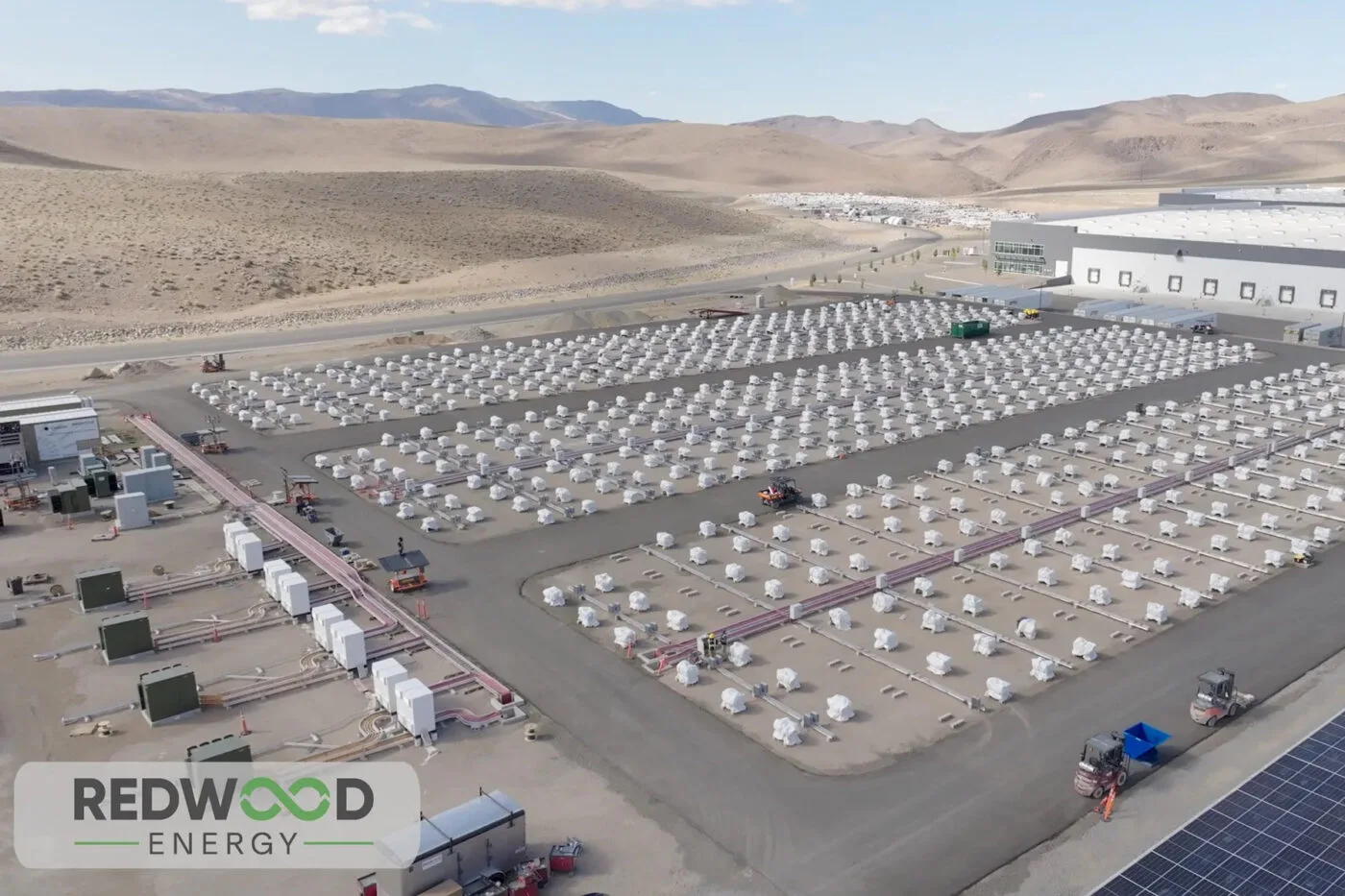
Redwood Materials’ recent $350 million Series E capital raise marks a pivotal moment for the burgeoning energy storage sector and offers a compelling counter-narrative to traditional oil and gas investment. This substantial injection of capital, led by Eclipse and attracting strategic investors like NVentures, underscores a profound shift in focus for the American battery recycler. While historically renowned for critical mineral recovery, Redwood is now aggressively pivoting towards large-scale, second-life energy storage facilities, aligning its ambitions directly with the escalating demands of AI infrastructure and broader grid stability. For investors monitoring the energy landscape, this move signifies a strategic embrace of domestic energy independence and a robust response to the intermittency challenges of renewable generation, setting a new benchmark for integrated energy solutions.
The Strategic Imperative: Bridging Critical Minerals and Grid Stability
Redwood Materials’ expansion into grid energy storage is not merely an opportunistic diversification; it represents a deep strategic imperative driven by converging market forces. The company explicitly states its commitment to shaping the next era of American energy leadership, emphasizing the critical role of electrical energy availability for the explosive growth of AI infrastructure. This focus transcends simply recycling valuable materials like cobalt, nickel, copper, and lithium; it’s about actively deploying those materials in new, high-value applications. Management highlights a “pivotal time” where international supply chain curtailments are clashing with intense domestic demand for both critical materials and energy products. By building low-cost, large-scale battery storage facilities, Redwood aims to power data centers, facilitate industrial electrification, and importantly, smooth out the inherent intermittency of domestic renewable generation. Their vision extends to integrating this storage capacity with existing baseload assets, such as natural gas turbines and future nuclear plants, to dramatically improve their efficiency, utilization, and reliability. Partnerships, like the memorandum of understanding with General Motors to deploy stationary storage systems utilizing both new and end-of-life GM batteries, exemplify the practical execution of this expansive strategy. The establishment of Redwood Energy, a dedicated subsidiary for second-life battery storage, further solidifies their leadership in repurposing batteries that are still too good for immediate recycling, unlocking immense value and extending their lifecycle.
Navigating Volatility: The Macro Backdrop for Energy Investment
Against the backdrop of Redwood’s ambitious expansion into energy storage, the traditional oil and gas markets continue to demonstrate significant volatility, a stark contrast that highlights the appeal of alternative energy investments. As of today, Brent crude trades at $90.38 per barrel, marking a notable 9.07% decline from its opening. Similarly, WTI crude has fallen to $82.59, down 9.41% within the day’s trading range. This recent dip is part of a broader trend; our proprietary data shows Brent plummeting nearly 20% from $112.78 just two weeks ago on March 30th to its current level. Gasoline prices have followed suit, now at $2.93 per gallon, a 5.18% decrease. This pronounced price instability underscores the inherent risks and geopolitical sensitivities embedded in fossil fuel markets. For investors, the consistent demand drivers for energy storage—such as critical mineral security and grid modernization—present a more predictable and domestically controlled investment thesis compared to the fluctuating dynamics of global crude supply and demand. The stability offered by large-scale battery deployment, especially when coupled with baseload generation, acts as a hedge against the very price swings that define today’s oil market, providing a compelling long-term value proposition.
Investor Outlook: Deciphering Future Energy Trajectories
Our proprietary market intelligence reveals that investors are intensely focused on the future direction of energy prices and the evolving energy mix. A frequent query from our readers this week, for example, asks directly: “What do you predict the price of oil per barrel will be by end of 2026?” This question, along with inquiries regarding “OPEC+ current production quotas,” underscores the immediate impact of geopolitical decisions on market fundamentals. The coming days are particularly critical for short-term crude price discovery. The OPEC+ Joint Ministerial Monitoring Committee (JMMC) meeting this Sunday, April 19th, followed swiftly by the full OPEC+ Ministerial Meeting on Monday, April 20th, will provide crucial insights into supply strategies. These events, combined with the API Weekly Crude Inventory report on April 21st and the EIA Weekly Petroleum Status Report on April 22nd, will heavily influence near-term price movements and shape investor sentiment. Beyond these immediate catalysts, the broader investment landscape is increasingly considering the long-term shift towards decarbonization and energy independence. Redwood’s strategic pivot directly addresses this future, offering a pathway to mitigate reliance on volatile international energy supplies while meeting the growing, domestic demand for stable, reliable power, especially for energy-intensive sectors like artificial intelligence. Investors are clearly looking beyond the next barrel and towards a more resilient energy future.
The Investment Case for Second-Life Storage and Domestic Production
The investment case for Redwood Materials, particularly its focus on second-life battery storage and expanded domestic production, is robust and multifaceted. By repurposing batteries that retain significant capacity, Redwood Energy effectively lowers the cost basis for large-scale energy storage, making these solutions more economically viable for a wide range of applications, from data centers to industrial sites. This approach not only optimizes resource utilization but also de-risks the supply chain for critical materials, a significant concern for US energy independence. The company’s unique position as North America’s market leader in battery recycling provides it with an unparalleled pipeline of feedstock—both production rejects and end-of-life batteries from partners like GM’s Ultium Cells. This integrated model, from collection and refining to the deployment of storage solutions, creates a circular economy that minimizes waste and maximizes value extraction from existing resources. With the $350 million capital raise, Redwood is poised to scale this integrated ecosystem, directly supporting the availability of electrical energy, a foundational requirement for sustained economic growth and technological advancement in the United States. This domestic, closed-loop system for critical minerals and energy storage offers a compelling long-term investment opportunity, distinct from the cyclical pressures of fossil fuel commodities.


