The Fleeting Impact of Russia Sanctions: A Deeper Dive for Oil Investors
Recent U.S. sanctions targeting Russia initially sent crude prices upward, sparking concerns among investors about immediate supply disruptions. However, the market’s reaction proved remarkably transient. As a senior investment analyst at OilMarketCap.com, our proprietary data indicates that any initial bullish momentum quickly evaporated, giving way to a significant downturn. Investors are now grappling with the true efficacy of these measures and their long-term implications for global oil supply, demand, and geopolitical stability. This analysis will cut through the noise, leveraging our first-party market data and forward-looking calendar to provide a clear perspective on where the oil market is headed.
Sanctions vs. Reality: Market Reversal and Price Dynamics
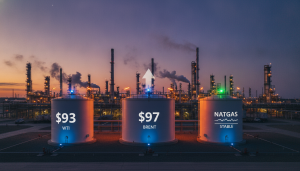
The initial knee-jerk reaction to new U.S. sanctions against Russia saw crude prices attempt a rally, with some reports indicating an over 4% surge. Yet, as of today, April 19, 2026, the market tells a starkly different story. Brent Crude is trading at $90.38, reflecting a substantial 9.07% decline today, with its intraday range spanning from $86.08 to $98.97. Similarly, WTI Crude stands at $82.59, down 9.41% within a range of $78.97 to $90.34. Gasoline prices have also fallen, currently at $2.93 per gallon, a 5.18% drop. This dramatic reversal underscores a critical market perception: the sanctions, while politically significant, are likely to have a limited direct impact on global crude flows. Our 14-day Brent trend data further illustrates this point, showing a consistent downward trajectory from $112.78 on March 30, 2026, to the current $90.38—a decline of $22.4, or nearly 20%. This persistent weakness suggests that traders have quickly discounted the disruptive potential, likely due to the continued operation of Russia’s vast parallel shipping networks that circumvent traditional enforcement mechanisms. The market clearly sees these measures as more symbolic than truly restrictive.
Geopolitical Leverage and Shifting Supply Chains
The strategic intent behind Washington’s latest sanctions appears to be less about an all-out economic assault and more about applying diplomatic pressure, particularly in broader negotiations with economic rivals. These actions serve as a tactical lever, designed to influence geopolitical alignments without triggering an inflationary surge in energy prices that could destabilize the U.S. economy. While the sanctions may not halt Russian exports entirely, they are undeniably forcing a realignment of global supply chains. Key buyers like India and China, who have been significant recipients of Russian crude, are now increasingly compelled to diversify their sourcing towards Middle Eastern producers. This pivot offers a strategic advantage to OPEC members, who have been gradually increasing output over the past year. With substantial spare capacity, the cartel is well-positioned to step in and capture increased market share, capitalizing on these enforced shifts in demand patterns. Investors should monitor this geographical recalibration closely, as it could signal increased leverage for Middle Eastern national oil companies and a potential shift in long-term trade relationships.
The Venezuela Wildcard and Upcoming OPEC+ Decisions
Adding another layer of complexity to future supply dynamics is the persistent speculation regarding Venezuela. Reports suggesting a potential U.S. intervention or a softening of sanctions on Caracas could introduce a significant net-bearish factor into the market. Venezuela possesses the world’s largest proven oil reserves, and any pathway for these barrels to re-enter the global market would fundamentally alter the supply landscape, potentially capping price rallies. This geopolitical maneuvering aligns with the broader U.S. strategy of preventing runaway oil prices. Against this backdrop, the upcoming OPEC+ meetings hold paramount importance for investors. The Joint Ministerial Monitoring Committee (JMMC) meets on April 19, followed by the full OPEC+ Ministerial Meeting on April 20. Our readers are keenly asking about current OPEC+ production quotas, underscoring the market’s focus on the group’s collective response to evolving supply and demand. Any indication from these meetings regarding production adjustments or a clearer stance on market balancing will be critical. Should OPEC+ decide to maintain or even increase output to accommodate the shifting demand patterns from Russia, it could further reinforce bearish sentiment, especially if Venezuelan oil also becomes a factor.
Speculative Positioning and the Investor’s Crystal Ball
Our proprietary data indicates a significant technical signal: speculative short positioning in crude oil futures is currently at an all-time high since 2011, based on ICE EU data. This suggests that a substantial portion of the market expects further downside, effectively shorting into any fleeting price rallies. This aggressive short positioning implies that a significant price catalyst, either bullish or bearish, could trigger substantial market movement as these positions are either covered or extended. Many of our readers are asking “what do you predict the price of oil per barrel will be by end of 2026?” Given the current market structure, high speculative shorts, and the geopolitical dance playing out, the path forward is fraught with volatility. The upcoming API Weekly Crude Inventory reports (April 21, April 28) and EIA Weekly Petroleum Status Reports (April 22, April 29) will provide crucial demand and inventory signals. Additionally, the Baker Hughes Rig Count on April 24 and May 1 will offer insight into North American supply responses. For investors, the confluence of technical positioning, geopolitical strategy, and fundamental data releases means maintaining agility is paramount. While the immediate impact of sanctions appears muted, the underlying currents of supply realignment and speculative sentiment will dictate crude’s trajectory through the remainder of 2026.