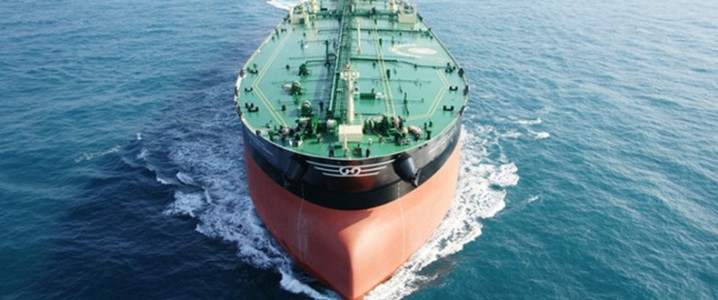
The global crude tanker market is navigating a fascinating confluence of forces, with freight rates surging to multi-year highs even as broader oil prices exhibit notable volatility. This isn’t merely a tale of supply and demand; rather, it’s a complex narrative deeply intertwined with geopolitical friction and market inefficiencies. For investors tracking the energy sector, understanding the underlying drivers of this tanker boom is crucial for identifying opportunities and risks within the shipping segment and the wider oil and gas ecosystem.
Geopolitical Friction Fuels Tanker Market Inefficiencies
The primary catalyst for the current strength in crude tanker rates is not a sudden, massive uptick in global oil consumption, but rather a significant build-up of crude in transit, reaching levels unseen in over five years. Proprietary data indicates that total crude and condensate at sea escalated to 1.31 million barrels per day in mid-October, a volume last observed during the exceptional floating storage conditions of May 2020. This surge is largely attributed to geopolitical disruptions, specifically prolonged delivery delays for sanctioned oil cargoes destined for key Asian markets like China and India. These inefficiencies are artificially tightening vessel availability and inflating transit times, creating a structural tailwind for compliant tonnage.
Consequently, Very Large Crude Carrier (VLCC) rates have rebounded sharply, now commanding approximately $82,000 to $85,000 per day. Suezmax rates recently touched highs last witnessed in November 2023, while Aframax earnings have impressively doubled since June. Individual fixture rates are once again approaching six-figure sums, with major charterers such as Petrobras and Equinor reportedly paying significant premiums for long-haul voyages. This scenario underscores how geopolitical factors can fundamentally alter market dynamics, rewarding tanker owners who navigate these complex waters with robust revenue streams, even as the underlying oil market faces other pressures.
Navigating Crude Price Volatility and the Contango Play
While tanker rates soar, the broader crude market has experienced a notable softening. As of today, Brent crude trades at $90.38 per barrel, marking a significant decline of 9.07% within the day and a substantial 19.9% drop from its $112.78 peak just a month ago on March 30th. Similarly, WTI crude is priced at $82.59, down 9.41% today. This recent weakness in prompt oil prices relative to futures contracts introduces a critical dynamic: the potential for a steep contango market.
A deepening contango, where future oil prices are significantly higher than current spot prices, makes floating storage economically viable. This was a defining feature of the market during the initial phases of the 2020 pandemic, and analysts like Erik Broekhuizen of Poten & Partners suggest a similar scenario could provide a substantial boost to the large tanker market. Our readers frequently ask about the future trajectory of oil prices, with “what do you predict the price of oil per barrel will be by end of 2026?” being a common query. The interplay between sustained geopolitical delays and the potential for a contango-driven floating storage surge creates a compelling, albeit complex, investment thesis for tanker companies. Should contango materialize, it would further absorb available tonnage, driving rates even higher and potentially realizing the upper end of bullish forecasts.
Upcoming Catalysts: OPEC+ Decisions and Inventory Signals
The immediate outlook for crude prices and, by extension, the contango structure, will be heavily influenced by key events on the horizon. Investors are keenly awaiting the OPEC+ Joint Ministerial Monitoring Committee (JMMC) Meeting on April 19th, swiftly followed by the full OPEC+ Ministerial Meeting on April 20th. These gatherings are pivotal, as any decisions regarding production quotas will directly impact global crude supply and, consequently, price stability.
A frequent question from our readership revolves around “What are OPEC+ current production quotas?” and how these might evolve. Should OPEC+ maintain or even deepen cuts in response to recent price weakness, it could help stabilize the prompt market, potentially mitigating a steep contango. Conversely, if the group signals a relaxation of output, it could exacerbate oversupply concerns and deepen the contango, thereby fueling the floating storage narrative and further benefiting tanker owners. Beyond OPEC+, the weekly API and EIA crude inventory reports on April 21st, 22nd, 28th, and 29th will offer crucial short-term insights into market balances, providing additional data points for investors to gauge the likelihood of a sustained contango environment.
Investment Outlook: Riding the Wave Amidst Shifting Sands
For investors, the current tanker market presents a compelling, albeit nuanced, opportunity. The baseline support for rates comes from persistent geopolitical inefficiencies, notably strong exports from the Middle East and the Americas encountering delays. On top of this, the potential for a contango-driven floating storage boom introduces significant upside. Clarksons Securities, for instance, projects VLCC rates to average around $63,000 per day in 2026 under a scenario of moderate OPEC cuts, but crucially, they envision a potential run-up to $200,000 per day if floating storage surges. This wide range highlights the sensitivity of the sector to evolving market conditions.
Companies with modern fleets, strong balance sheets, and efficient operations are best positioned to capitalize on these dynamics. While the recent volatility in crude prices, as seen with Brent’s nearly 20% decline in the last month, might prompt questions like “How well do you think Repsol will end in April 2026?” for integrated oil companies, the tanker segment offers a more direct play on logistics and market dislocations. Investors should monitor upcoming OPEC+ decisions and crude price trends closely, as these will be critical in determining whether the tanker market continues to ride the current wave of geopolitical disruption or transitions into an even more lucrative phase driven by floating storage economics.


