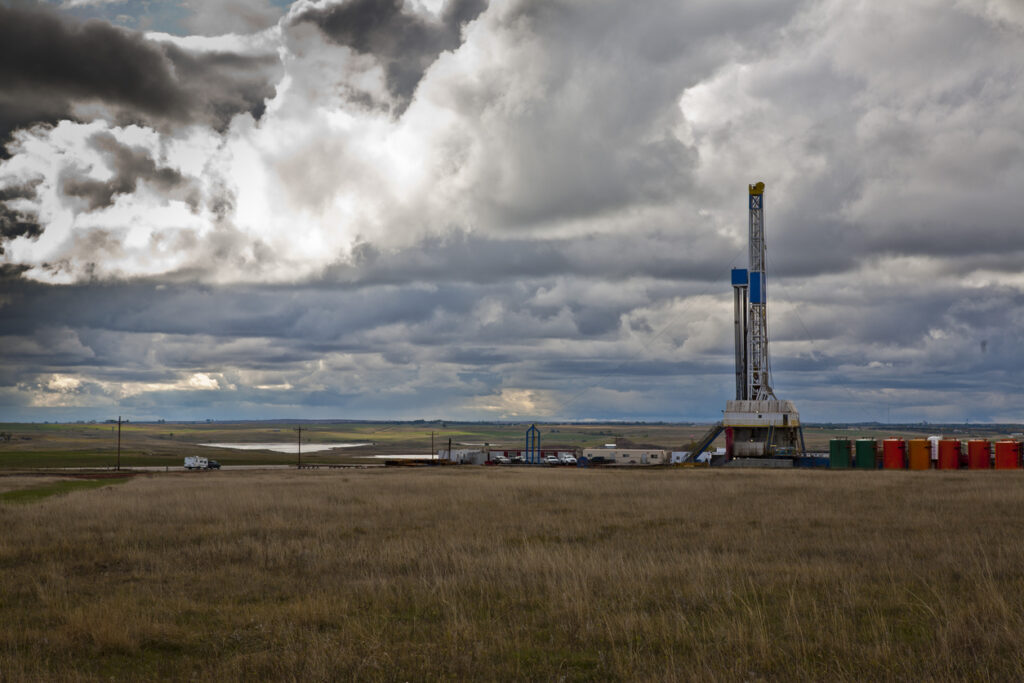
The landscape of global energy markets is perpetually shifting, yet the fundamental drive to maximize existing hydrocarbon assets remains a constant for savvy investors. A significant development out of North Dakota, though deliberated months ago, continues to resonate with long-term strategic implications: the recommendation of $45 million in funding for Enhanced Oil Recovery (EOR) pilot projects. This pivotal decision, centered on unlocking billions of barrels in the prolific Williston Basin, underscores a vital strategy for resource expansion amidst volatile crude markets. For investors, this isn’t just about a one-time capital injection; it’s about a foundational shift in reserve valuation and production longevity for key operators in a crucial domestic basin.
Unlocking Williston Basin’s Future: The EOR Imperative
Back in October 2025, the North Dakota Oil & Gas Research Council acted decisively, recommending the allocation of $45 million to propel several EOR pilot projects forward. This move, subsequently approved by the North Dakota Industrial Commission at its October 27, 2025 meeting, targets the vast, yet often challenging, reserves within the Williston Basin. The ambition is clear: to leverage advanced recovery techniques in horizontal wells, potentially unlocking billions of barrels of oil that would otherwise remain inaccessible. Companies like Chord Energy, Energy & Environmental Research Center (EERC), Devon Energy, Cobra Oil and Gas Corporation, and Continental Resources are at the forefront of these initiatives. Their participation highlights a collective industry commitment to innovation, promising to significantly extend the productive life of the basin. For investors, this translates directly into enhanced asset value and a longer runway for cash flow generation from these operators, shifting the focus from expensive new exploration to optimizing existing infrastructure and known reservoirs.
Market Volatility Meets Long-Term Production Strategy
The timing of such strategic initiatives takes on added significance when viewed against the backdrop of current market dynamics. As of today, Brent crude trades at $90.38 per barrel, marking a substantial 9.07% decline from yesterday’s close, with an intraday range reflecting considerable volatility. WTI crude mirrors this trend, currently at $82.59, down 9.41% on the day. This recent downturn follows a broader trend, with Brent having shed $22.4, or nearly 20%, over the past two weeks alone. Such fluctuations underscore the inherent risks in short-term oil price speculation. However, EOR projects offer a counter-narrative: a long-term strategy for stable, domestic supply. While gasoline prices have also seen a dip, currently at $2.93 per gallon, the underlying message for investors is clear. In a market buffeted by geopolitical uncertainties and demand-side questions, de-risking future supply through proven EOR techniques provides a compelling argument for the stability and resilience of companies with significant Williston Basin exposure. This focus on maximizing existing resources offers a more predictable production profile compared to the high-capital, high-risk endeavors of frontier exploration, directly addressing investor concerns about future oil price stability by bolstering the supply side with known quantities.
Strategic Implications for Key Players and Future Supply
The funding for these EOR pilot projects carries profound strategic implications for the participating companies and the broader U.S. energy supply outlook. Major players like Devon Energy, Chord Energy, and Continental Resources, already significant operators in the Williston Basin, stand to gain substantially. Successful EOR pilots could lead to material upward revisions in their proven and probable reserve estimates, fundamentally enhancing their intrinsic value and providing a strong tailwind for their share prices. This is precisely the kind of fundamental driver that astute investors scrutinize when assessing an energy company’s long-term viability, moving beyond short-term price movements to evaluate genuine asset growth. While the immediate impact on global inventories might be limited, the long-term success of these projects could influence future API and EIA weekly petroleum status reports by steadily contributing to domestic crude production. Furthermore, the commitment to EOR, championed by figures like Kyle Haustveit, then Assistant Secretary of Fossil Energy, U.S. Department of Energy, signals continued federal support for technological advancements that bolster domestic energy security. This consistent policy environment provides a stable foundation for ongoing investment in enhanced recovery, offering a strategic hedge against global supply disruptions.
Investor Outlook: Valuing Future Barrel Potential
For investors actively engaged in the oil and gas sector, the success of these North Dakota EOR initiatives represents a critical factor in valuing companies and projecting future market dynamics. A common question among our readers revolves around the long-term trajectory of crude prices, with many asking for predictions on the price of oil per barrel by the end of 2026. While definitive predictions are elusive, the widespread adoption of successful EOR techniques adds a significant, tangible component to the supply side of that equation. It suggests a future where a greater percentage of oil in place becomes economically recoverable, effectively increasing the global recoverable resource base without the need for new discoveries. This prospect directly impacts valuation models for companies with extensive Williston Basin acreage, potentially increasing the net present value (NPV) of their assets and offering a compelling case for growth even in a scenario of moderate crude price appreciation. Companies that can demonstrate scalable and cost-effective EOR will be best positioned to capture investor capital, as they offer a more predictable path to reserve growth and sustained production. Focusing on these operators, particularly those involved in the initial pilot projects, allows investors to capitalize on the unlocking of future barrel potential today.