Canada’s Pipeline Prowess: Reshaping Global Oil Flows and Investment Horizons
For years, Canada’s vast oil reserves faced a critical bottleneck: a severe shortage of export pipeline capacity that often forced producers to sell at significant discounts. This structural limitation not only constrained revenue but also hampered Canada’s influence in global energy markets. However, a monumental shift has occurred with the successful commissioning of the Trans Mountain Expansion (TMX) project on May 1, 2024. This new infrastructure has fundamentally altered the competitive landscape, transforming Canada into a more formidable player capable of shipping crude directly from its Pacific coast to lucrative Asian markets. This pivotal development not only unlocks substantial value for Canadian producers but also introduces new dynamics for investors tracking global crude supply and geopolitical energy strategies.
The New Era of Canadian Export Capacity and Value Unlock
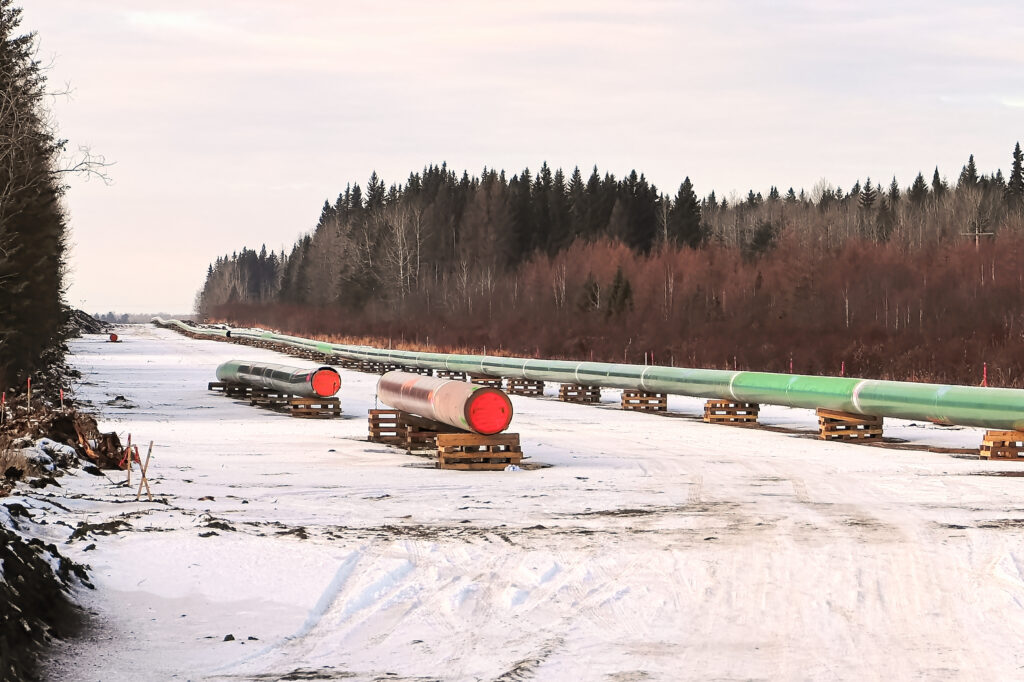
The operational launch of the Trans Mountain Expansion pipeline marked the end of a protracted period of infrastructure deficit that had plagued the Canadian oil and gas sector. Prior to TMX’s commercial opening, the lack of transport capacity was estimated to cost Canadian producers billions annually, hindering their ability to realize full market value. Now, with TMX online, Alberta’s oil producers can send nearly 600,000 barrels per day (bpd) of additional crude oil to the Canadian Pacific coast, effectively tripling their previous access. This translates to direct, unfettered access to high-demand Asian markets, bypassing traditional reliance on the U.S. Gulf Coast and its often-congested routes. This increased market reach is not merely about volume; it’s about strategic positioning and improved netbacks for Canadian heavy crude, fundamentally revitalizing a sector that had struggled under the weight of export limitations. Investors focused on upstream Canadian equities should note this direct correlation between enhanced market access and potential margin expansion for producers.
Market Volatility, Reader Interest, and the Impact of New Supply
The backdrop for this Canadian resurgence is a global oil market characterized by notable volatility. As of today, Brent crude trades at $90.38, reflecting a significant daily decline of 9.07% from its opening, with a day range between $86.08 and $98.97. Similarly, WTI crude has seen a sharp drop to $82.59, down 9.41%. This immediate market reaction, following a broader 14-day trend where Brent has fallen from $112.78 to its current price, naturally fuels intense investor scrutiny. Our proprietary reader intent data highlights this very concern, with a significant number of investors asking, “what do you predict the price of oil per barrel will be by end of 2026?” This question underscores the market’s sensitivity to both demand-side concerns and any new supply injections. While TMX’s 600,000 bpd may seem modest in a 100-million-bpd global market, its strategic routing to Asia offers a new, diversified supply channel that could help moderate price spikes driven by geopolitical disruptions in other regions. The stability offered by this new, reliable Canadian supply route could be a critical factor in how global prices evolve over the medium term, providing a crucial alternative for major importers.
Geopolitical Dynamics and Emerging Trade Benchmarks
The timing of TMX’s launch is particularly salient given the evolving geopolitical landscape, marked by persistent trade tensions between major economic powers like China and the United States. While the U.S. continues to impose tariffs and China retaliates with port fees, the cost and complexity of traditional U.S. to China energy shipments have increased. In this context, Canadian crude, flowing directly from Vancouver to Asian ports, presents a compelling alternative, offering greater supply security and potentially more favorable pricing dynamics. Reflecting this monumental shift in trade flows, the Baltic Exchange, a global authority in maritime market data, has already introduced two new Aframax tanker benchmarks. These benchmarks, TD28 for shipments from Vancouver to Ningbo, China, and TD29 for Vancouver to the Pacific Area Lightering zone off the US West Coast, became active on October 13. Their creation on the Intercontinental Exchange is a clear signal from the market that Canadian crude is now a distinct and significant component of global energy trade, demanding its own transparent pricing mechanisms. This institutional recognition further validates the long-term strategic importance of Canadian oil exports.
Forward-Looking Analysis: Upcoming Events and Investment Implications
Looking ahead, the next two weeks are packed with critical events that will undoubtedly influence short-term price movements and investor sentiment, further shaping the economic impact of Canada’s elevated export capacity. The OPEC+ Joint Ministerial Monitoring Committee (JMMC) Meeting on April 19, immediately followed by the full OPEC+ Ministerial Meeting on April 20, will be closely watched for any adjustments to production quotas. Our reader questions confirm this keen interest, with many asking about “OPEC+ current production quotas.” Any decision by the cartel to alter output, especially in a market now seeing additional Canadian barrels flowing, could introduce new volatility or stability to global prices. Furthermore, the weekly API and EIA crude inventory reports on April 21, 22, 28, and 29, alongside the Baker Hughes Rig Count on April 24 and May 1, will provide essential insights into North American supply and demand balances. For investors, these events provide continuous data points to assess the integration of new Canadian supply into the global tapestry, impacting the profitability and strategic positioning of Canadian upstream and midstream companies. The enhanced capacity solidifies Canada’s role as a reliable, long-term energy supplier, a factor that will likely become increasingly attractive in a world grappling with energy security concerns.