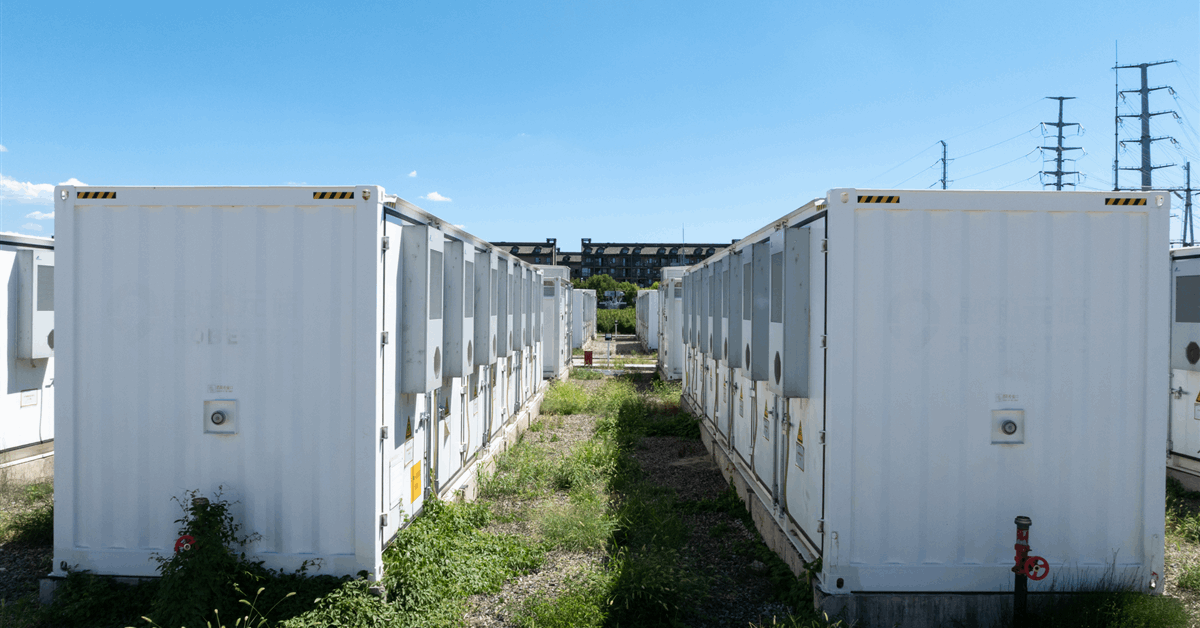
The global energy landscape continues its rapid evolution, presenting both formidable challenges and compelling opportunities for oil and gas investors. In a clear signal of strategic realignment towards decarbonization and grid modernization, Spanish utility giant Iberdrola SA has announced its acquisition of the 270-megawatt (MW), 1,080-megawatt-hour (MWh) Tungkillo battery energy storage system (BESS) project in South Australia from RES Australia. This move, part of a broader multi-billion-euro investment strategy, underscores a growing conviction in the critical role of grid-scale battery storage in stabilizing renewable-heavy grids and diversifying energy portfolios. For investors navigating the volatile traditional energy markets, understanding these pivot points in major utility strategies is paramount to identifying long-term value creation.
Strategic Imperative: Fueling Australia’s Energy Transition
Iberdrola’s Tungkillo acquisition is not an isolated event but a calculated step within Australia’s burgeoning renewable energy market. The project, slated for a 2028 operational start and requiring an estimated EUR 275 million in investment, is strategically located in South Australia, a region at the forefront of renewable energy integration. The utility explicitly states the Australian system’s dire need for increased battery storage capacity to effectively integrate new renewable generation and introduce essential flexibility into the grid. From an investor perspective, this highlights a significant, demand-driven market for BESS solutions, offering a more predictable revenue stream often backed by long-term contracts for grid services, contrasting sharply with the commodity price volatility of traditional fossil fuels. Furthermore, Iberdrola views these storage systems as crucial backup capacity for its expanding portfolio of energy sales contracts to customers, demonstrating a vertical integration strategy designed to enhance reliability and capture market share in a rapidly transforming energy economy.
Iberdrola’s Expanding Australian Footprint and Capital Allocation
The Tungkillo project acquisition solidifies Iberdrola’s substantial and growing presence in the Australian energy market. This latest addition complements an already impressive pipeline of BESS developments. The company currently has two other battery storage projects under construction: the 65-MW Smithfield project in New South Wales, expected to commence operations in 2025, and the 180-MW Broadsound project in Queensland, part of a larger 360-MW solar development, targeting a 2026 operational date. Beyond these, Iberdrola already operates two BESS facilities in Australia: the 50-MW Wallgrove Grid Battery in New South Wales, where it holds a 10-year dispatch control agreement, and the 25-MW Lake Bonney project co-located with wind farms in South Australia. Looking further ahead, the company has three additional proposed BESS projects, including the ambitious 1-gigawatt Burrenbring Battery, the 200-MW Mount Doran Battery, and the 270-MW Kingswood Battery. These projects collectively underscore Iberdrola’s commitment, aligning perfectly with its recently unveiled 2025-28 plan, which earmarks over EUR 1 billion for investments in Australia, predominantly focused on battery development. This regional allocation is part of a much larger EUR 58 billion global investment plan, with EUR 5 billion specifically directed towards Australia and European Union markets outside the Iberian Peninsula. Executive chair Ignacio Galan’s vision to transform Iberdrola into a more regulated company, with networks as a primary vector for growth, provides a clear strategic framework for these capital expenditures, offering investors a glimpse into a future utility model focused on stability and essential grid services.
Navigating Volatile Energy Markets: The Oil & Gas Investor’s Perspective
For investors primarily focused on the oil and gas sector, these strategic shifts by major utilities present a nuanced challenge. As of today, the crude oil market is exhibiting significant volatility. Brent Crude trades at $90.38, reflecting a substantial 9.07% decline today, with a day range between $86.08 and $98.97. Similarly, WTI Crude stands at $82.59, down 9.41% within a range of $78.97 to $90.34. This sharp downturn is particularly notable given the 14-day trend, which has seen Brent crude plummet from $112.78 on March 30 to its current level, representing a significant 19.9% drop. Such pronounced swings inevitably lead investors to ask crucial questions, such as “What do you predict the price of oil per barrel will be by end of 2026?”
This widespread investor concern underscores the inherent commodity price risk in traditional energy investments. In contrast, Iberdrola’s strategic pivot towards regulated assets like BESS projects in stable economies like Australia offers a different risk-reward profile. While not directly replacing oil and gas production, these investments represent capital flowing into the energy sector’s future infrastructure, gradually reshaping demand dynamics for fossil fuels over the long term. For sophisticated investors, understanding this dichotomy – the immediate, often speculative, movements in crude prices versus the long-term, utility-scale infrastructure build-out – is essential for constructing a resilient portfolio. The acquisition of Tungkillo, amidst a period of significant crude market turbulence, highlights a strategic move towards assets that provide grid stability and support decarbonization, potentially offering more predictable returns less susceptible to daily commodity price fluctuations.
Key Catalysts on the Horizon: Upcoming Events and Their Impact
The immediate future holds several critical events that could further influence energy market sentiment and, by extension, investment strategies across the spectrum. This weekend, specifically on April 19th and 20th, the OPEC+ Joint Ministerial Monitoring Committee (JMMC) and the full Ministerial Meeting are scheduled. These gatherings are closely watched for any indications regarding production quotas and supply policies, directly addressing investor queries such as “What are OPEC+ current production quotas?” Decisions made at these meetings have the potential to introduce significant short-term volatility or stability into crude prices, impacting global supply-demand balances. Following this, the market will turn its attention to the API Weekly Crude Inventory report on April 21st and the EIA Weekly Petroleum Status Report on April 22nd, providing crucial insights into U.S. inventory levels and demand trends. These are followed by the Baker Hughes Rig Count on April 24th, offering a snapshot of upstream activity. These traditional market catalysts will continue to dictate short-term trading dynamics for oil and gas. However, investors are increasingly evaluating these signals through the lens of a broader energy transition. While OPEC+ decisions and inventory reports remain critical for immediate market positioning, the underlying trend exemplified by investments like Iberdrola’s Tungkillo BESS project suggests a sustained, long-term shift that traditional energy investors must integrate into their strategic outlooks.
Investment Implications: Diversification and Long-Term Value Creation
Iberdrola’s acquisition of the Tungkillo BESS project is a compelling case study for oil and gas investors seeking to diversify and capture value in the evolving energy landscape. It represents a deliberate move into regulated, infrastructure-heavy assets that are essential for the energy transition. For a sector historically defined by commodity price cycles, the stability and predictable cash flows offered by grid-scale battery storage, particularly within a AAA-rated economy like Australia, present an attractive alternative or complementary investment. This strategy mitigates exposure to the inherent volatility of crude oil and natural gas prices while aligning with global decarbonization efforts. As utilities like Iberdrola continue to allocate significant capital towards network expansion and renewable integration, these investments contribute to building the energy system of the future. Investors should view such moves not just as a departure from traditional fossil fuels but as a strategic re-allocation of capital towards resilient, long-term growth vectors within the broader energy complex. The emphasis on network development and regulated assets aims to create a more stable and predictable financial profile, a characteristic often highly valued by institutional investors and a potential hedge against the ongoing uncertainties in the upstream and midstream oil and gas sectors.


