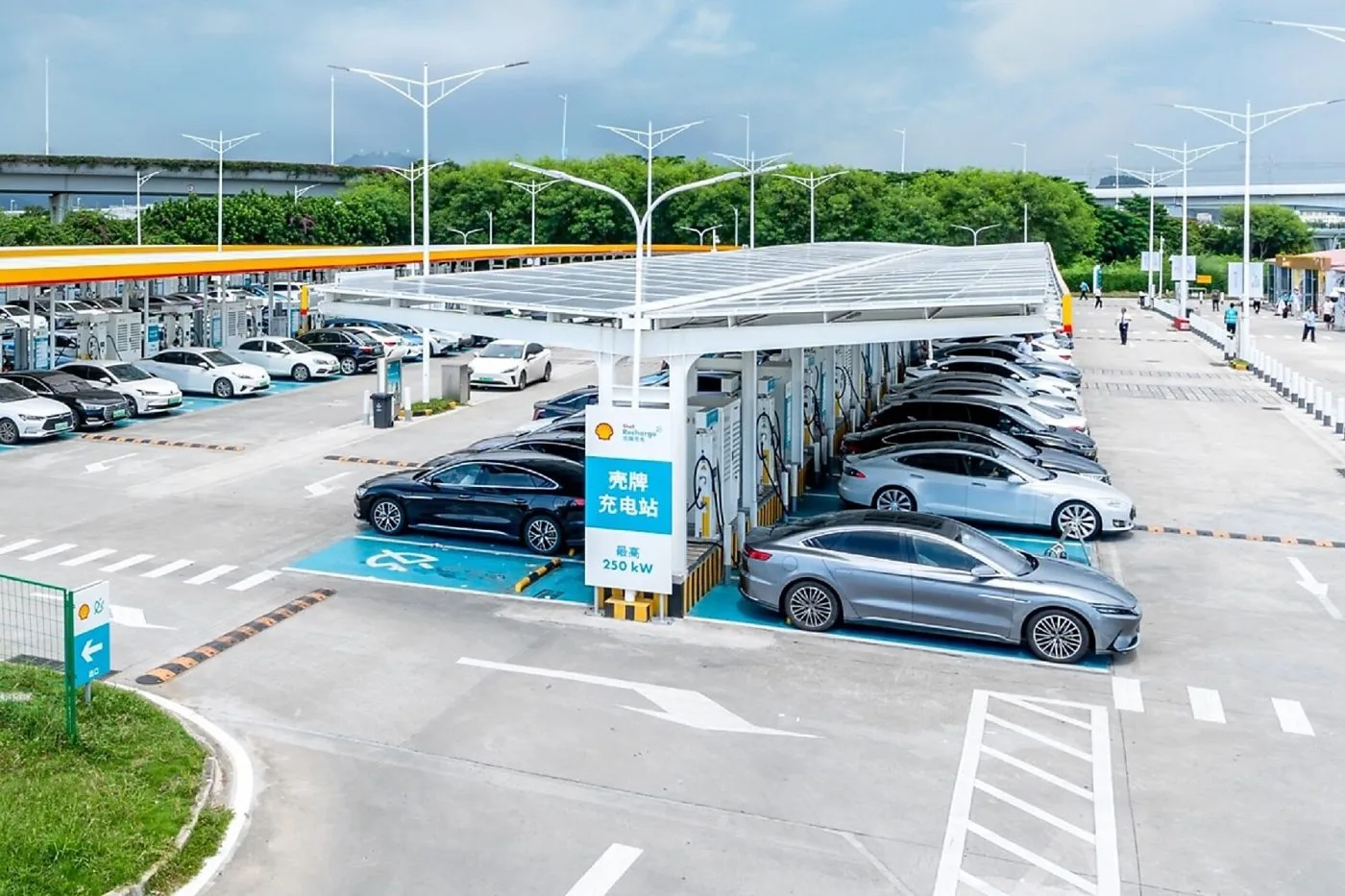
China’s National Energy Administration has unveiled an ambitious three-year plan to dramatically expand the nation’s electric vehicle (EV) charging infrastructure, a move that signals a significant structural headwind for global oil demand. This initiative, set to double charging service capacity by 2027, aims to support an estimated 80 million EVs nationwide, fundamentally altering the energy landscape in the world’s largest automotive market. For oil and gas investors, this aggressive build-out is not merely an EV adoption story; it represents a direct challenge to future gasoline consumption and necessitates a re-evaluation of long-term demand forecasts. Our analysis delves into the specifics of this plan, its immediate market implications, and what it means for your investment strategy amidst upcoming energy catalysts.
China’s EV Infrastructure Surge: A Deep Dive into the Plan
The “Three-Year Action Plan for Doubling the Service Capacity of Electric Vehicle Charging Facilities (2025–2027)” is a comprehensive blueprint designed to achieve unparalleled EV charging density and efficiency. By the close of 2027, the NEA and its partner ministries intend to provision over 300 million kilowatts (300 GWh) of public charging capacity, expanding the national network to approximately 28 million facilities. This massive undertaking is structured around four core pillars: balance, innovation, inclusiveness, and implementation, addressing current challenges such as rural coverage gaps, network equilibrium, power supply security, and service quality.
The plan highlights critical upgrades, particularly focusing on high-power charging. With current public charging facilities averaging a modest 45.5 kilowatts, the initiative specifically targets the deployment of 1.6 million new DC fast chargers in urban areas by 2027, including 100,000 high-power units. Furthermore, a concerted effort will see 40,000 ultra-fast charging points, each rated above 60 kilowatts, installed across highway service areas, ensuring fast-charging availability at nearly all motorway sites. Rural regions are not overlooked, with at least 14,000 new DC chargers slated for townships currently devoid of public charging options, guaranteeing full national coverage. This strategic rollout underscores China’s unwavering commitment to electrifying its transportation sector, setting a precedent for other nations and solidifying the long-term trajectory away from internal combustion engines.
The Immediate Market Reaction and Lingering Investor Questions
This bold announcement from China arrives at a time when crude markets are already exhibiting signs of softness. As of today, Brent crude trades at $96.28 per barrel, marking a 3.13% decline within the day’s range of $95.59 to $98.97. Similarly, WTI crude has fallen to $87.82, down 3.67%, fluctuating between $87.02 and $90.34. This recent volatility is part of a broader trend; Brent has seen a notable softening, declining over 12% from its level of $112.57 just two weeks ago. Gasoline prices also reflect this sentiment, currently at $3.03, down 2.26%.
Against this backdrop, investors are actively seeking clarity on market dynamics. Our proprietary reader intent data reveals a consistent focus on fundamental price discovery and supply-side factors. “What is the current Brent crude price?” remains a top query, reflecting the market’s sensitivity to daily shifts. Moreover, with the upcoming OPEC+ meetings, “What are OPEC+ current production quotas?” is another frequently asked question, underscoring the market’s reliance on supply management to offset demand concerns. While the full impact of China’s charging plan is a longer-term narrative, its implications for future demand are already being priced into expectations, contributing to the current bearish lean in crude prices and prompting a sharper focus on supply-side responses.
Forecasting Oil Demand Headwinds: Beyond the Horizon
The sheer scale of China’s EV charging expansion projects a significant, albeit gradual, erosion of gasoline demand. Supporting 80 million EVs by 2027 means a substantial portion of the world’s largest vehicle fleet will no longer rely on fossil fuels for propulsion. While the immediate daily oil demand impact might seem marginal compared to global consumption, the compounding effect by 2027 and beyond will be profound. Each new high-power charger, each urban fast-charging station, and every rural DC charger installed represents a reduction in future gasoline sales, particularly during peak travel periods.
Beyond direct displacement, the plan’s emphasis on innovation, particularly vehicle-grid interaction (VGI), introduces another layer of demand destruction risk for fossil fuels. By enabling EVs to participate in grid balancing and energy storage, China is not only shifting transportation energy sources but also enhancing grid stability without necessarily building new fossil fuel-fired power plants. This integrated approach means that as EV adoption surges, the need for oil-derived electricity generation or even natural gas for peaking plants could diminish, indirectly affecting the broader energy complex. Oil and gas investors must recognize that China’s strategy is a multi-faceted attack on fossil fuel dominance, extending beyond just the tailpipe.
Strategic Implications for Oil & Gas Investors: Navigating Upcoming Catalysts
For oil and gas investors, China’s aggressive EV charging strategy demands a careful re-evaluation of long-term portfolio allocations and a heightened focus on upcoming market catalysts. The market is currently bracing for critical supply-side decisions. With OPEC+ set to convene its Joint Ministerial Monitoring Committee (JMMC) this Friday, April 17th, followed by the full Ministerial Meeting on Saturday, April 18th, the group’s response to softening demand signals and rising non-OPEC supply will be paramount. Any indication of sustained production cuts or, conversely, a relaxation of quotas, will profoundly impact crude prices already under pressure from long-term demand concerns stemming from China’s EV push.
Further clarity on immediate demand trends will emerge from the API Weekly Crude Inventory report on April 21st and the EIA Weekly Petroleum Status Report on April 22nd. These reports will provide crucial insights into U.S. inventory levels and refinery activity, serving as bellwethers for current demand strength. The following week brings another round of these reports on April 28th and 29th, offering a more comprehensive picture. On the supply side, the Baker Hughes Rig Count on April 24th and May 1st will indicate the responsiveness of U.S. producers to current price signals. Savvy investors will closely monitor these events, understanding that while they address immediate supply-demand imbalances, China’s structural shift towards EVs represents a powerful and growing long-term headwind that cannot be ignored.


