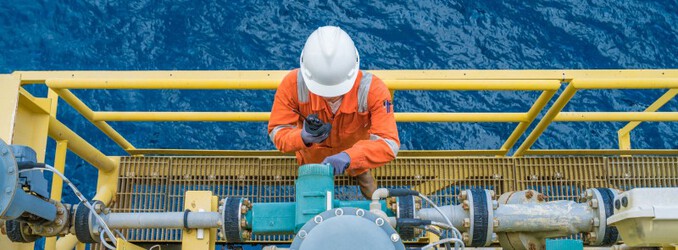
Halliburton (HAL) and Aker BP have recently unveiled a significant advancement on the Norwegian Continental Shelf (NCS) that promises to redefine subsea completion operations. The successful deployment of the first-ever umbilical-less tubing hanger installation represents more than just a technical feat; it’s a strategic move that unlocks substantial value by streamlining offshore operations, slashing costs, and enhancing safety. This milestone, achieved through Halliburton’s Enhanced Remote Operated Control System (eROCS) in tandem with the Optime Tubing Hanger Orientation System (OTHOS), signals a crucial step forward for the entire subsea industry and offers a compelling investment narrative for those tracking innovation in oilfield services and E&P.
The Digital Frontier: Unpacking Umbilical-Less Subsea Completions
At the heart of this operational breakthrough lies Halliburton’s eROCS technology. By replacing traditional hydraulic and mechanical control systems with a fully digital hydraulic solution, the need for cumbersome and costly umbilicals is eliminated. This is not merely an incremental improvement; it’s a paradigm shift in how subsea Christmas tree tubing hangers are precisely oriented and installed. For Aker BP, a key operator on the high-cost NCS, the benefits are immediate and tangible: simplified planning, reduced operational complexity and risk, and significantly improved rig flexibility. These efficiencies translate directly into lower capital expenditures and operational expenses, critical factors in maintaining project viability in challenging offshore environments. This pioneering field validation positions Halliburton at the forefront of next-generation subsea digitalization, establishing a platform to deliver enhanced control, reliability, and cost reductions across future offshore completions globally.
Navigating Market Volatility: Why Efficiency is Paramount Now
The timing of this innovation could not be more pertinent for the energy sector. As of today, Brent crude trades at $96.3 per barrel, reflecting a 3.11% decline, with its daily range between $95.59 and $98.97. Similarly, WTI crude sits at $87.83, down 3.66% within a $87.02-$90.34 range. This recent dip follows a broader trend over the past two weeks, where Brent has shed over $14, or 12.4%, from its $112.57 perch on March 27th to $98.57 just yesterday. Such pronounced market volatility underscores the critical need for operational efficiency and cost management across the oil and gas value chain. In an environment where crude prices can fluctuate by double-digit percentages within a fortnight, every dollar saved in exploration and production becomes vital for maintaining profitability and investor confidence. Halliburton’s eROCS directly addresses this pressure point, offering E&P companies like Aker BP a robust solution to mitigate operational risks and optimize project economics, making high-cost developments more resilient to price swings.
Investor Focus: Decoding the Value Proposition Amidst Market Questions
Our proprietary reader intent data reveals a strong focus on understanding market drivers and the underlying models powering our insights. Investors are keenly asking about current Brent crude prices and the rationale behind market movements, alongside inquiries into OPEC+ production quotas and the utility of advanced analytical tools. In such a market, where every dollar of operational cost is scrutinized, Halliburton’s eROCS offers a tangible answer to how E&P companies can protect margins and enhance project economics. By simplifying subsea infrastructure and significantly reducing rig time, this innovation directly impacts the cost base, making projects viable even in lower price environments. For investors, this translates into a clear value proposition: an investment in Halliburton reflects exposure to a company driving fundamental improvements in operational efficiency, while for Aker BP, it signifies a commitment to leveraging technology for sustained profitability in a mature basin like the NCS. This technological edge directly addresses the investor’s core question of how companies are adapting to and thriving in a dynamic and often unpredictable energy market.
Forward Momentum: Upcoming Events and Offshore Prospects
Looking ahead, the energy market is poised for potential shifts driven by a series of critical events. The OPEC+ Joint Ministerial Monitoring Committee (JMMC) meeting on April 17th, followed by the Full Ministerial meeting on April 18th, could significantly influence global supply dynamics and, consequently, crude oil prices. Any decisions impacting production quotas will further underscore the critical need for operational efficiency in the field. Additionally, weekly API and EIA inventory reports, due on April 21st, 22nd, 28th, and 29th, will provide fresh insights into demand and supply balances. For the oilfield services sector, the Baker Hughes Rig Count, scheduled for April 24th and May 1st, will offer a granular view into drilling activity. For a company like Halliburton, a leader in subsea completions, sustained or increased rig activity, particularly in offshore deepwater and complex shallow water regions, directly translates to higher demand for advanced solutions like eROCS. This technology positions Halliburton to capitalize on the industry’s sustained drive towards digitalization and automation in offshore environments, projecting a future where remote functionality becomes the norm, reducing human risk, improving reliability, and further cutting costs across all major offshore regions.