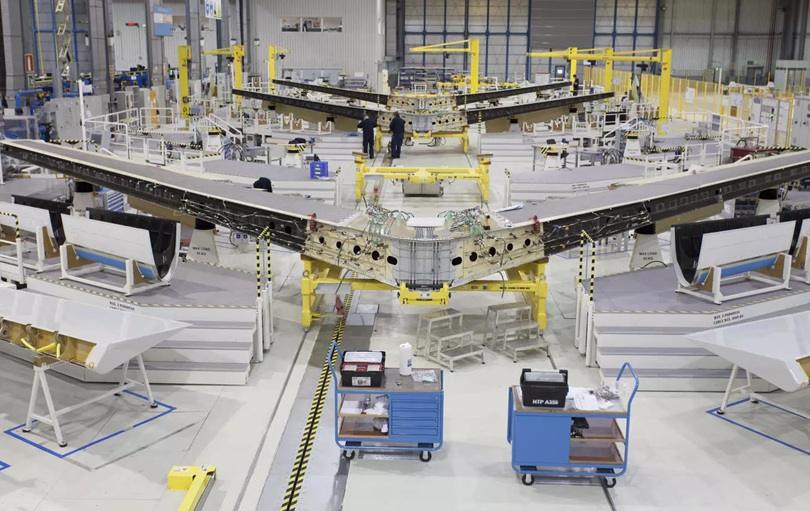
The energy transition is often discussed in broad strokes, but it’s the granular commitments from industrial giants that truly signal its accelerating pace and potential impact on long-term oil demand. The recent framework agreement between Siemens and Airbus to decarbonize four significant Airbus industrial sites in the U.S. and UK serves as a powerful case study. This isn’t just another green initiative; it’s a systematic blueprint for reducing energy consumption and carbon emissions within heavy industry, leveraging advanced technologies and integrated solutions. For oil and gas investors, this alliance underscores a critical trend: the structural erosion of demand in key sectors, necessitating a vigilant re-evaluation of long-term investment theses, even amidst short-term market volatility.
The Decarbonization Blueprint: A Microcosm of Macro Trends
The collaboration between Siemens and Airbus is a prime example of how major corporations are addressing their Scope 1 and 2 emissions head-on. Siemens, through its Buildings business, will lead the charge, supported by Capgemini for initial consulting and project management. The core of this initiative involves a comprehensive “decarbonization masterplan” for each site, designed to implement scalable solutions that reduce both energy demand and carbon emissions. Key elements of this strategy include the integration of renewable energy sources, smart energy management systems, and the crucial shift to low-carbon heat production, notably through advanced heat pumps. Infrastructure rollout for these ambitious changes is slated to commence in 2026.
What makes this particularly significant is the methodological rigor. Siemens will utilize “Energy System Twins” to simulate and determine optimal decarbonization roadmaps, ensuring that the deployed solutions are not only effective but also highly optimized for each specific site. Airbus has set aggressive targets, aiming to reduce overall energy consumption by 20% and slash Scope 1 and 2 greenhouse gas emissions by a staggering 85% by 2030, benchmarked against a 2015 baseline. These aren’t aspirational goals; they are concrete, measurable commitments from a global manufacturing powerhouse, directly impacting the consumption profile of traditional energy sources. Investors must recognize that such systemic changes, replicated across industries, represent a material, long-term headwind for oil and gas demand.
Market Realities: Navigating Short-Term Volatility Amidst Long-Term Shifts
While the long-term implications of industrial decarbonization are profound, the immediate market remains driven by a confluence of factors, often presenting a different picture. As of today, Brent crude trades at $90.38 per barrel, marking a significant 9.07% decline within the day, while WTI crude sits at $82.59, down 9.41%. This recent dip is part of a broader trend, with Brent shedding nearly 20% in the last two weeks, falling from $112.78 on March 30th to its current level. Gasoline prices also reflect this bearish sentiment, currently at $2.93, a 5.18% drop today. This short-term volatility highlights the market’s sensitivity to geopolitical events, economic indicators, and supply-side narratives, often overshadowing the slower-moving, but ultimately more impactful, demand destruction trends.
For investors, this divergence presents a challenge: how to position portfolios when immediate price swings are dramatic, yet the underlying fundamentals of demand are undergoing a structural transformation. The sharp pullback in crude prices, within a daily range of $86.08-$98.97 for Brent and $78.97-$90.34 for WTI, underscores the inherent unpredictability of the commodity market. Yet, overlooking the strategic shifts by major industrial consumers, as exemplified by the Siemens-Airbus partnership, would be a critical oversight for anyone building a long-term investment strategy in the energy sector.
Investor Questions: Peering into the Future of Oil Demand and Supply
Our proprietary reader intent data reveals a clear focus among investors: a strong desire to understand future oil prices and the strategies of key market players. Specifically, investors are keenly asking about where the price of oil per barrel will be by the end of 2026 and what OPEC+ current production quotas entail. These questions are critically important, and the Siemens-Airbus agreement provides a tangible, real-world data point that must be integrated into any robust forecast. While OPEC+ decisions directly influence supply, the accelerating pace of industrial decarbonization directly impacts the demand side of the equation.
When investors ponder future oil prices, they must now increasingly factor in the cumulative effect of hundreds, if not thousands, of similar industrial initiatives. An 85% reduction in Scope 1 and 2 emissions from major manufacturing hubs, driven by energy efficiency and a shift to low-carbon heat, translates directly into reduced consumption of natural gas, and indirectly, other fossil fuels. These commitments are not theoretical; they involve substantial engineering studies, infrastructure rollouts, and multi-year timelines, suggesting a durable shift rather than a temporary trend. Therefore, any prediction for crude oil prices by late 2026 or beyond must account for this growing, systemic erosion of demand from industrial users, potentially dampening the impact of supply-side management by groups like OPEC+.
Upcoming Events and Strategic Positioning
The interplay between long-term decarbonization trends and immediate market dynamics will be sharply in focus over the coming weeks. The immediate attention of the market turns to the upcoming OPEC+ Joint Ministerial Monitoring Committee (JMMC) and Ministerial Meetings, scheduled for April 19th and 20th respectively. These meetings are crucial for understanding potential adjustments to production quotas, which could significantly influence short-term price movements. Following these, the API Weekly Crude Inventory (April 21st & 28th) and EIA Weekly Petroleum Status Report (April 22nd & 29th) will provide critical insights into U.S. supply and demand balances, while the Baker Hughes Rig Count (April 24th & May 1st) will signal future production intent.
For investors, the strategic imperative is to evaluate how OPEC+ policies might respond to a world where industrial giants are actively working to reduce their energy footprint. Will continued production cuts be necessary to stabilize prices if demand erosion accelerates beyond current forecasts? The Siemens-Airbus initiative, with infrastructure rollout beginning in 2026, signals that the demand headwinds are not distant future problems but current strategic considerations. Investors should be positioning their portfolios to mitigate risks associated with declining long-term demand for traditional energy sources, perhaps by exploring opportunities in companies facilitating the energy transition. While weekly inventory reports and rig counts offer tactical trading opportunities, the strategic investor must look beyond these short-term signals to the structural changes quietly reshaping the global energy landscape.


